Lincoln is a popular topic among my readers, so I thought I’d list my favorite books about him.
At the same time, I am eager to hear about your favorite Lincoln books.
My favorites are, in no order:
Abraham Lincoln: His Speeches and Writings, ed. by Roy P. Basler. This anthology contains everything by Lincoln that is of real importance. Basler helpfully explains the context of each selection, and also includes in this volume his essay on “Lincoln’s Development as a Writer.” What I found most surprising about this book is the unfailing seriousness of Lincoln in his writings. The storyteller and humorist are not in evidence here — just a formidably intelligent man who was wholly intent on achieving something distinguished.
Abraham Lincoln: A Life, by Michael Burlingame. The two hefty volumes of this biography, published in 2008, run to almost 2000 pages. The story is familiar, but Burlingame makes it all seem new by providing new detail. He did a prodigious amount of original research. For example, everyone knows that Lincoln grew up poor. What wasn’t made clear to us before is that the Lincolns were the poorest of the poor, scorned by other poor people for their shiftlessness and lack of self respect. Lincoln’s rise in life becomes all the more remarkable. This biography is for me an immense bowl of salted peanuts.
Abraham Lincoln, by Lord Charnwood (Baron Godfrey Rathbone Benson). This biography, which was published in 1917, is in my opinion the best written biography of Lincoln, and in many ways the most profound. Charnwood had a true feeling for America and the Lincoln era that would be remarkable in any foreigner. He knew Henry James and had long talks with him about Lincoln and the Civil War in preparation to write this book. What James told him no doubt accounts for Charnwood’s ability to get so many things right.
Any Lincoln books by James G. Randall. When I read Randall’s books, I find myself arguing with him all the time. I do not think that the Lincoln Douglas debates were about nothing. I do not think that the cause of the Civil War was the ineptitude of the political leaders of that era, North and South. Randall believes these things and supports his beliefs with massive, expertly marshalled scholarship. To argue with him, you need to marshall your own scholarship pretty damn well.
The Lincoln Anthology: Great Writers on His Life and Legacy from 1860 to Now, edited by Harold Holzer. This wonderful anthology is full of surprises, such as interesting writings about Lincoln by Bram Stoker and Delmore Schwartz. It also includes indispensable essays, such as the studies of Lincoln the writer by Jacques Barzun and Marianne Moore.
The Cooper Union Address performed by Sam Waterston at Cooper Union. On May 5, 2004, Sam Waterston delivered Lincoln’s Cooper Union Address entire, at the place where Lincoln delivered it in 1860. In this speech, Lincoln defended his belief that the authors of the Constitution intended for Congress to have the power to exclude slavery from the territories and from states formed out of territories. To establish his point, Lincoln marshaled a large amount of historical detail and legal history, buttressed my logical and moral reasoning. The speech is easy to follow, and when you listen to Sam Waterston’s performance of it, you experience how it won for Lincoln the presidential nomination of the Republican Party later that year.
I once spent a summer evening, around fifty years ago, sitting on the porch of a house I was staying in, seeking relief from smothering heat. For company I had a bookish acquaintance — not quite a friend — and we were trying to come up with a short list of the true and indispensable masterpieces of American literature. We felt fully qualified for this task; we were young. I forget what we thought we could do with the list.
We made the obvious choices — Huckleberry Finn, Moby Dick, Leaves of Grass, and plenty of Emily Dickinson — and then stopped to think whether we had missed anything that could compare with these works. We thought and thought — and thought. Finally I said, “What about Lincoln’s Second Inaugural Address?”
My acquaintance was surprised by this suggestion. He didn’t know much about Lincoln and had never read the address. But he wanted to know why I had thought of it — a speech, of all things. I went into the house and got a book that I knew included the text of the address. Back on the porch, I read it out loud, slowly and carefully. Here is the full text — I recommended that you read it out loud yourself:
Fellow-Countrymen:
At this second appearing to take the oath of the Presidential office there is less occasion for an extended address than there was at the first. Then a statement somewhat in detail of a course to be pursued seemed fitting and proper. Now, at the expiration of four years, during which public declarations have been constantly called forth on every point and phase of this great conflict which is of primary concern to the nation as a whole, little that is new could be presented. The progress of our arms, upon which all else chiefly depends, is as well known to the public as to myself, and it is, I trust, reasonably satisfactory and encouraging to all. With high hope for the future, no prediction in regard to it is ventured.
On the occasion corresponding to this four years ago all thoughts were anxiously directed to an impending civil war. All dreaded it, all sought to avert it. While the inaugural address was being delivered from this place, devoted altogether to saving the Union without war, insurgent agents were in the city seeking to destroy it without war—seeking to dissolve the Union and divide effects by negotiation. Both parties deprecated war, but one of them would make war rather than let the nation survive, and the other would accept war rather than let it perish. And the war came.
One-eighth of the whole population were colored slaves, not distributed generally over the Union, but localized in the southern part of it. These slaves constituted a peculiar and powerful interest. All knew that this interest was somehow the cause of the war. To strengthen, perpetuate, and extend this interest was the object for which the insurgents would rend the Union even by war, while the Government claimed no right to do more than to restrict the territorial enlargement of it. Neither party expected for the war the magnitude or the duration which it has already attained. Neither anticipated that the cause of the conflict might cease with or even before the conflict itself should cease. Each looked for an easier triumph, and a result less fundamental and astounding. Both read the same Bible and pray to the same God, and each invokes His aid against the other. It may seem strange that any men should dare to ask a just God's assistance in wringing their bread from the sweat of other men's faces, but let us judge not, that we be not judged. The prayers of both could not be answered. That of neither has been answered fully. The Almighty has His own purposes. "Woe unto the world because of offenses; for it must needs be that offenses come, but woe to that man by whom the offense cometh." If we shall suppose that American slavery is one of those offenses which, in the providence of God, must needs come, but which, having continued through His appointed time, He now wills to remove, and that He gives to both North and South this terrible war as the woe due to those by whom the offense came, shall we discern therein any departure from those divine attributes which the believers in a living God always ascribe to Him? Fondly do we hope, fervently do we pray, that this mighty scourge of war may speedily pass away. Yet, if God wills that it continue until all the wealth piled by the bondsman's two hundred and fifty years of unrequited toil shall be sunk, and until every drop of blood drawn with the lash shall be paid by another drawn with the sword, as was said three thousand years ago, so still it must be said "the judgments of the Lord are true and righteous altogether."
With malice toward none, with charity for all, with firmness in the right as God gives us to see the right, let us strive on to finish the work we are in, to bind up the nation's wounds, to care for him who shall have borne the battle and for his widow and his orphan, to do all which may achievel and cherish a just and lasting peace among ourselves and with all nations
When I finished reading it, we were both stunned. We felt that we had just heard, not a speech, but a great musical composition, with the four paragraphs representing different movements. The first two movements were slow, deliberate, and measured; the third movement, by far the longest, was marked by slowly increasing emotional intensity; the fourth movement was a grave and majestic resolution of the whole.
This was our impression. As I said, we were young, and we had been trying to cool ourselves down with Budweisers all evening. But even today, I find that The Second Inaugural Address, of all Lincoln’s writings, is uniquely suggestive of music.
But it is music made of words and their meanings, and of the context in which those words were spoken. The speech becomes even more remarkable the more you look into the meaning and context of its words.
Lincoln was inaugurated for a second term as President on March 4, 1865. The armies of the Confederacy had by then been worn down by battle, disease, and desertion until they were incapable of fighting any longer. Lee would not surrender the principal Confederate army for another five weeks, but the outcome of the war was not in doubt. In the meanwhile, tens of thousands of sick and wounded soldiers, both Northern and Southern, were suffering private hells in makeshift military hospitals scattered across the thousand mile wide theatre of war.
A photograph exists of Lincoln delivering his Second Inaugural Address. In this photograph, his head is bent forward slightly as he reads the address from papers in his hands. His unusual height is apparent; he truly was a physical anomaly. In front of him is a stand on which someone had placed a glass of water. (The stand was for some years in the possession of the Massachusetts Historical Society in Boston. I went to see it one day — to be in the presence of an object that had stood in the presence of Lincoln as he delivered his address, and that had held the glass of water from which he drank. When I got to the Society, I found out that the stand had been sent to the national archives in Washington a few days before.)
The crowd at Lincoln’s second inauguration was much larger than the crowd at his first. It is safe to say that people had come to hear a victory speech. Lincoln could have been pardoned for giving one. Under his leadership, the North had achieved what few had thought possible four years earlier. The Union was saved, democracy was vindicated, and slavery was soon to be abolished. As Bismarck and leaders of other nations realized, with the victory of the North a world power of the first rank had been created. Lincoln had accomplished something greater even than Washington had accomplished.
But only the people standing within a few yards of Lincoln were able to hear his words, which were as remarkable as his achievements. “Fellow countrymen”, he began, addressing the people both of the North and of the South. He continued, in a dry matter of fact tone, to recapitulate how the war had started, noting that the South had started it — as close as he was to come to criticizing the South in the entire address: “Both parties deprecated war, but one of them would make war rather than let the nation survive, and the other would accept war rather than let it perish. And the war came.”
The third paragraph of the speech is by far the longest. I do not feel that I am engaging in hyperbole when I say that it is a masterpiece of thought and expression.
First the thought. Lincoln meditates on the crime of slavery and the will of God, Who, Lincoln says, held both North and South accountable for that crime, giving to both the war as its punishment. An astonishing conclusion to have been reached by the leader of the victorious armies! Lincoln is said to have disliked “The Battle Hymn of the Republic”, which he regarded as self-righteous; he preferred the unpretentious song “Dixie”, which he said the North could claim as booty of war.
[Lincoln’s refusal to enlist God under the Union banner makes him somehow similar in conviction to Karl Barth (1886 – 1968) who is widely regarded as the greatest protestant theologian since Calvin. Barth insisted that God is not immanent in the human mind or human heart but is “above him—unapproachably distant and unutterably strange,” “unknown,” “Wholly Other” (Rom. II, 27, 56, 49). Barth became interested in the American Civil War after someone gave him books about it as a present; he even asked to be taken on a tour of the Gettysburg battlefield during one of his few visits to the United States. I can imagine that he would find much to approve in the Second Inaugural Address, but I have been unable to find that he ever had anything to say about Lincoln or his ideas about God.]
Next, the expression. The language of this paragraph resounds with the cadences of the Authorized or King James Version of the Bible — so much so that Lincoln could easily and naturally incorporate Matthew 18:7–14 (“Woe unto the world . . .”) and Psalm 19:9 (“The judgements of the Lord l . . “) from that version into his own words. Lincoln’s mastery of the spoken word is nowhere better exemplified than in this paragraph, with its slowly increasing emotional intensity, reaching a crescendo with the quotation of Psalm 19:9.
The final paragraph makes no distinction between North and South in calling upon Americans to work together to restore the Union. Lincoln had for some time been looking forward to the problems of reconstruction. He knew how damaged and exhausted the country was, how little remained of its stores of generosity and idealism. But there was the work of healing to be done.
One of the first people to comment on address was Frederick Douglass, who told Lincoln at a White House reception after the inauguration that it was a “sacred effort”. Thurlow Weed, the Republican party boss of New York, wrote Lincoln a letter praising the speech. Lincoln’s reply is well known:
Thurlow Weed, Esq
My dear Sir.
Every one likes a compliment. Thank you for yours on my little notification speech, and on the recent Inaugeral [sic] Address. I expect the latter to wear as well as — perhaps better than — anything I have produced; but I believe it is not immediately popular. Men are not flattered by being shown that there has been a difference of purpose between the Almighty and them. To deny it, however, in this case, is to deny that there is a God governing the world. It is a truth which I thought needed to be told; and as whatever of humiliation there is in it, falls most directly on myself, I thought others might afford for me to tell it.
Yours truly
A. LINCOLN
The Second Inaugural Address prompted Walter Bagehot, the brilliant editor of the London Economist, to write a generous palinode in an editoral published on the occasion of Lincoln’s death. For the previous four years, Bagehot had been writing articles about American affairs, and in all that time had found nothing better to say about Lincoln than that he was “well-meaning” and “honest”. Now he wrote:
We do not know in history such an example of the growth of a ruler in wisdom as was exhibited by Mr. Lincoln. Power and responsibility visibly widened his mind and elevated his character. . . .The very style of his public papers altered, till the very man who had written in an official dispatch about “Uncle Sam’s web feet” drew up his final inaugural in a style which extorted from critics so hostile as those of the Saturday Reviewers a burst of involuntary admiration. . .
In 1963, the American theologian and political activist Reinhold Niebuhr wrote, with reference especially to the Second Inaugural Address, that
the religion of Abraham Lincoln in the context of the traditional religion of his time and place … must lead to the conclusion that Lincoln’s religious convictions were superior in depth and purity to those, not only of the political leaders of his day, but of the religious leaders of the era.
What do I make of all this?
The democracy to which Lincoln devoted his life would now seem to have fallen on very hard times, so hard that a recovery seems almost impossible. The appearance of Lincoln in our history — improbable in the extreme as it was— can provide us with comfort, the comfort of knowing that we may not appreciate, in our moments of dejection, just how rich in possibility is the realm of the actual. But much is demanded of us. In the Gettysburg Address, Lincoln urged us to be devoted to “the task remaining before us”, the task of winning the war for democracy . In his Second Inaugural Address, he urged us to “bind the nation’s wounds”, that is, the wounds of a nation that was divided and horribly damaged. When asked to take up such tasks, we very naturally hesitate, in view of their difficulty. But, on the other hand, can we really consider refusing? It is Abraham Lincoln who is asking . . .
Several of my most devoted — and, need I say it, most discerning — readers have told me that they like to read about Lincoln in this space. I am loathe to disappoint them. And it happens that I like to write about Lincoln. So I will now revisit the subject, which, I am happy to find, is inexhaustible.
In this post, I will look at a public letter that Lincoln wrote to Horace Greeley, the founder and editor of the New York Tribune, on August 22, 1862. Greeley was a leader of the faction of the Republican party that wanted Lincoln to take immediate action against slavery. Lincoln wrote to reassure Greeley that he had not forgotten about slavery, the cause of the war; while doing this, he had to be careful not to alarm the faction of the party that insisted that the war was fought to preserve the Union and with no other aim. Lincoln wrote at a time when the war was not going well for the North and enlistments were not supplying the needs of the Union army. While failing to pacify the passionate and irascible Greeley altogether, Lincoln’s letter was widely admired for its vigorously reasoned exposition of his policies, and for its kindness and tact in dealing with Greeley.
Screenshot
Lincoln’s letter was in response to an editorial that Greeley had written and published in the Tribune on August 20. Titled “The Prayer of Twenty Million”, it criticized Lincoln for not enforcing the Confiscation Acts passed by Congress and signed by Lincoln in 1861 and 1862. These acts required Union forces to confiscate confederate property, including slaves, whenever possible. Lincoln‘s enforcement of these laws was deliberately lax; he was not yet ready to make such a direct attack on slavery..
One hundred years later, Robert Penn Warren would write that the Civil War happened because the South over-estimated how much the North cared about blacks and under-estimated how much it cared about the Union. Lincoln made no such miscalculation. He knew that northern soldiers believed themselves to be fighting to preserve the Union, not to emancipate the slaves. He knew that the border states — Missouri, Kentucky, Maryland, and Delaware — might join the South if the war became a war of emancipation. And he feared that resistance to a draft, which he expected in any case, would be far greater if he were drafting men to liberate slaves.
The mood of Lincoln’s critics is exemplified by this letter that Horace Greeley sent to Senator Charles Sumner on August 7, 1862:
My dear sir:
Do you remember that old theological book containing containing this
”Chapter I. Hell.
Chapter II. Hell Continued.”
Well that gives a hint of the way Old Abe ought to be talked to in this crisis in the nation’s destiny.
Horace Greeley
The drift and tenor of Greeley’s “Prayer of 20 Millions” can be inferred from these excerpts:
We think you are strangely and disastrously remiss in the discharge of your official and imperative duty with regard to the emancipating provisions of the new Confiscation Act.
We think you are unduly influenced by the counsels, the representations, the menaces, of certain fossil politicians hailing from the Border Slave States.
We think timid counsels in such a crisis calculated to prove perilous, and probably disastrous.
We complain that the Union cause has suffered, and is now suffering immensely, from mistaken deference to Rebel Slavery.
We complain that the Confiscation Act which you approved is habitually disregarded by your Generals, and that no word of rebuke for them from you has yet reached the public ear. . . I entreat you to render a hearty and unequivocal obedience to the law of the land.
Here is Lincoln’s public letter to Greeley:
Executive Mansion, Washington, August 22, 1862
Hon. Horace Greeley: Dear Sir.
I have just read yours of the 19th. addressed to myself through the New-York Tribune. If there be in it any statements, or assumptions of fact, which I may know to be erroneous, I do not, now and here, controvert them. If there be in it any inferences which I may believe to be falsely drawn, I do not now and here, argue against them. If there be perceptable in it an impatient and dictatorial tone, I waive l”it in deference to an old friend, whose heart I have always supposed to be right.
As to the policy I “seem to be pursuing” as you say, I have not meant to leave any one in doubt.
I would save the Union. I would save it the shortest way under the Constitution. The sooner the national authority can be restored; the nearer the Union will be “the Union as it was.” If there be those who would not save the Union, unless they could at the same time save slavery, I do not agree with them. If there be those who would not save the Union unless they could at the same time destroy slavery, I do not agree with them. My paramount object in this struggle is to save the Union, and is not either to save or to destroy slavery. If I could save the Union without freeing anyslave I would do it, and if I could save it by freeing all the slaves I would do it; and if I could save it by freeing some and leaving others alone I would also do that. What I do about slavery, and the colored race, I do because I believe it helps to save the Union; and what I forbear, I forbear because I do not believe it would help to save the Union. I shall do less whenever I shall believe what I am doing hurts the cause, and I shall do more whenever I shall believe doing more will help the cause. I shall try to correct errors when shown to be errors; and I shall adopt new views so fast as they shall appear to be true views.
I have here stated my purpose according to my view of official duty; and I intend no modification of my oft-expressed personal wish that all men every where could be free.
Yours, A. Lincoln!
This letter is extraordinary in several respects.
It is extraordinary in having been written at all. “So novel a thing as a newspaper correspondence between the President and an editor excites great attention,” wrote one journalist. No all of the attention was favorable. Many people, including some of Lincoln’s supporters, felt that for Lincoln to respond to criticisms printed in a newspaper would diminish the dignity and effectiveness of the office of president.
It is extraordinary in the boldness with which it refuses to answer Greeley’s criticisms point by point. Not wishing to antagonize so influential a supporter, or to impair the dignity of the presidency by arguing with a newspaper editor, he disposes of Greeley’s erroneous statements and false inferences by an adroit use of the rhetorical device praeteritio, in which the speaker or writer calls attention to a fact by announcing that he is going to ignore it. (“If there be in it any statements, or assumptions of fact, which I may know to be erroneous, I do not, now and here, controvert them.”)
It is extraordinary for the magnanimity of its treatment of Greeley. Lincoln writes: “If there be perceptable in it an impatient and dictatorial tone, I waive it in deference to an old friend, whose heart I have always supposed to be right.” The magnanimity of Lincoln’s “deference” to Greeley as an old friend strikes me as genuine.
[Lincoln was hardly the only person to be handled roughly by Greeley. Once Mark Twain mistakenly entered Greeley’s office while looking for someone else in the same building. Greeley, looking up from his work, said to Twain, “Whoever you are, get the hell out of here!”. Twain said, “I’m just looking for a gentle_” “We don’t have any of those in stock here!” Greeley interjected. This was Mark Twain’s sole meeting with Greeley.]
Lincoln believed — this is my guess — that there was something wrong with Greeley, as does a modern biographer, who thinks that he had Asperger’s Syndrome. And Lincoln liked to make allowances for people whose personal problems or defects forced them to engage with the world at an oblique angle. He had chosen as his law partner the eccentric, hard drinking, politically radical William Herndon; their partnership lasted for 16 years. He had special affection for his son Tad, whose pronounced lisp caused him social problems and emotional turmoil. He invited a fellow Springfield lawyer, the large and loutish Ward Hill Lamon, to accompany him to Washington as a bodyguard and factotum; the detective Allen Pinkerton, who foiled at least one assassination attempt on Lincoln, said that Lamon was “an idiot.” (Lamon was out of town on official business the night of Lincoln’s assassination.) So I find it easy to suppose that Lincoln’s deference to Greeley was based on a sort of affection — only note that it is Greeley’s heart, not his mind, that Lincoln supposes to to be right.
Lincoln also no doubt respected Greeley for his strengths and accomplishments. Like Lincoln, he had made his way upward in the world through hard work and ability. His family lost everything in the panic of 1837, and he was forced at age 15 to leave school and apprentice himself to a printer in Vermont. Here he learned the technical and business side of the newspaper business. He then moved to New York City, which at that time supported dozens of daily papers. For several years he took small writing and editing jobs for various papers, and then founded The New-Yorker, a weekly which, like its unhyphenated twentieth century namesake, reported literary and artistic news for a sophisticated audience. When Greeley’s New-Yorker failed (James Thurber would not be born until 1894), he founded a newspaper that he named The Tribune, and saw to it that that it was well-edited and written. (Among his talented writers and editors was Margaret Fuller, through whom he became acquainted with a remarkable young writer in Concord, Massachusetts named Henry David Thoreau; Greeley would tirelessly promote Thoreau’s writing for the rest of his short life.) The Tribune quickly achieved the largest circulation of any newspaper in the country, largely through mail subscriptions, which made it a truly national newspaper.
Greeley’s political history was like Lincoln’s as well. He became an energetic supporter of the Whig Party (like Lincoln), and when the Whig Party was destroyed by sectional tensions, he migrated to the Republican Party (like Lincoln). He was unlike Lincoln, however, in his uncompromising advocacy of the abolition of slavery, of women’s rights (including the right to vote) , of the rights of indigenous people, and various other reforms. He became a political ally of prominent New York Republicans such as William Seward and the powerful party boss Thurlow Weed.
Lincoln, then, had reasons to pay Greeley deference, but the rest of his letter does not address Greeley’s criticisms at all. In fact, Lincoln had written a draft of it before Greeley published his editorial.
Finally, this letter is extraordinary for its extreme lucidity. In writing the letter, Lincoln had evidently taken extraordinary pains to make his meaning unmistakable. He systematically anticipates every possible misinterpretation of his motives and counters each one with his actual position. It is as good an example as any of the impassioned reasoning that is the basis of his eloquence. Given the important purposes that this letter was to serve, it was natural that Lincoln should wish it to be understood correctly.
The speech by Lincoln that most resembles this letter in its painstaking striving after unmistakable meaning was the Cooper Union Address, delivered in New York City on February 27, 1860. In that speech, Lincoln presented a tightly reasoned argument that the United States Constitution gave the Congress the power to regulate slavery in the territories — and even to exclude it. The speech made Lincoln a leading contender for the Republican nomination. Please see Sam Watterston’s remarkable recreation of that address:
But in fact, Lincoln had been working at the art of making his meanings unmistakable since his youth. When he was a child he liked to listen to conversations between adults, but he became frustrated and angry whenever he could not understand what the adults were talking about. This experience accounts, some think, for what became in him a passionate concern for clarity of expression. Just as he hated to be baffled, he hated to baffle others.
What was the political value to Lincoln of this letter?
In answering Greeley’s letter, Lincoln was able to address not only the public, which needed assurance that Lincoln had a plan. It also addressed the vehemently anti-slavery wing of the Republican Party, which had been growing restive as months passed without progress being made to destroy slavery. In the letter, Lincoln stated several times, that he would attack slavery directly if he thought that this would further the primary aim of the war, the restoration of the Union. What he did not reveal is that he had already written a draft of a “preliminary emancipation proclamation.”. He had decided not to release the proclamation, however, until a Union army had won a significant victory over the south; otherwise, releasing the proclamation might appear to be an act of desperation.
He did not have to wait much longer. On September 17, 1862, the main Union army, led by general George McClellan, fought Lee’s army at a place known as Antietam, near Sharpsburg, Maryland. Each army suffered such extreme casualties that talk of a victory seemed absurd. Lee was, however, forced to withdraw his army from Maryland.
Several days after the battle, when the nation was still trying to comprehend the scope of the horror at Antietam, Lincoln called a meeting of his cabinet. As he often did, he began the meeting by reading out loud the latest newspaper column by Artemus Ward, his favorite humorist:
IN the fall of 1856 I showed my show in Utiky, a trooly grate sitty in the State of New York.

The people gave me a cordyal recepshun. The press was loud in her prases.

1 day as I was givin a descripshun of my Beests and Snaiks in my usual flowry stile, what was my skorn & disgust to see a big burly feller walk up to the cage containin my wax figgers of the Lord’s Last Supper, and cease Judas Iscariot by the feet and drag him out on the ground. He then commenced fur to pound him as hard as he cood.

“What under the son are you abowt?” cried I.

Sez he, “What did you bring this pussylanermus cuss here fur?” & he hit the wax figger another tremenjus blow on the hed.

Sez I, “You egrejus ass that air’s a wax figger—a representashun of the false ’Postle.”

Sez he, “That’s all very well fur you to say, but I tell you, old man, that Judas Iscariot can’t show hisself in Utiky with impunerty by a darn site!” with which observashun he kaved in Judassis hed. The young man belonged to 1 of the first famerlies in Utiky. I sood him and the Joory brawt in a verdick of Arson in the 3d degree.
The members of Lincoln’s cabinet enjoyed the story although Stanton thought that such a frivolous diversion was not appropriate given the somber circumstances. Then Lincoln brought out his draft of a preliminary Emancipation Proclamation and read it to the cabinet. He had decided to make this proclamation public on September 22, he said. Antietam, terrible as it was, was a victory.
Although the Emancipation Proclsmation is far from his most eloquent composition — in fact, he appears to have made it prosaic deliberately — one paragraph is as stirring as anything he ever wrote:
That on the first day of January, in the year of our Lord one thousand eight hundred and sixty-three, all persons held as slaves within any State or designated part of a State, the people whereof shall then be in rebellion against the United States, shall be then, thenceforward, and forever free . . .
As every school child used to know, Lincoln’s three minute speech at the dedication of the Union cemetery at Gettysburg, on November 19, 1863, was better than the two hour speech delivered by Edward Everett on the same occasion. The irony of the situation was easily grasped: Lincoln’s few words said more than Everett’s prolixity, and said it better.
Note: In case you haven’t read it in a while, here’s the best of the several versions of Lincoln’s remarks:
Everett himself was one of the first to be aware of the irony. On the day after the dedication, he wrote the following in a letter to Lincoln:
Permit me . . . to express my great admiration of the thoughts expressed by you, with such eloquent sensibility & appropriateness, at the consecration of the Cemetery. I should be glad, if I could flatter myself, that I came as near to the central idea of the occasion in two hours, as you did in two minutes. My son, who parted from me at Baltimore & my daughter concur in this sentiment.
Lincoln replied graciously:
Your kind note of to-day is received. In our respective parts yesterday, you could not have been excused $to make a short address, nor I a long one. I am pleased to know that, in your judgment, the little I did say was not entirely a failure.
Lincoln’s reply refers to the fact that Everett had been invited by the organizers of the ceremony to be the principal speaker and in that role was expected to speak at some length. Lincoln, however, had been asked only to deliver “a few brief remarks”, simply to provide official sanction for the new cemetery.
The only photograph of Lincoln delivering the Gettysburg Address
A second irony becomes evident upon closer inspection of the context of the two speeches. The irony involves the degree of risk that each speaker was willing to take in shaping his remarks.
In giving the kind of speech that he gave, Everett was taking little risk with his reputation as the nation’s leading orator. His speech was exactly what his audience wanted and expected: long and replete with references to ancient Greek and Roman history as well as with patriotic exhortation to see the war through to victory. It also included a detailed and accurate review of what had happened when Meade’s army fought Lee’s over this ground on July 1, 2, and 3 earlier that year — the sort of information that was hard to come by back then, in the darkness of our nation’s pre-electronic era.
But Lincoln, who had immensely more at stake than the maintenance of his reputation as an orator, chose not to play it safe in shaping his speech. He had been invited to make “a few brief remarks”. It is not known exactly what the organizing committee meant by “brief”. We know what Lincoln meant by it. The speech that he gave was radical in its brevity. At 275 words, Lincoln’s remarks were a tiny fraction in length of Everett’s oration of 13, 607 words. Such a speech risked being dismissed as hardly any speech at all by an audience that was accustomed to long speeches. It risked creating the impression that Lincoln couldn’t think of anything to say. And the brevity of the speech would require Lincoln to neglect the orator’s rule that, to make sure that you get a point across with your audience, you must say it at least three times. Lincoln was limiting himself to saying things of the greatest importance only once.
The thing of greatest importance that Lincoln had to keep in mind was his own chance of being re-elected to the presidency the following year. This was a matter of more than personal ambition. On Lincoln’s re-election depended the survival of the Union, for his chief political rival, General George McClellan, had pledged that if elected he would seek to end the war by negotiation — in other words, by allowing the Union to be divided into a slave half and a free half. And the Union’s survival was essential to demonstrate to the world that democracy was a viable form of government.
To improve his chance of being re-elected, Lincoln had clearly to state his administration’s war aims, to make clear why those war aims were worth the suffering that the war was inflicting on the nation, and to rally the nation behind those war aims. All this in 275 words.
Everett, then, played it safe having comparatively little at stake. Lincoln, having everything at stake, risked all on extreme brevity. A second kind of irony.
At this point in my reflections on the Gettysburg Address, it occurred to me that the significance of Lincoln’s speech might best be apprehended through other ironies. I sensed that there were more, went hunting for them, and found some.
I found irony in the contrasting educational backgrounds of Everett and Lincoln, and the degree to which each man’s background contributed to his grasp of the significances of the tragic events that had engrossed both men’s lives.
A broader, more cosmopolitan background than Everett’s is hard to imagine. He was the first American to be awarded a PhD degree, which he earned at Göttingen, one of Europe‘s most distinguished Universities. Jacob and Wilhelm Grimm taught there while preparing their great collection of fairy tales; Otto von Bismarck would later study law there; and Bernhardt Riemann while at the university would propose the extensions to classical geometry that would form the basis of Einstein’s general theory of relativity. Everett’s education could also be said to include impressive life experience, such as meeting Goethe and Byron, teaching ancient Greek literature at Harvard, serving as president of Harvard, representing Massachusetts in the U. S. House of Representatives and the U.S. Senate, serving as Governor of Massachusetts, and being the United States Ambassador to the Court of Saint James.
Lincoln had had only a few months of formal education, and his life experience, before he was elected president, would in itself have made him known to history as nothing more than a provincial celebrity. He had run a general store that failed, had been a moderately successful politician, and had made a comfortable middle class living as a lawyer, known for his way with juries. His educational opportunities have often been underplayed by biographers, to exaggerate the improbability of his amounting to anything. He did have access to books and read widely, mostly in classics of English literature. Michael Burlingame, Lincoln’s most recent biographer, discovered that Lincoln liked Alexander Pope’s Essay on Man, and it seems likely that this poem was an influence on Lincoln’s Second Inaugural Address.
Still, he lacked what are called “advantages,” the principal advantage being a mentor to take his education in hand. Lacking a mentor, he ran the risks run by all autodidacts, such as becoming over-confident, or developing a pompous, eccentric style of self expression. His great contemporary Walt Whitman, another autodidact, did not altogether escape these risks. But Lincoln did, through his remarkable power of standing apart from himself, and judging himself and his works with a terrible objectivity.
One advantage that he appears to have had was genetic; although almost nothing is known of his mother Nancy Hanks, friends and neighbors described her as “intellectual” and “brilliant.”. But it is impossible to estimate the importance of this advantage to Lincoln’s development.
And yet it was Lincoln, the man without educational advantages, and not Everett, who displayed the more comprehensive grasp of the significance of the battle of Gettysburg. Lincoln saw and stated more clearly than Everett, that in a world dominated by regimes hostile to democracy, it was up to America to demonstrate that a nation could flourish under democratic government. A third irony.
A fourth irony inclines to the technical side. Everett was a classical scholar; Lincoln had “small Latin and less Greek.”. But, as Gary Wills notes in his book Lincoln at Gettysburg, Everett’s own written style owed more to English romantic prose writers than to any Greek writer, while Lincoln’s style resembles that of the ancient Greeks orators and historians on several points.
For example, the thinking of the ancient Greek orators and historians tended to resolve itself into antitheses, expressed in paired clauses. The clauses were marked by short words known as particles, the particle men (μεν) being used in the first clause and the particle de (δε) used in the second clause. The particles are no more translatable than the “eh?” at the end of a Canadian sentence, but they had a specific and well-understood function — like “eh?”, which asks the auditor for confirmation of what the sentence says.
The particle men raises the expectation that the clause in which it occurs will be followed by a second clause that completes or provides a contrast to the first clause. The second clause is marked by de. Lincoln thought naturally in μεν … δε contrasts:
“The world μεν will little note nor long remember what we say here,
“but δε it can never forget what they did here.”
This sentence exactly illustrates the principle stated by the English classical scholar J. D. Denniston in his authoritative study The Greek Particles:
Often . . . the antithesis carries an idea of strong contrast, so that in English we should make one of the clauses concessively dependent on the other. In such cases the weight is far more frequently on the δε clause. Denniston p. 370
(An unmarried daughter of one of Professor Denniston’s colleagues was once urged by her mother to try to get to know Denniston, who wasn’t married either. “He’s a very good man. He knows more about men and de than anyone else,” said the mother. “Well, I know something about men,” sniffed the daughter. Among classicists, that’s a real knee-slapper.)
Lincoln was also a natural master of a more complex device used by ancient Greek orators and historians: the tricolon abundans. This device consists of three clauses (tri-cola) constructed in parallel, with the first two of roughly equal weight or duration, and third of noticeably greater weight or duration (abundans). Conspicuous among ancient Greek writers using this device was Gorgias (438 – 375 B. C), a sophist and teacher of rhetoric. In his charming and erudite book Golden Latin Artistry, the British classicist L. P . Wilkinson refers to Lincoln as particularly “Gorgianic”, citing as an example the phrases
we cannot dedicate,
we cannot consecrate,
we cannot hallow this ground.
which form a textbook example of tricolon abundans. Lincoln made this device even more effective by using two more devices known to classical rhetoricians: anaphora, the repetition or a word or words at the beginning of a phrase (“we cannot”); and asyndeton, the omission of a connective word (in this example, “and”), to indicate vehemence.
Lincoln, of course, had never read Gorgias. (Very little of the writing of Gorgias survives, anyway). He undoubtedly learned about tricolon abundans from the King James Bible and John Bunyan, with which he was thoroughly familiar. The English Bible itself was stylistically influenced by the Latin liturgy, where tricolon abundans is used frequently; for example:
Te Deum laudamus,
Te Deum confitemur,
Te aeternum Patrem omnis terra veneratur;
In the King James Bible, Lincoln undoubtedly read the follow tricola:
Except I shall
see in his hands the print of the nails, and
put my finger into the print of the nails, and
thrust my hand into his side,
I will not believe.
And in The Pilgrim’sProgress, Lincoln read how Christian’s relatives, having discovered that he is troubled by thoughts of damnation, tried to bring him back to his right mind:
sometimes they would deride,
sometimes they would chide,
and sometimes they would quite neglect him:
Rhetorical devices by themselves do not make one a great orator or writer. Anyone can write a tricolon abundans: here’s one that I wrote for this occasion:
I don’t want to clean up my study,
I don’t want to do my laundry,
I don’t want to do these things but I will sometime soon.
What is hard is to use these rhetorical devices without making them seem adventitious. To be effective, they must seem to be the inevitable and necessary vehicles of the thought that they express. This Lincoln was able to do, because he was a skilled artist in words.
This reflection led me to the fifth irony suggested by the speakers at the Gettysburg dedication ceremonies. Everett, with all his training and exposure to the best models of prose, did not become an artist in that medium. Lincoln did.
As a classicist, Everett was familiar with what German scholars call Kunstprosa, or “art prose”, as exemplified in the extreme urbanity of Plato and the almost superhuman eloquence of Demosthenes. At Harvard, he would have taken his students — including Ralph Waldo Emerson — through these masterpieces clause by clause in search of the secrets of their magic. He did not learn to make use of what he found there in his own writing, however.
Lincoln did learn to make use of what he found in the classics — the English classics. In his essay “Lincoln the Literary Genius”, Jacques Barzun wrote of Lincoln as a “literary artist, the maker of a style that is unique in English prose and doubly astonishing in the history of American literature, for nothing led up to it.”
I’m not sure I agree with Barzun that “nothing led up to” Lincoln’s style, at least in the American practice of public speaking. Lincoln admired the speeches of Daniel Webster, and the little I’ve read of Webster suggests that he was an influence on Lincoln’s way of writing. Like Lincoln, Webster was a pleader before juries and a solid reasoner. And Lincoln undoubtedly admired Webster’s famous tricolon, “Liberty and union, one and inseparable, now and forever.”
There was in Lincoln’s prose a unique kind of music, the nature and source of which are elusive. In his book on the Declaration of Independence, Carl L Becker — himself a distinguished writer — tries to define why Jefferson’s prose, for all its felicity, fails to move us the way Lincoln’s does. Edmund Wilson, in his study of the literature of the Civil War, Patriotic Gore, wrote that the prose of Ulysses Grant, rightly admired for its strength and lucidity, lacks music — Lincoln’s music.
One source of Lincoln’s music may have been identified by the poet Marianne Moore, in her 1959 essay “Abraham Lincoln and the Art of the Word” — still the best thing ever written about Lincoln’s prose, in my opinion. Moore lays great emphasis on Lincoln’s study of Euclidean geometry, and how, when Lincoln was most deeply moved by what he was writing about, his writing became more austere, and rational, and Euclidean. Moore calls the writing that results “a Euclid of the heart”.
The best example of what Moore calls Lincoln’s “restrained impetuosity” may be found, in my opinion, in Lincoln’s farewell address to the citizens of Springfield — a short speech that in its artistic perfection deserves to be set beside the short speech that he would make at Gettysburg three years later:
My friends, no one, not in my situation, can appreciate my feeling of sadness at this parting. To this place, and the kindness of these people, I owe everything. Here I have lived a quarter of a century, and have passed from a young to an old man. Here my children have been born, and one is buried. I now leave, not knowing when, or whether ever, I may return, with a task before me greater than that which rested upon Washington. Without the assistance of the Divine Being who ever attended him, I cannot succeed. With that assistance I cannot fail. Trusting in Him who can go with me, and remain with you, and be everywhere for good, let us confidently hope that all will yet be well. To His care commending you, as I hope in your prayers you will commend me, I bid you an affectionate farewell.
Note: This post introduces a feature called Spotlight on Neglected Worth that will appear from time to time on this site. Most articles posted under this rubric will be shorter than the other posts.
I used to believe that Time, the only literary critic whose opinion really matters, would take care to preserve the works of all worthy writers and ensure that they remain known to posterity. Lately, I’ve been seeing evidence that Time performs this important function less diligently than I had imagined. Take the case of Conyers Middleton (1683 — 1759).
Conyers Middleton
Even if you know your way around in the age of Alexander Pope (1688 — 1744), chances are you haven’t heard of Middleton. I discovered him in a footnote in an edition of Pope’s Dunciad (a rollicking work in which Pope fries his enemies in the crackling hot oil of his wit). The footnote says that Pope regarded Middleton as the only person in England who wrote prose as distinguished as his own. (Pope later quarreled with Middleton and never had a nice thing to say about him after that.). As distinguished as his own? That is high praise indeed. Pope’s introduction to his own translation of the Iliad, for example, is one of the greatest essays in the English language, combining critical insight with urbanity of manner and forcefulness of expression. That is my opinion — and Pope’s.
Conyers Middleton was a clergyman from Yorkshire who would have been entirely devoured by oblivion were it not for Pope’s praises, noted above, and for his authorship of a biography of Marcus Tullius Cicero ( 106 — 43 B.C.), the ancient Roman orator and statesman. The biography of Cicero was a well deserved success, in spite of the accusation that it incorporates a great deal of material from the work of another writer. The accusation is true, but Middleton rewrote whatever he stole in his own exemplary style. I’m not sure, then, where that leaves the accusation of plagiarism. Middleton would have done well, at least, to acknowledge the other writer’s contribution to his own work, but he did not.
Middleton begins his biography of Cicero with the following statement of purpose:
TH ERE is no part of history, which seems capable of yielding either more instruction or entertainment than that which offers to us the select lives of great and, virtuous men, who have made an eminent figure on the public stage of the world. In these we see at one view, what the annals of a whole age can afford, that is worthy of notice, and in the wide field of universal history, slipping as it were over the barren places, gather all its flowers, and possess ourselves at once of every thing that is good in it.
Middleton here restates, in his elegant manner, the ancient commonplace that history is valuable chiefly as the record of the deeds of great men, whose virtues are to be studied and emulated. This school of history has had a few modern practitioners, such as John F. Kennedy in his charming study Profiles in Courage. There have been fewer modern historians to share Middleton’s admiration of Cicero himself.
In the following passage, Middleton describes his debt as an historian and biographer to the very man about whom he is writing:
In the execution of this design, I have pursued as closely as I could that very plan which Cicero himself had sketched out for the model of a complete history. WHere he lays it down as a fundamental law, that the writer should not dare to affirm what was falsse, or to suppress what was true ; nor give any suspicion either of favour or disaffection : that in the relation of facts he should observe the order of time, and sometimes add the description of places ; should first explain the counsels, then the acts, and lastly the events of things : that in the counsels he should interpose his own judgment on the merit of them; in the acts relate not only what was done, hut how it was done ; in the events show what share chance or rashness or prudence had in them; that he should describe likewise the particular characters of all the great persons who bare any considerable part in the story; and should dress up the whole in a clear and equable style, without affecting any ornament or seeking any other praise but of perspicuity.
This paragraph encompasses a great deal of matter without confusion or obscurity; the individual points are made separately and distinctly; there is an easy flow from point to point; and the rhythm of the whole is pleasing.
It is unlikely that there will ever again be an audience for what Conyers Middleton has to offer — the rhetoric of the British educated classes in the eighteenth century, freed of its laboriousness and pomposity. But once there was such an audience, to Britain’s great credit.
You probably won’t seek to deepen your acquaintance with Conyers Middleton, unless you are interested in Cicero or eighteenth century English literature, and that’s OK. You have joined me in bearing witness to Conyer Middleton’s limited, specialized, and very real excellence.
I am grateful for the responses of you my readers. Knowing that someone is out there reading my stuff and finding it comprehensible is a thrill.
But, I have two requests to make of you:
Try to talk a friend or acquaintance into subscribing to “Yes, Books Matter.”. Emphasize that subscriptions are free and that I always put “only” next to the word that it belongs with logically.
Let me hear more about your thoughts — either about my commentaries or about the books themselves.
John Crowe Ransom published his first book of poetry, Poems About God, in 1919, and almost immediately regretted having done so. The poems in this book, he said, were marred by “blatant and inconsistent theologizing” and a low level of craftsmanship. Robert Frost and Robert Graves both praised Ransom’s poems, but his mind was unchanged. He never permitted any of the contents of Poems About God to be reprinted.
John Crowe Ransom 1888 – 1974
“It is a paradox that poetry has to be a technical act, of extreme difficulty, when it wants only to know the untechnical homely fullness of the world,” he wrote years later, and it is hard not to see, in this statement, a personal reference to his own pained discovery of the arduous demands of the art. His friend Robert Frost put it less elegantly: “Stay out of the poetry game if you don’t have a snout for punishment.”
Frost was referring to his own experience of the severity of reviewers; Ransom, still little known, had enough to face in the severity of his own judgement.
But he persisted in his efforts to learn to write poetry. He was helped by the advice and encouragement of a group of poetry-loving friends at Vanderbilt University, where he was now a professor of English. Several of the members of this group, including Ransom’s student Robert Penn Warren, would become honored poets, but none achieved maturity as a poet more quickly than Ransom. (And none, in my opinion, would become as good a poet as Ransom.)
In 1924, now a century ago, Ransom published his second book of poetry, Chills and Fever. His progress in the art over the preceedng five years was astonishing. He had found his way to “know the untechnical homely fulness of the world” in poetry that was as distinguished as his earlier poetry had been stumbling and unsure.
In Ransom’s poems, an observer, both tender hearted and tough minded, confronts the ineluctible finalities: the end of innocence, of love, of illusion, of life itself. Robert Penn Warren, Delmore Schwartz, and Randall Jarrell have written brilliant essays about the style that Ransom created for himself in order to become this observer. The title poem of his second book is characteristic:
Here lies a lady of beauty and high degree. Of chills and fever she died, of fever and chills, The delight of her husband, her aunts, an infant of three, And of medicos marvelling sweetly on her ills.
For either she burned and her confident eyes would blaze, And her fingers fly in a manner to puzzle their heads— What was she making? Why, nothing; she sat in a maze Of old scraps of laces, snipped into curious shreds—
Or this would pass, and the light of her fire decline Till she lay discouraged and cold as a thin stalk white and blown, And would not open her eyes, to kisses, to wine; The sixth of these states was her last; the cold settled down.
Sweet ladies, long may ye bloom, and toughly I hope ye may thole, But was she not lucky? In flowers and lace and mourning, In love and great honour we bade God rest her soul After six little spaces of chill, and six of burning.
Delmore Schwartz wrote that Ransom’s work is especially treasured by people who want to learn to write poetry. For these people, and for anyone else who finds in poetry one of ordinary pleasures of life, I recommend The Complete Poems of John Crowe Ransom, edited by Ashby Bland Crowder. This edition contains every poem, published and unpublished, that Ransom is known to have written. The forward by Ransom’s granddaughter, Robb Forman Dew, is worth the price of admission.
Huckleberry Finn — that is, both the boy as he exists in popular imagination and the book by Mark Twain — has taken up a lot of space in the minds of Americans since the book was published in 1884. Or possibly the boy may have been taking up too much space and the book not enough. When Ronald Reagan wanted to stress the idyllic nature of his childhood in Illinois, he said that he had had a “Huck Finn sort of boyhood”. Really? Had he narrowly escaped being murdered by his drunken, ax-wielding father? Clearly, the boy needs to be corrected by the book. And perhaps the book itself needs to be corrected — or brought into better focus — by comparison with another book, such as Uncle Tom’s Cabin.
My wife and I recently read Harriet Beecher Stowe’s anti-slavery novel Uncle Tom’s Cabin — that is, I read it out loud while she followed along in her own copy. We didn’t know quite what to expect when we started to read it. We knew that it is often described as a work of propaganda — propaganda for a righteous cause, to be sure, but still propaganda. We knew that as propaganda, it had been effective like no other book before it in American history had been, not even Thomas Paine’s appeals to the revolutionary spirit of the American colonials. Whether or not Lincoln said that Stowe and her book were the cause of the Civil War, there is no doubt that it hastened the coming of the war by making the depth of the country’s division of conviction and feeling about slavery impossible to ignore.
As we read Uncle Tom’s Cabin, we were surprised to find that it is powerful not only as a political tract, but also as a work of fiction. The characters in the book are believable and vividly drawn, and the story is deeply moving. The main character in the story, Uncle Tom, is dignified and courageous; the events leading to his death are harrowing; and his death is the most terrible to read in all the literature that I know.
We had also recently read Mark Twain’s Huckleberry Finn, in a book discussion group, and that book was still fresh in our minds. It was natural to compare Huckleberry Finn with Uncle Tom’s Cabin; both books deal with racism, and both had become controversial on that account. Both were written at roughly the same distance in time from the passage of the 13th Amendment in 1865, which abolished slavery: Uncle Tom’s Cabin, published in 1852, came 13 years before, and Huckleberry Finn, published in 1884, came 19 years after. The comparison gave us a better sense of both books.
Stowe and Twain were next door neighbors in Hartford for 17 years, but no photograph of them together is known to exist.
My wife prefers Uncle Tom’s Cabin, and I prefer Huckleberry Finn, although we each like both books. My wife admires Stowe’s strong clear prose and her unforced moral outrage. I admire, to the point of idolatry, the music of Huck’s easy flow of dialect, and his humor, and his ironies (conscious and unconscious).
We knew that both books had from the beginning been reviled by large numbers of Americans; and that both books had been banned in many places. Harriet Beecher Stowe was accused by defenders of slavery of having made up most of the incidents on which the book’s condemnation of slavery is based. Mark Twain was accused of having promoted racism by including racial slurs in his book’s dialog — critics have even counted the number of times (213) that the N-word appears in the book.
But both Stowe and Twain worked hard to get the factual basis of their books right. Stowe based every important incident in her book on a verified event, and she documented her sources in a book titled A Key to Uncle Tom’s Cabin, Presenting the Original Facts and Documents.
Mark Twain put the following note at the beginning of Huckleberry Finn:
This note should make it clear even to the most captious critic that Twain included racial slurs in his book only because such language was in fact spoken by the people on whom he based the characters in his book. The N-word was part of their dialects. Of course, it was as hateful a word then as now. But Twain’s love for the world of his youth would not allow him to idealize it.
We felt quite superior to the critics of our two books — but more so to the critics of Huckleberry Finn, who seemed to us to be especially literal minded and obtuse.
But then I ran across an article about Huckleberry Finn by a distinguished novelist and critic who shares our admiration for Uncle Tom’s Cabin but has strong dislike, verging on contempt, for Huckleberry Finn. I will not mention the name of this novelist and critic (“N&C” going forward), who will likely have admirers among you who are reading this. N&C is, at any rate, someone whose thoughts I have to take seriously.
N&C’s general criticism of Huckleberry Finn is that Twain’s treatment of Jim’s quest to gain his freedom lacks the seriousness that so great a subject deserves. Although Jim’s humanity is magnificently affirmed when Huck apologizes to him for having played a cruel practical joke on him, Jim is otherwise a diversion, a figure of fun, rather than anything like what he would have been in fact — the central figure in the tragedy of a family destroyed, its members separated from each other, all of its hope stifled.
Twain’s portrayal of Jim at times amounts to caricature, N&C objects. He is shown to be ignorant, superstitious, and weak. He lacks Uncle Tom’s dignity and strength. Among whites he assimilates himself to what whites want him to be — mere chattell, that is, “a personal possession other than real estate.” It is only on the raft, in the middle of the river, far from whites (except Huck), that Jim ever lays claim to the dignity and freedom that are properly his as a man.
(It seems obvious to me that we modern readers are not in a position to judge whether Twain’s depiction of Jim is accurate as to his speech, his beliefs, or his character generally. We do know that Twain worked hard to reproduce as accurately as possible the different dialects spoken by his characters, so that Jim’s manner of speaking is probably drawn from life. And we can assume that if Twain had produced, in Jim, a mere racist caricature, there would have been people alive when the book was published who could have called this out from first hand knowledge.)
Another sign of Twain’s lack of seriousness about Jim, says C&N, is the plan that Jim and Huck form of going down the Mississippi only as far as the mouth of the Ohio, where they would find a steamboat on which to travel up the Ohio as far north as they could go. Implausible! says C&N. From Jackson Island, Jim and Huck could have looked to the east and seen the free soil state of Illinois. Once there, Jim would have been free. Twain didn’t make them cross over to Illinois because he wanted them try for the mouth of the Ohio, and miss it, and so be carried helplessly down stream toward all the adventures that he had in mind for them.
But Jim and Huck’s plan might have seemed reasonable to Mark Twain. Although Illinois was a free state, the white population of southern Illinois was violently racist; in 1837, roughly the time of Huck Finn’s adventures, a pro-slavery mob murdered the abolitionist printer Elijah Lovejoy in Alton, Illinois. Mark Twain would have felt, then, that it would be implausible for Jim and Huck simply to cross the river into Illinois. Welcome to the dark wood of speculation!
For most of the rest of the book, the question of Jim’s fate is set aside to make way for numerous digressions — the con men who come on board the raft, the feud between the Grangerfords and Shepherdsons, Colonel Sherburn and Boggs, and so on. Most annoying and offensive of all is the appearance of Tom Sawyer at the end of the book; from this point on, Jim’s fate is no longer set aside, but is made the substance of an elaborate charade in which Tom makes Jim play the part of a prisoner in one of the adventure stories that Tom so loves.
Jim has, of course, been freed by the terms of the will of his owner, who has died. Tom knows this, but keeps this joyous news to himself, making him all the more a jerk.
No, says C&N, it’s wrong to mix the profoundly serious matter of a man’s struggle for freedom with the stuff of a boy’s adventure story. In Tom Sawyer, Twain kept serious matter in the background, mostly, and produced a nearly perfect prose poem about the world of his boyhood. In Huckleberry Finn, Twain’s attempt to mix adult seriousness with boyish fun produced an artistic and moral disaster.
These are serious criticisms and Huckleberry Finn would stand justly condemned by them, if they weren’t based on a wrong idea about what Huckleberry Finn is all about, and about what Mark Twain was attempting to do in writing it. The answer to these questions is found in the title of the book: The Adventures of Huckleberry Finn. The book is not about Jim, or even, as some suppose, the Mississippi River. It is about Huck Finn.
The title might have been reworded, The Moral Adventures of Huckleberry Finn, for the book is about Huck’s growth in moral understanding in the course of his trip down the Mississippi River in the company of a runaway slave. Such a story would inevitably raise issues of justice and race, but Huckleberry Finn could not be the same sort of book as Uncle Tom’s Cabin. Mark Twain was writing in and for a different world from the world in which Uncle Tom’s Cabin was written. Stowe could appeal to the anti-slavery fervor that was overtaking the North. Twain had to appeal to a public that had turned away from moral crusades. In particular, the white book-buying public had lost interest in the fate of the former slaves. It had cost four years of hellish blood letting to free them — wasn’t that enough? If Mark Twain was interested in raising the issues of race and justice that he well knew needed to be raised, they would have to be raised indirectly; for example, in an account of a young boy’s moral education.
But it could not be an ordinary boy. Perceptive readers of Huckleberry Finn could not have been long in noticing that the central figure of this new book possessed empathy for others in an extraordinary degree. He is often “in a sweat” for people in danger or trouble. Huck describes what he saw when he and Tom went out in the middle of the night to organize a band of robbers who would wreak havoc on their town, robbing the wealthy and taking hostages and ransoming the hostages — whatever that means.
Well, when Tom and me got to the edge of the hilltop we looked away down into the village and could see three or four lights twinkling, where there was sick folks, maybe; and the stars over us was sparkling ever so fine; and down by the village was the river, a whole mile broad, and awful still and grand. (emphasis added)
While Tom’s mind is filled with the imaginary glory that he and his band of robbers will achieve by inflicting misery on imaginary victims, Huck’s mind is filled with the real beauty of the river at night, and with the possibility that there are sick people in the rooms where lights are on.
Huck’s empathy extends to people who would not seem to deserve it. When Jim and Huck stop to explore a wrecked steamboat, they find a villainous gang of murderers on board, preparing to kill a man they accuse of cheating them. The steamboat starts to break up, and Jim and Huck abandon ship as quickly as possible. They take the murders’ row boat, for their raft had come loose and started to drift away:
Then Jim manned the oars, and we took out after our raft. Now was the first time that I begun to worry about the men—I reckon I hadn’t had time to before. I begun to think how dreadful it was, even for murderers, to be in such a fix. I says to myself, there ain’t no telling but I might come to be a murderer myself yet, and then how would I like it?
So says I to Jim:“The first light we see we’ll land a hundred yards below it or above it, in a place where it’s a good hiding-place for you and the skiff, and then I’ll go and fix up some kind of a yarn, and get somebody to go for that gang and get them out of their scrape, so they can be hung when their time comes.
Later, when Huck goes ashore to buy some supplies and is called up short by a terrible sight:
. . . and as they went by I see they had the king and the duke astraddle of a rail—that is, I knowed it was the king and the duke, though they was all over tar and feathers, and didn’t look like nothing in the world that was human—just looked like a couple of monstrous big soldier-plumes. Well, it made me sick to see it; and I was sorry for them poor pitiful rascals, it seemed like I couldn’t ever feel any hardness against them any more in the world. It was a dreadful thing to see. Human beings can be awful cruel to one another.
Another extraordinary quality of Huck Finn is his self-reliance. He is not eager to be a rebel. He hates to go against what he has been taught. But if what he has been taught is contradicted by what he feels and knows in his heart to be right, he follows his heart. In one of the most celebrated passages in the book, Jim upbraids Huck for having led him to believe that he had drowned:
When I got all wore out wid work, en wid de callin’ for you, en went to sleep, my heart wuz mos’ broke bekase you wuz los’, en I didn’ k’yer no’ mo’ what become er me en de raf’. En when I wake up en fine you back agin, all safe en soun’, de tears come, en I could a got down on my knees en kiss yo’ foot, I’s so thankful. En all you wuz thinkin’ ’bout wuz how you could make a fool uv ole Jim wid a lie. Dat truck dah is trash; en trash is what people is dat puts dirt on de head er dey fren’s en makes ’em ashamed.”
It is after this chastisement that Huck makes his famous decision to humble himself and apologize to Jim — a black man! — saying afterward that it felt right to have done so:
It was fifteen minutes before I could work myself up to go and humble myself to a nigger; but I done it, and I warn’t ever sorry for it afterwards, neither. I didn’t do him no more mean tricks, and I wouldn’t done that one if I’d a knowed it would make him feel that way.
He has come far in his moral education; when he first realized that Jim was a runaway, he was torn between the conventional thought that he owed it to Miss Watson to restore her “property” to her, and his understanding of Jim’s desire to be free and re-united with his family. It is hard not to wish that Tom Sawyer could have undergone such a moral transformation before playing thoughtlessly cruel practical jokes on Jim at the end of the book.
And yes, Tom Sawyer’s arrival on the scene does dissipate most of the interest that the story has for readers. Even so, Tom is instructive as a foil to Huck. He calls attention to Huck’s best qualities by his own notable lack of them. That is, Tom lacks the empathy, insight, and charity that Huck possesses in abundance, and that are the reason why most readers have, long before the end of the book, come to regard Huck as a hero.
N&C criticizes Twain for saying, in effect, that white people can make up for the injustices that they have committed against blacks by cultivating kindly feelings toward them. To which I would answer that kindly feelings are not enough, of course, but neither are they to be despised.
For almost a century, black Americans would be stifled in all their aspirations by violence and the ever present threat of violence; and even at the end of this terrible time, most black Americans would continue to receive frequent reminders to stay in their places — the places having been defined by white people. Stowe could appeal directly to the elemental sense of justice in white people; Twain could not make any such direct appeal. So Twain beguiled his audience into being morally educated vicariously, through the moral adventures of a young boy. And if the only fruit of this education was kindly feelings, that at least was a start. The day would come when the kindly feelings of white people could no longer accept the segregation of blacks from the mainstream of our national life.
The compelling interest and importance of the issues touched upon in Mark Twain’s great book are enough almost to make readers overlook the sense of beauty that suffuses it — the beauty of youth and life, but above all the beauty of nature, especially of the magnificent Mississippi River. Bearing witness to a thunderstorm from the vantage point of a cave on Jackson Island, Huck shows himself to be one of our country’s greatest nature poets — greater, for my money, than Emerson or Thoreau:
Pretty soon it darkened up, and begun to thunder and lighten; so the birds was right about it. Directly it begun to rain, and it rained like all fury, too, and I never see the wind blow so. It was one of these regular summer storms. It would get so dark that it looked all blue-black outside, and lovely; and the rain would thrash along by so thick that the trees off a little ways looked dim and spider-webby; and here would come a blast of wind that would bend the trees down and turn up the pale underside of the leaves; and then a perfect ripper of a gust would follow along and set the branches to tossing their arms as if they was just wild; and next, when it was just about the bluest and blackest—fst! it was as bright as glory, and you’d have a little glimpse of tree-tops a-plunging about away off yonder in the storm, hundreds of yards further than you could see before; dark as sin again in a second, and now you’d hear the thunder let go with an awful crash, and then go rumbling, grumbling, tumbling, down the sky towards the under side of the world, like rolling empty barrels down stairs—where it’s long stairs and they bounce a good deal, you know.
“Jim, this is nice,” I says. “I wouldn’t want to be nowhere else but here. Pass me along another hunk of fish and some hot corn-bread.”
“An ideally good gag, perfectly constructed and played, would bring the victim up this ladder of laughs by cruelly controlled degrees to the top rung, and would then proceed to wobble, shake, wave, and brandish the ladder until he groaned for mercy.”
Stars of Silent Film Comedy
Agee found much to admire in talking pictures, but they never made him groan for mercy.
.Dozens of gifted silent comedians appeared to meet the needs of this new form of popular entertainment. Many were veterans of vaudeville, where they had learned the physical skills that silent comedy depended on. Some of the more notable were, Agee wrote:
“Huge Mack Swain, who looked like a hairy mushroom, rolling his eyes in a manner patented by French Romantics and gasping in some dubious ecstasy.
Or snouty James Finlayson, gleefully foreclosing a mortgage, with his look of eternally tasting a spoiled pickle.
Or Louise Fazenda, the perennial farmer’s daughter and the perfect low-comedy housemaid, primping her spit curl; and how her hair tightened a good-looking face into the incarnation of rampant gullibility.
Or Chester Conklin, a myopic and inebriated little walrus stumbling around in outsize pants
. Or Fatty Arbuckle, with his cold eye and his loose, serene smile, his silky manipulation of his bulk and his satanic marksmanship with pies (he was ambidextrous and could simultaneously blind two people in opposite directions).”
But four comedians quickly achieved an eminence in physical humor and expressiveness that the others could only envy: Harry Langdon, Harold Lloyd, Buster Keaton, and Charlie Chaplin.
Harry Langdon “looked like an elderly baby and, at times, a baby dope fiend; he could do more with less than any other comedian.”
Harold Lloyd “wore glasses, smiled a great deal and looked like the sort of eager young man who might have quit divinity school to hustle brushes. . . He had an expertly expressive body and even more expressive teeth, and out of his thesaurus of smiles he could at a moment’s notice blend prissiness, breeziness and asininity, and still remain tremendously likable. . . . He was especially good at putting a very timid, spoiled or brassy young fellow through devastating embarrassments.”
But Agee devoted the most space in his essay to Keaton and Chaplin, the greatest among the great.
Joseph “Buster” Keaton — the nickname “Buster” was given him by Harry Houdini after watching him fall down a flight of stairs — “ranked almost with Lincoln as an early American archetype; it [his face] was haunting, handsome, almost beautiful, yet it was irreducibly funny; he improved matters by topping it off with a deadly horizontal hat, as flat and thin as a phonograph record. One can never forget Keaton wearing it, standing erect at the prow as his little boat is being launched. The boat goes grandly down the skids and, just as grandly, straight on to the bottom. Keaton never budges. The last you see of him, the water lifts the hat off the stoic head and it floats away.
“No other comedian could do as much with the dead pan. He used this great, sad, motionless face to suggest various related things: a one-track mind near the track’s end of pure insanity; mulish imperturbability under the wildest of circumstances; how dead a human being can get and still be alive; an awe-inspiring sort of patience and power to endure, proper to granite but uncanny in flesh and blood.”
Agee’s admiration for Chaplin was without reserve. He wrote: “Chaplin could probably pantomime Bryce’s The American Commonwealth without ever blurring a syllable and make it paralyzingly funny into the bargain.” Actors who worked with Chaplin have recalled his astonishingly funny pantomiming at lunchtime, lost forever, like the snowman that Michelangelo made for the Medicis.
Agee tries to define what set Chaplin apart from other funny men, even the great Keaton, as follows:
“Of all comedians he worked most deeply and most shrewdly within a realization of what a human being is, and is up against. The Tramp is as centrally representative of humanity, as many-sided and as mysterious, as Hamlet, and it seems unlikely that any dancer or actor can ever have excelled him in eloquence, variety or poignancy of motion. As for pure motion, even if he had never gone on to make his magnificent feature-length comedies, Chaplin would have made his period in movies a great one singlehanded even if he had made nothing except [the silent short films] The Cure, or One A.M.”
But one of his feature length silent movies, City Lights (1931) must rank as among the greatest movies of any kind ever made — as well as one of the most anticipated while it was being made. The movie loving public was eager to see whether the viruoso of silent comedy could fulfill his genius in the sound era. Winston Churchill, always eager to be where important things were happening, visited Chaplin on the set halfway through the making of the movie. Albert Einstein was Chaplin’s personal guest at the opening.
Left: Winston Churchill visits Chaplin on the set of City Lights, ca. 1929. Right: Albert Einstein attends opening of City Lights as Chaplin’s guest, 1931.
Chaplin’s approach to making his kind of movie in the sound era was compromise. City Lights has a musical sound track, but no spoken dialogue. The closest thing in the sound track to speech is the kazoo like noise that represents the voices of speakers at the dedication of a civic monument — an undisguised dig at the “talkies”.
Comedy’s greatest era, Agee wrote, ended with its greatest moment:
“At the end of City Lights the blind girl who has regained her sight, thanks to the Tramp, sees him for the first time. She has imagined and anticipated him as princely, to say the least; and it has never seriously occurred to him that he is inadequate. She recognizes who he must be by his shy, confident, shining joy as he comes silently toward her. And he recognizes himself, for the first time, through the terrible changes in her face. The camera just exchanges a few quiet close-ups of the emotions which shift and intensify in each face. It is enough to shrivel the heart to see, and it is the greatest piece of acting and the highest moment in movies.”
If technological advance aborted “comedy’s greatest era”, it has preserved many of its greatest moments in digital form, which alone would be enough to keep me from declining into Luddism.
The invention of moving pictures in the 1890s called into being, almost over night, a specialized and brilliant art form — that of silent film comedy. Roughly forty years later, this brilliant art form was abandoned by its audience and ceased to be practiced because of a second invention — that of moving pictures with sound. The greatest practitioners of this short lived art form are the subject of James Agee’s classic essay “Comedy’s Greatest Era”, which appeared in the September 5, 1949 issue of Life Magazine.
The author, James Agee (1909 — 1955) , reviewed movies for Time and The Nation. His reviews set a standard for insight and style that in my opinion has never been equalled — Pauline and Roger will forgive me.
Screenshot
It was Agee’s essay “Comedy’s Greatest Era” that made later generations aware that silent movies were not crude forerunners of movies with sound, but something excellent and achieved in their own right. Something original and brilliant had been lost when sound was added to movies. But no one was interested in making silent comedies anymore.
The essay received one of the greatest responses in Life magazine’s history, unsurprisingly, for Agee was a brilliant writer, and his love for silent comedy was unfeigned and contagious.
“Comedy’s Greatest Era” is included in Agee on Film, Volume 1, New York, Beacon Press 1964. Promise me that you will read the reviews in this book — preferably soon, for you don’t want to miss them and life in uncertain. A companion volume to Agee on Film contains the screenplays that Agee wrote for The African Queen and The Night of the Hunter. The Library of America has brought out a volume of Agee’s writings about the movies.
An Abstract Art
Early in the twentieth century — after decades of technical development — it had become possible at last to create convincing illusions of continuous motion by projecting 16 photographic images per second on a screen. The images were of successive stages of motion; the human brain knit them into a single seamless flow. The illusions, which the public eagerly bought tickets to witness, became known as movies.
The movies were black and white and soundless. They were a perfect medium for a particular visual art which came into existence and achieved classic form almost overnight. That visual art was silent comedy. The silent comedians based their art on the limitations of the medium in which they worked. Silence concentrated the viewers’ attention on motion. Lack of color concentrated their attention on form. The silent comedians exploited the possibilities of motion and form to get the most laughs possible out of tripping over a dog or stepping into an uncovered manhole or being hit in the face with a cream pie.
While audiences were being entertained by silent comedy, the complex technical innovations needed for adding sound to movies were being made with astonishing speed. In 1927, the first movie with sound, The Jazz Singer, was released to the theaters. From now on, the public wanted their movies only with sound. After a few years, that was their only choice; Hollywood was not going to make what the public no longer wanted. The masters of silent comedy either developed the skills needed for acting in movies with sound (a few did) or found other work, or sought oblivion through alcohol or drugs (many did).
The Stages of Laughter
At the beginning of his essay, Agee differentiates the stages of laughter that the best silent comedy elicited from him:
“In the language of screen comedians four of the main grades of laughter are the titter, the yowl, the bellylaugh, and the boffo.
The titter is just a titter.
The yowl is a runawy titter.
Anyone who has ever had the pleasure
The boffo is the laugh that kills.
“An ideally good gag, perfectly constructed and played, would bring the victim up this ladder of laughs by cruelly controlled degrees to the top rung, and would then proceed to wobble, shake, wave, and brandish the ladder until he groaned for mercy.”
Stars of Silent Film Comedy
Agee found much to admire in talking pictures, but they never made him groan for mercy.
.Dozens of gifted silent comedians appeared to meet the needs of this new form of popular entertainment. Many were veterans of vaudeville, where they had learned the physical skills that silent comedy depended on. Some of the more notable were, Agee wrote:
“Huge Mack Swain, who looked like a hairy mushroom, rolling his eyes in a manner patented by French Romantics and gasping in some dubious ecstasy.
Or snouty James Finlayson, gleefully foreclosing a mortgage, with his look of eternally tasting a spoiled pickle.
Or Louise Fazenda, the perennial farmer’s daughter and the perfect low-comedy housemaid, primping her spit curl; and how her hair tightened a good-looking face into the incarnation of rampant gullibility.
Or Chester Conklin, a myopic and inebriated little walrus stumbling around in outsize pants
. Or Fatty Arbuckle, with his cold eye and his loose, serene smile, his silky manipulation of his bulk and his satanic marksmanship with pies (he was ambidextrous and could simultaneously blind two people in opposite directions).”
But four comedians quickly achieved an eminence in physical humor and expressiveness that the others could only envy: Harry Langdon, Harold Lloyd, Buster Keaton, and Charlie Chaplin.
Harry Langdon “looked like an elderly baby and, at times, a baby dope fiend; he could do more with less than any other comedian.”
Harold Lloyd “wore glasses, smiled a great deal and looked like the sort of eager young man who might have quit divinity school to hustle brushes. . . He had an expertly expressive body and even more expressive teeth, and out of his thesaurus of smiles he could at a moment’s notice blend prissiness, breeziness and asininity, and still remain tremendously likable. . . . He was especially good at putting a very timid, spoiled or brassy young fellow through devastating embarrassments.”
But Agee devoted the most space in his essay to Keaton and Chaplin, the greatest among the great.
Joseph “Buster” Keaton — the nickname “Buster” was given him by Harry Houdini after watching him fall down a flight of stairs — “ranked almost with Lincoln as an early American archetype; it [his face] was haunting, handsome, almost beautiful, yet it was irreducibly funny; he improved matters by topping it off with a deadly horizontal hat, as flat and thin as a phonograph record. One can never forget Keaton wearing it, standing erect at the prow as his little boat is being launched. The boat goes grandly down the skids and, just as grandly, straight on to the bottom. Keaton never budges. The last you see of him, the water lifts the hat off the stoic head and it floats away.
“No other comedian could do as much with the dead pan. He used this great, sad, motionless face to suggest various related things: a one-track mind near the track’s end of pure insanity; mulish imperturbability under the wildest of circumstances; how dead a human being can get and still be alive; an awe-inspiring sort of patience and power to endure, proper to granite but uncanny in flesh and blood.”
Agee’s admiration for Chaplin was without reserve. He wrote: “Chaplin could probably pantomime Bryce’s The American Commonwealth without ever blurring a syllable and make it paralyzingly funny into the bargain.” Actors who worked with Chaplin have recalled his astonishingly funny pantomiming at lunchtime, lost forever, like the snowman that Michelangelo made for the Medicis.
Agee tries to define what set Chaplin apart from other funny men, even the great Keaton, as follows:
“Of all comedians he worked most deeply and most shrewdly within a realization of what a human being is, and is up against. The Tramp is as centrally representative of humanity, as many-sided and as mysterious, as Hamlet, and it seems unlikely that any dancer or actor can ever have excelled him in eloquence, variety or poignancy of motion. As for pure motion, even if he had never gone on to make his magnificent feature-length comedies, Chaplin would have made his period in movies a great one singlehanded even if he had made nothing except [the silent short films] The Cure, or One A.M.”
But one of his feature length silent movies, City Lights (1931) must rank as among the greatest movies of any kind ever made — as well as one of the most anticipated while it was being made. The movie loving public was eager to see whether the viruoso of silent comedy could fulfill his genius in the sound era. Winston Churchill, always eager to be where important things were happening, visited Chaplin on the set halfway through the making of the movie. Albert Einstein was Chaplin’s personal guest at the opening.
Left: Winston Churchill visits Chaplin on the set of City Lights, ca. 1929. Right: Albert Einstein attends opening of City Lights as Chaplin’s guest, 1931.
Chaplin’s approach to making his kind of movie in the sound era was compromise. City Lights has a musical sound track, but no spoken dialogue. The closest thing in the sound track to speech is the kazoo like noise that represents the voices of speakers at the dedication of a civic monument — an undisguised dig at the “talkies”.
Comedy’s greatest era, Agee wrote, ended with its greatest moment:
“At the end of City Lights the blind girl who has regained her sight, thanks to the Tramp, sees him for the first time. She has imagined and anticipated him as princely, to say the least; and it has never seriously occurred to him that he is inadequate. She recognizes who he must be by his shy, confident, shining joy as he comes silently toward her. And he recognizes himself, for the first time, through the terrible changes in her face. The camera just exchanges a few quiet close-ups of the emotions which shift and intensify in each face. It is enough to shrivel the heart to see, and it is the greatest piece of acting and the highest moment in movies.”
If technological advance aborted “comedy’s greatest era”, it has preserved many of its greatest moments in digital form, which alone would be enough to keep me from declining into Luddism.
Lately I’ve been reading books by and about the classic American writers who lived in Concord, Massachusetts in the years before the Civil War — Emerson, Thoreau, Hawthorne, and Fuller. My reading has given me definite ideas about what must have been the personal qualities of each of them. I would be surprised if, on meeting Emerson, I found him to be anything but smiling and serene, or Thoreau anything but serious and difficult to engage in conversation, or Hawthorne anything but shy, courteous, and brooding on evil, or Fuller anything but an epitome of critical intelligence. My ideas may be no more than caricatures, but they do have roots in what I have read.
But I had been unable to form any such definite idea about Bronson Alcott, who was a figure of consequence in that extraordinary community of writers and thinkers. Although he wrote almost daily, in a journal that grew to thousands of pages in the course of his long life, he never fully succeeded in revealing himself in his writing. That is, as far as I know; I haven’t read the volume of selections from his journals edited by his biographer Odell Shepard.
Amos Bronson Alcott
And yet, I am certain that he was an extraordinary person of some sort. He was taken quite seriously by distinguished writers whom we must take seriously. He became a close friend of both Emerson and Thoreau. At one time, Emerson and Alcott tinkered with the idea of combining their households to form a sort of transcendental commune. (Mrs. Emerson and Mrs. Alcott said no.). He lent Thoreau the ax that he used when building his hut at Walden Pond and he became a frequent visitor at the hut. He was entrusted with planning Thoreau’s funeral and memorial service. When a young poet named William Dean Howells paid Hawthorne a visit in Concord, Hawthorne told him that there were two more people whom he must see before he left town: Emerson and Alcott.
His acceptance by the great figures of Concord — he was a outsider from Connecticut — is all the more remarkable in that it occurred when Concord was beginning to attract cranks and and cultural sight-seers of all types, and the great figures in town were no doubt on guard against them. Alcott got through their defenses.
But for all that, I was able to picture him only as a failure — as a teacher, a writer, a thinker, and a breadwinner for his wife and four daughters. I’m missing something.
To begin my quest for Bronson Alcott, I looked up the main facts of his life in standard reference works, and found the following.
Amos Bronson Alcott (1799 – 1888) was born in Spindle Hill, Connecticut. His father was an unprosperous farmer and mechanic. Like Lincoln, Alcott had little formal education but made up for this lack by reading classics of English literature. Unlike Lincoln, Bronson did not become a distinguished writer. His very real gifts would lie elsewhere.
Growing up, he worked in a New England clock factory, and as a pedlar selling books in Virginia and the old Carolinas.
In 1830, Alcott married Abby May, the daughter of a prominent abolitionist. Through her personal connections, he became acquainted with William Lloyd Garrison and contributed an article to Garrison’s anti-slavery paper The Liberator. Alcott and his wife visited Garrison in jail on the day after Garrison had been rescued by authorities from a Boston lynch mob — jail being the best way that the authorities knew to protect him.
Visiting Garrison while the lynch mob was still no doubt violently agitated was a courageous and principled act, and not the first such act that Alcott would take. He later refused to pay taxes as a protest against the Mexican War — and was bailed out by friends. Thoreau admired Alcott’s courage and emulated him, even to the point of being bailed out by friends.,
But Alcott’s real vocation was not political agitation, but teaching.
After teaching in several schools in New England and Philadelphia, he founded the Temple School in Boston. Here, in his own school, he had the freedom to follow his own unorthodox teaching philosophy, which stressed the development of the child’s personality rather than the inculcation of knowledge. This philosophy was based on his belief that children have within them illimitable funds of knowledge and wisdom. The teacher’s job, accordingly, is to elicit this knowledge and wisdom, to make it effective and working in the lives of pupils. And the way to draw out a pupil’s inner riches, Alcott believed, was through conversation. Alcott listened to his pupils as much as he spoke to them; he tried to engage them in dialectic of the kind practiced by his hero Socrates.
Even in the matter of discipline, Alcott refused to rely on his authority as the teacher, and instead adopted a collaborative and Socratic approach. When a pupil misbehaved, Alcott asked the other pupils to decide on a punishment. This would, Alcott believed, arouse in the pupils a sense of shame at their own misbehavior. It worked, according to later accounts of some pupils, but it disturbed some of the parents. The hickory stick reigned in American classrooms at this time. Thoreau lost his teaching job in the Concord public schools by refusing to cane his students.
Alcott’s classroom was decorated to reassure and inspire his pupils. The walls were covered with maps and with prints of such paintings as Guido Reni’s “Flight into Egypt”. Busts of Plato and Socrates and Milton were mounted on the walls, to remind students of the greatness of which the human spirit is possible. Dr. Johnson’s English Dictionary sat on Alcott’s desk, where it was displayed as a sacred ark of human knowledge.
Alcott was assisted in running his school by two brilliant women, Elizabeth Peabody and later Margaret Fuller. Peabody — whose sister Sophia married Nathaniel Hawthorne — would later open the first English language kindergarten in the United States and become a leading expert on early childhood education. Fuller would become a major figure of the transcendentalist movement. That Alcott was able to enlist the help of two such women is another indication that he was something more than a crank.
I have read different explanations of how Alcott’s school failed. One explanation is that it simply came to lack pupils. Some parents withdrew their children when they saw how unorthodox Alcott’s teaching philosophy was. The economic panic of 1837 forced other parents to withdraw their children.
According to another account, suspicions of heretical teaching led authorities to shut the school down. Alcott had been engaging his pupils in conversations about the meaning of the gospels. Elizabeth Peabody wrote a book about the conversations. A Boston attorney bought 750 copies of the book in order to destroy them. When a sheriff appeared at the door of the school holding a copy of the decree that the school must be closed, Alcott’s little daughter Louisa May confronted the sheriff and said, “Go away, bad man, you are making my father unhappy!”
Later, Alcott would open a small version of the Temple school, and would again outrage public opinion, this time by accepting a black girl as one of his pupils.
After the Temple school failed, whatever the reason, Alcott moved his family to several different towns before settling in Concord in 1840, some say at the urging of Ralph Waldo Emerson.
The family lived in poverty alleviated occasionally by earnings from Alcott’s lecturing. Lecturing could be a lucrative occupation in that era, as Emerson and Mark Twain were showing, but Alcott’s style of lecturing would never become popular. He called his lectures “Conversations” and expected members of his audience to do at least half of the talking. The truth will emerge through dialectic, he told his bewildered ticket holders. In the end, though, few people cared to spend money on tickets only to hear themselves talk,
He founded a short-lived community to be based on principles of virtue and the sharing of wealth. The members of the community were to sustain themselves by farming, and their enterprise, accordingly, was named Fruitlands. This project, perhaps the noblest of all projects undertaken by Alcott, contributed by its failure to Alcott’s reputation as an impractical visionary.
The Orchard House, the Alcotts’ home in Concord
Increasingly, the Alcott family was supported by Louisa May, whose books Little Women, Little Men, and Jo’s Boys became (and remain) best sellers. Bronson’s diaries record the great pride that he took in his daughter’s success.
In 1859 he was appointed superintendent of the Concord School System, a job he held until 1865. I have been unable to find out who was behind the appointment; whoever it was, the appointment indicates that Alcott was held in esteem by Concord’s civic leaders.
As superintendent, Alcott found, rather late in life, a paying job for which he was well suited. He visited classrooms throughout the district, encouraging a more spontaneous and joyous style of teaching and learning than was then customary. He invited Thoreau to visit classrooms and talk to students about nature, and to write a natural history of Concord for use in the schools. Thoreau liked these ideas but was too sick with tuberculosis to act on them.
In 1879, Alcott and the former abolitionist Franklin Sanborn founded the Concord School of Philosophy, which Alcott hoped would become a modern Plato’s Academy. The school was housed in a building constructed on the grounds of the Alcott House. It hosted lecturers who spoke about modern philosophers such as Kant and Hegel, as well as transcendentalists and the abolition movement. The school closed in 1888 with a memorial lecture about Alcott, who had recently died.
Modern Restoration of the Concord School of Philosophy
In his old age, Alcott lived quietly, receiving visits from guests and admirers who regarded him as a sort of oracle. Of course, others regarded him as a crank, and in fact the jury remains out on the value of his claim on our attention. But that is just question that I set out to answer for myself.
That is what the reference works tell me. It’s a picture frame waiting for a portrait. Fortunately, his gifted acquaintances were good portrait painters.
Of all his gifted friends, Alcott was probably closest to Ralph Waldo Emerson. Emerson met Alcott in Boston in 1835 and the two got along well from the beginning of their acquaintance.
Scholars and readers have speculated about why Emerson took to Alcott so quickly. My guess is that in Alcott, Emerson saw a reflection of his own unfallen nature.
Henry James Sr., who knew Emerson well, wrote that Emerson lacked a conscience, by which he meant that Emerson had no sense of ever having sinned. Emerson never tasted of the tree of the knowledge of good and evil. He didn’t reflect on his own good intentions; he simply took the goodness of his intentions for granted.
And in fact, Emerson was instinctively virtuous, so much so that James was outraged when he saw Emerson enjoying a cigar and a drink at a literary banquet in Boston. It was the desecration of an otherwise immaculate temple, James felt.
Alcott, similarly, was virtuous by instinct, without his left hand knowing what his right hand did. Alcott would be the subject of many entries in Emerson’s journals, and it is from these that I draw most of my idea of Alcott as a person.
In his journal entry for October 21, 1835, Emerson wrote: “Last Saturday night came hither Alcott & spent the Sabbath with me. A wise man, simple, superior to display & drops the best things as quietly as the least.” Much later Emerson is known to have described Alcott as “a tedious archangel”, but he never seems to have lessened his regard for Alcott’s character. Emerson’s biographer Robert Richardson believed that Emerson may have had Alcott in mind when he wrote his essays on “The American Scholar”:and “Character”. The latter essay begins:
“I have read that those who listened to Lord Chatham felt that there was something finer in the man, than anything which he said. . . . This inequality of the reputation to the works or the anecdotes, is not accounted for by saying that the reverberation is longer than the thunder-clap; but somewhat resided in these men which begot an expectation that outran all their performance. The largest part of their power was latent. This is that which we call Character, — a reserved force which acts directly by presence, and without means.”
In a journal entry dated March — April 1842, Emerson wrote:
He [Alcott] delights in speculation, in nothing so much and is very well endowed & weaponed for that work with a copious accurate, & elegant vocabulary; I may say, poetic; so that I know no man who speaks such good English as he, and is so inventive withal. . . . Where he is greeted by loving and intelligent persons his discourse soars to a wonderful height, so regular, so lucid, so playful, so new & disdainful of boundaries & experience, the the hearers no longer seem to have bodies or material gravity, but almost they can leap into the air at pleasure, or leap at one bound out of this poor solar system
Emerson the notes with regret that Alcott could not transfer his wonderful flow of words and speculation to paper. In the following excerpt from an essay by Alcott, something is struggling for articulation and form but does not succeed:
Nature is quick with spirit. In eternal systole and diastole, the living tides course gladly along, incarnating organ and vessel in their mystic flow. Let her pulsations for a moment pause on their errands, and creation’s self ebbs instantly into chaos and invisibility again. The visible world is the extremist wave of that spiritual flood, whose flux is life, whose reflux death, efflux thought, and conflux light. Organization is the confine of incarnation,—body the atomy of God.
Reading this, I am reminded of Tertan, the brilliant and altruistic university student of disordered mind who is the central figure of Lionel Trilling’s short story “Of This Time, of That Place”. Tertan’s literature professor encourages Tertan to express his ideas intelligibly, without success. I was tempted, when first thinking about Alcott, to find evidence of mental illness in his words and actions, but the more I read and thought about him, the less this seemed to account for him. Alcott was certainly sane. And like Tertan, he had a gift for disinterested love. Although he must have been frustrated by his own failure as a writer, he took pride in the success as writers that his daughter Louisa May and his friend Henry David Thoreau were enjoying. He seldom quarreled with anyone, and remained on good terms with people who told him that he was ludicrous or dangerous.
Emerson further noted that Alcott never lost his belief in a benevolent superintending Deity, and this at a time when Darwin’s discoveries and the Higher Criticism of biblical texts were undermining the faith of Christians, Alcott remained convinced of the truth of most Christian teachings. His simple unquestioning belief in life after death led to his often being asked to console children who had lost family members.
Being human, Bronson Alcott must have done his share of mean and shabby things, but none are recorded — and it’s hard to imagine him doing them. His inability to make money created much hardship for his wife and family. Louisa May resolved not to become financially dependent on a man, and never married. But of intentional cruelty toward those he loved, I’ve read nothing.
Alcott may best be understood, then, as an unfallen spirit in a fallen world. That much we can say, but it doesn’t come close to making up for what we will forever lack, the experience of listening to him talk so brilliantly and unselfconsciously, out of the fullness of a mind that retained, through a long life of failure and turmoil, its stubborn, undefeated innocence.
NOTE. The books that are most helping me in my quest for Alcott are:
— Pedlar’s Progress: the Life of Bronson Alcott, by Odell Shepard
— Books about Emerson, Thoreau, or the Transcendentalists by Robert Richardson
— The essays of Emerson
— Selection from Emerson’s Journals, edited by Joel Porte.
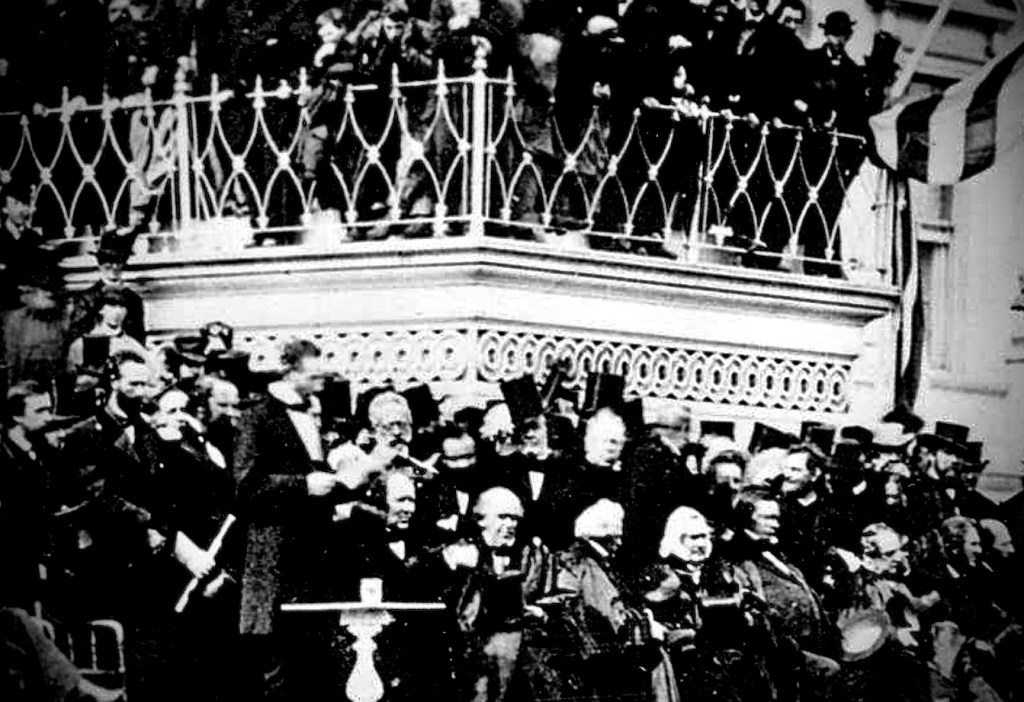
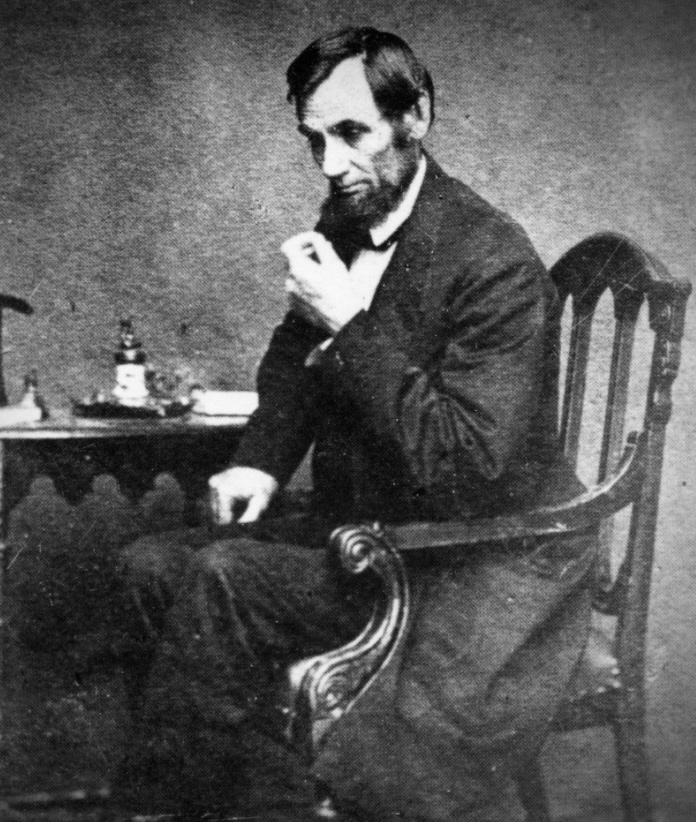
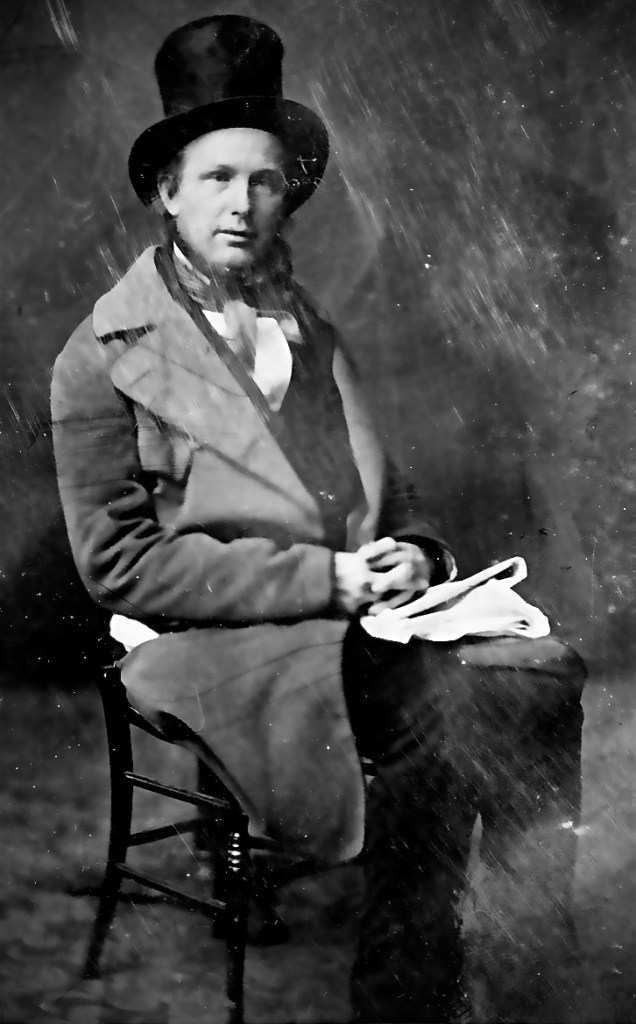
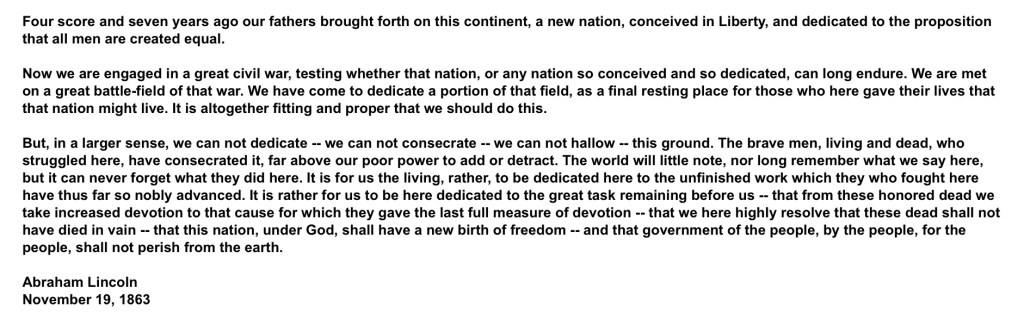
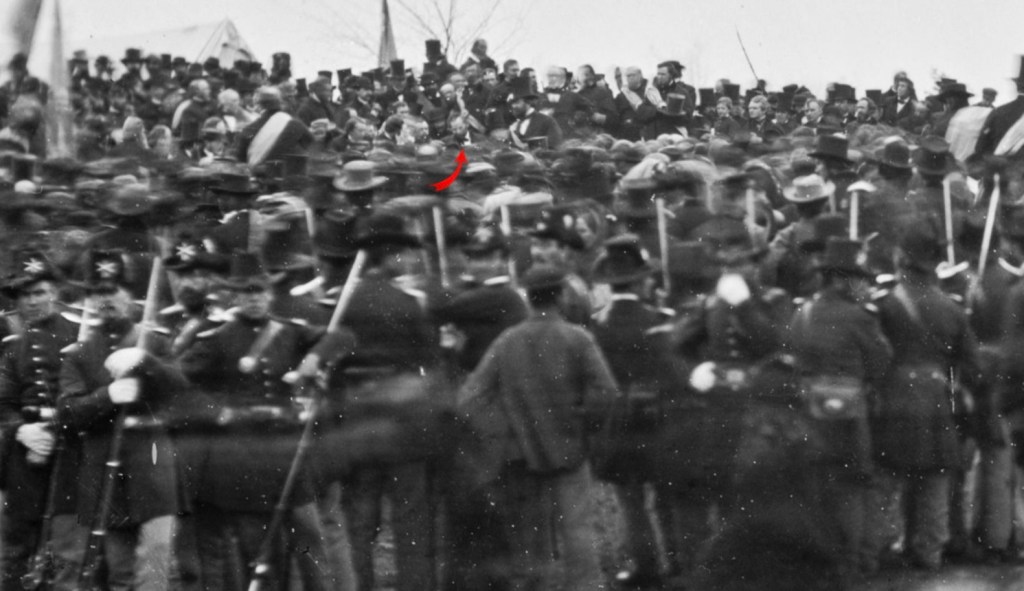
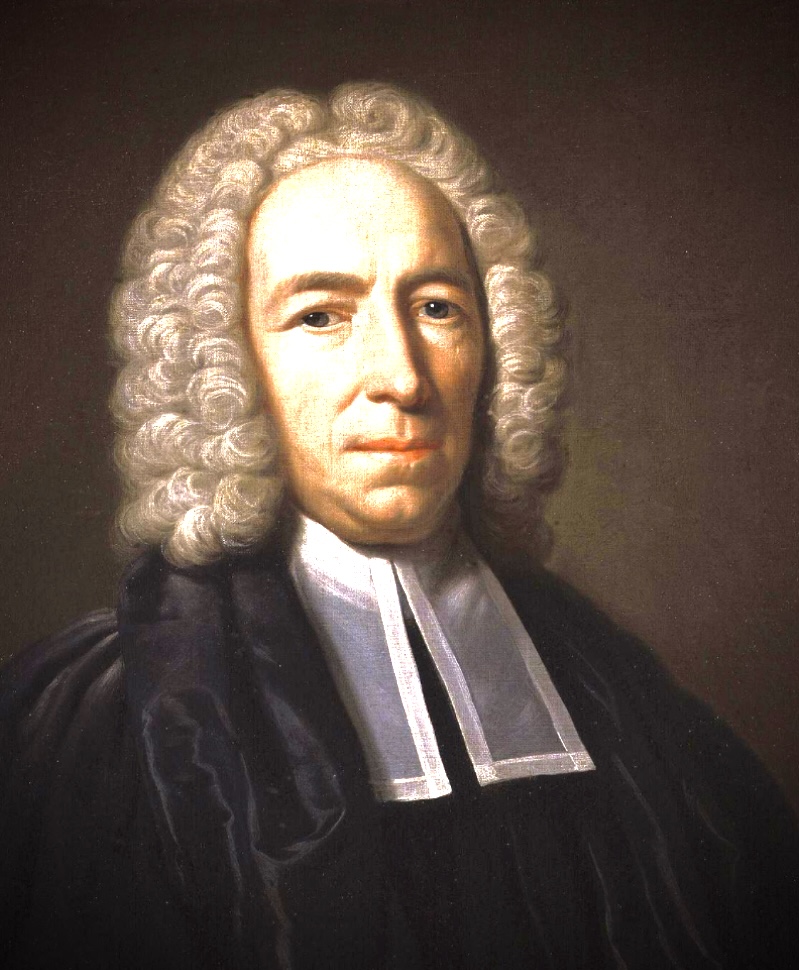
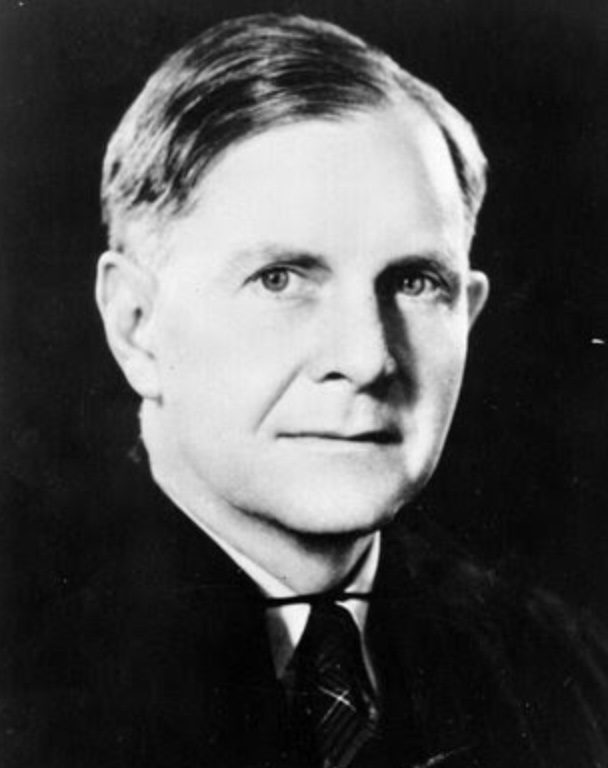
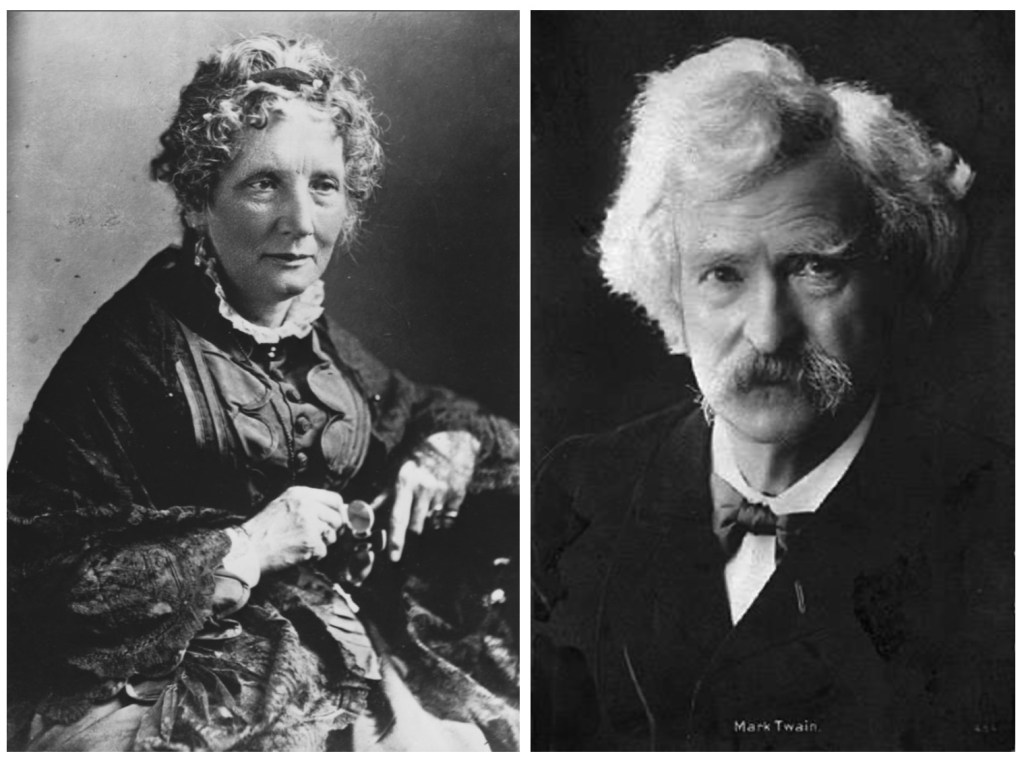
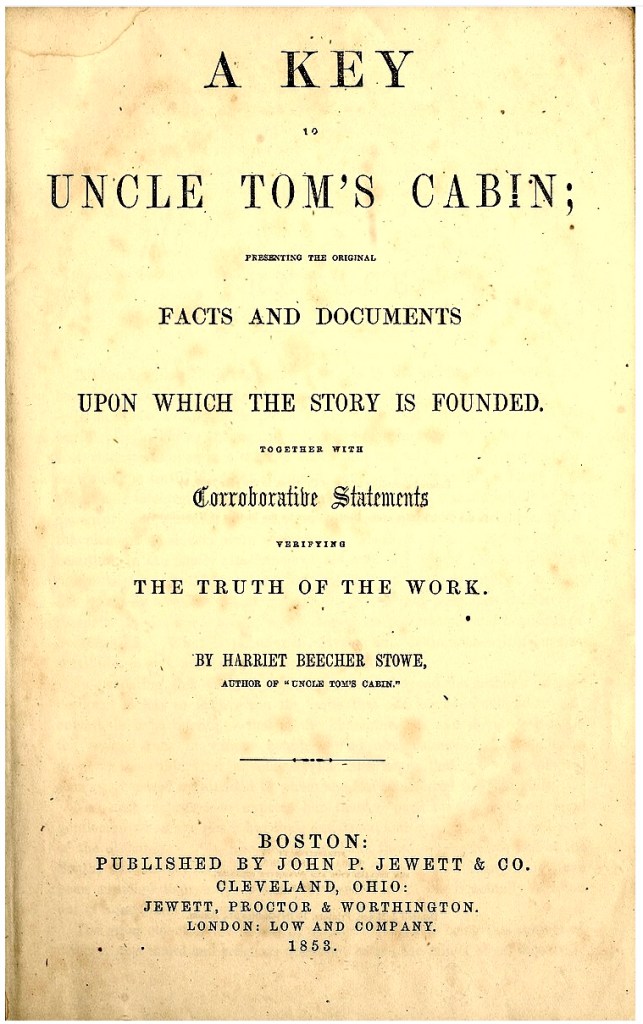
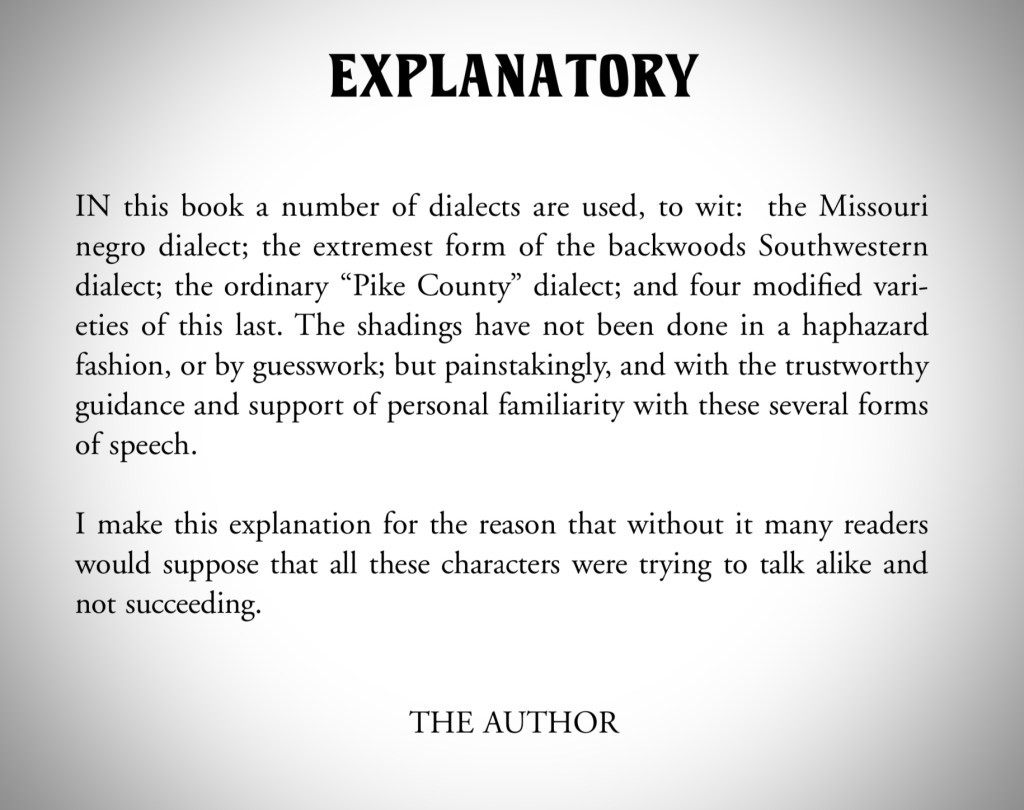
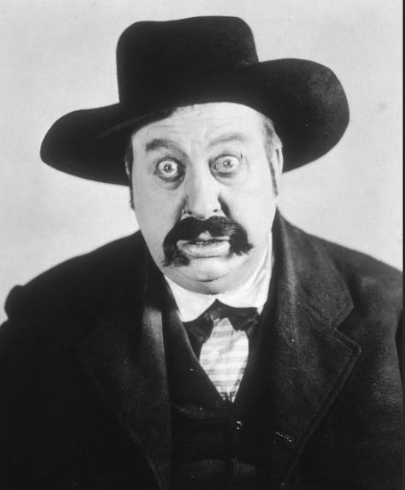
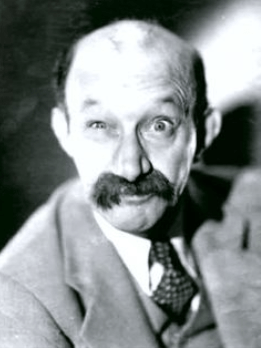
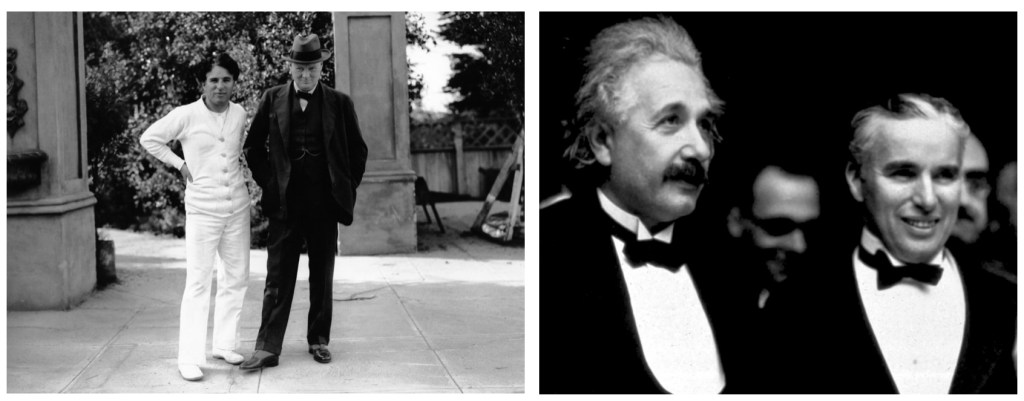
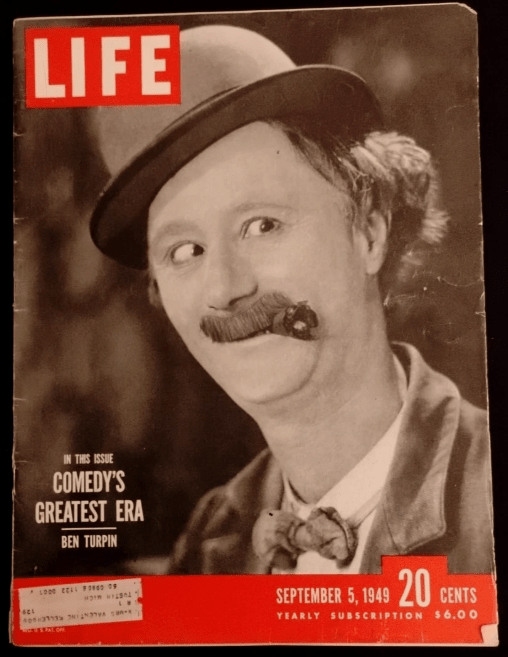
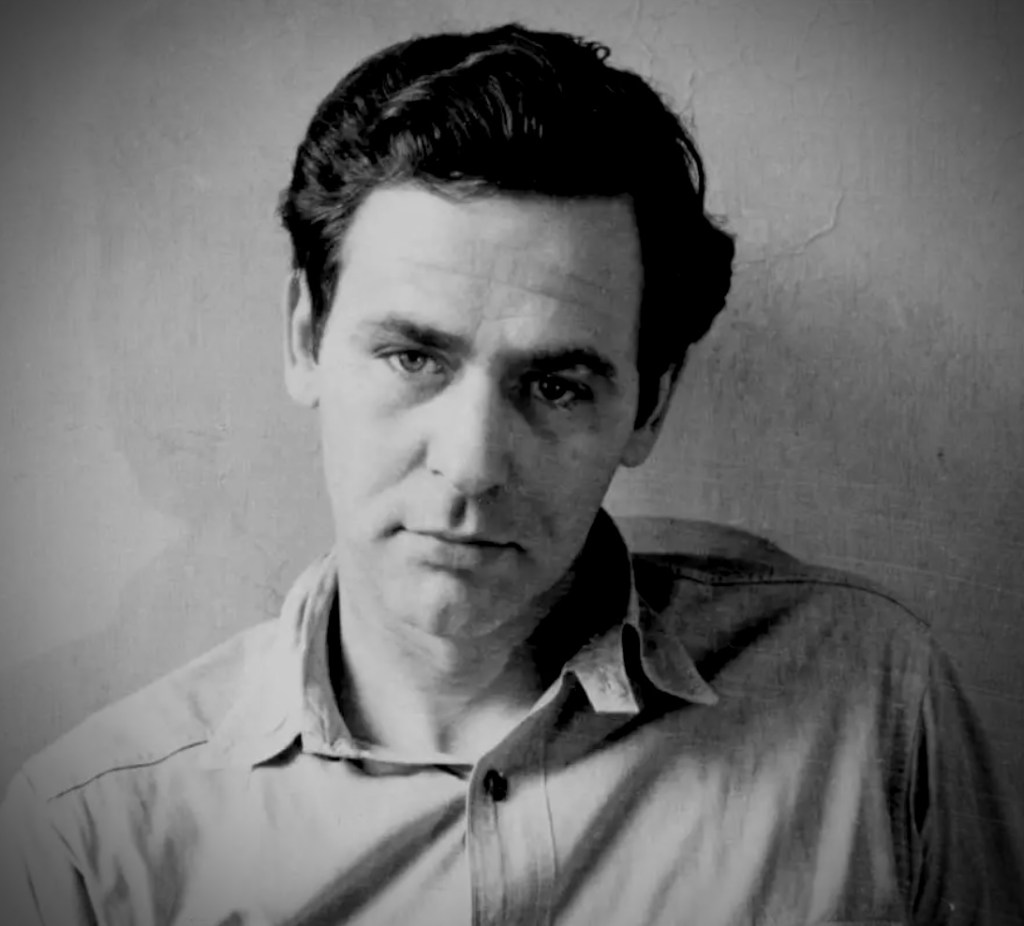

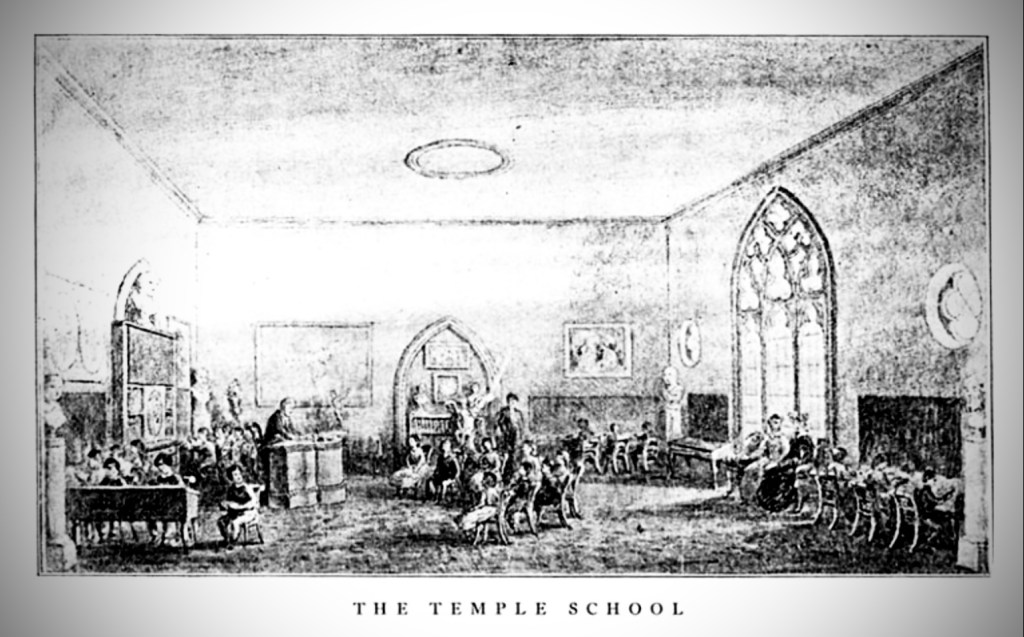
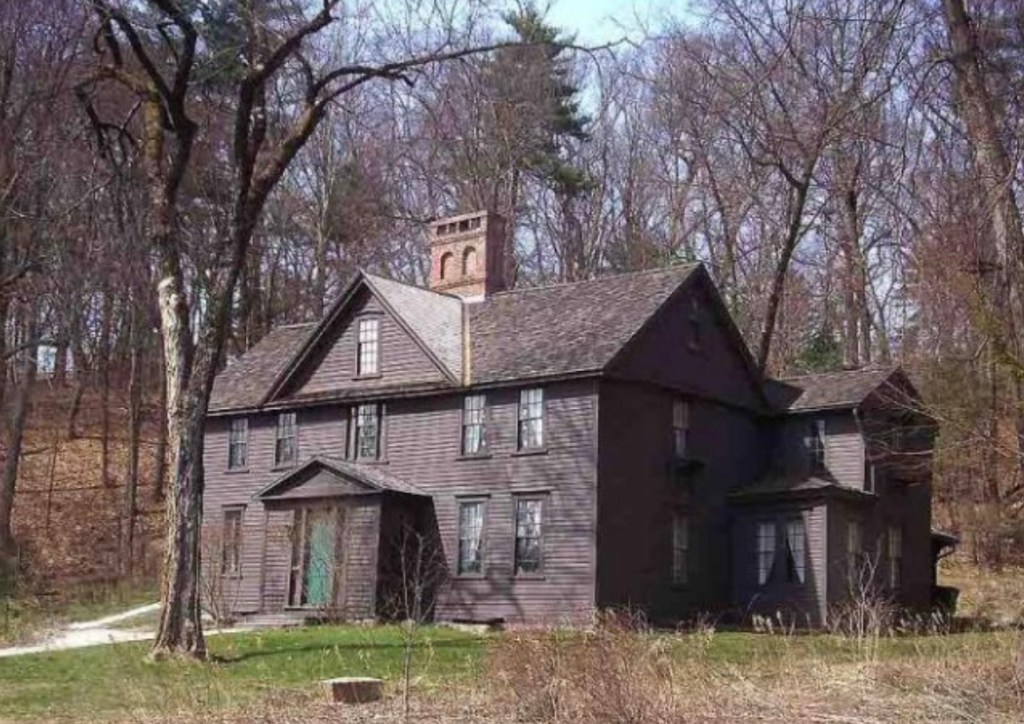
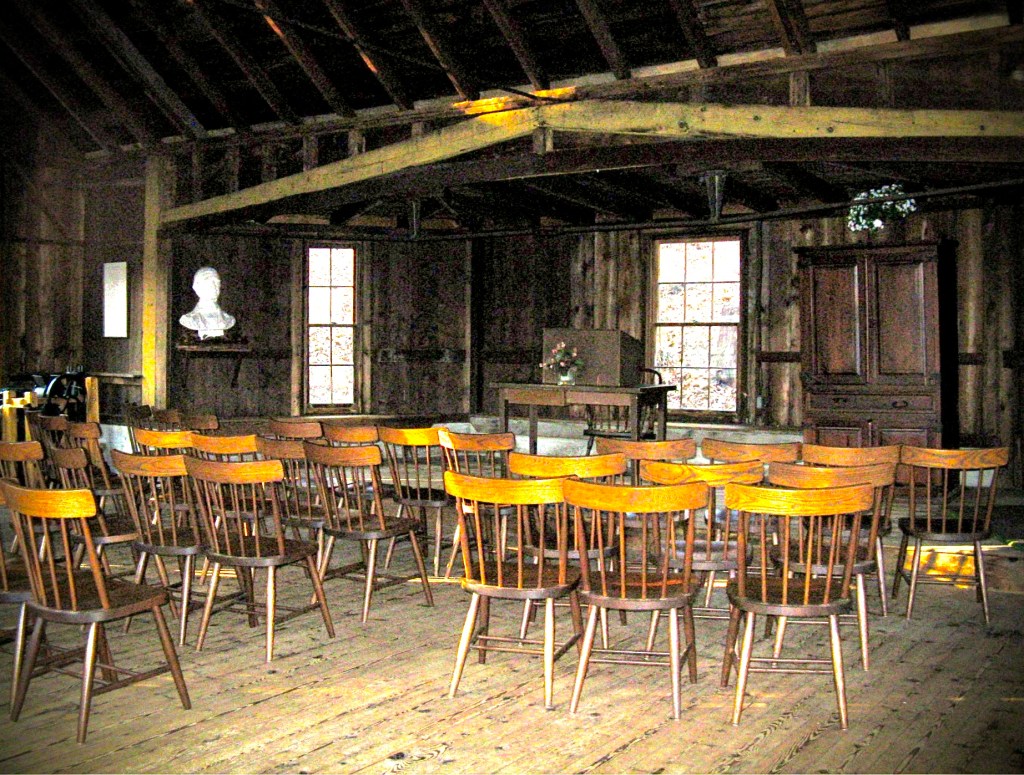
 Books Matter