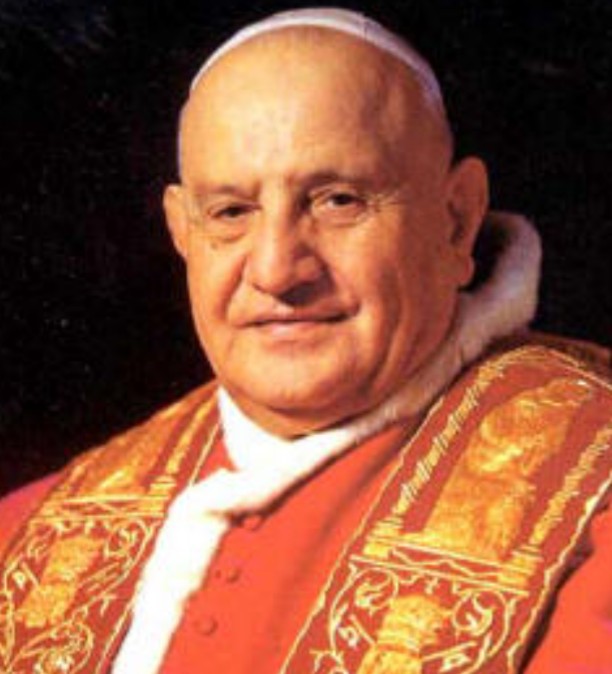
The news that Pope Leo has lung cancer awakened my dim memory of the news that Pope John XXIII (Angelo Giuseppi Roncalli) had something wrong with his stomach — in his case, untreatable cancer. The pontificate of John XXIII lasted only five years (1958 — 1963).
Roncalli was a man of faith. This phrase has been overused to the point where it signifies nohing to most people’s minds. In Roncalli’s case, however, it points to a specific quality of mind. There was very little that he was afraid of.
As a papal nuncio in Bulgaria, he intervened to prevent hundreds of Jews from being shipped to concentration camps. Messing with the intentions of der Fuehrer was dangerous no matter who you were.
Only a pope who was unafraid of failure could have convened an ecumenical council.
His fearlessness could manifest itself as unflappability. Once when he was attending a state dinner in Paris as papal nuncio, a certain member of the French government — call him Monsieur X – tried to embarass him by passing around the table a pornographic postcard showing a naked woman. When the postcard reached Roncalli, he glanced at it and said “Madame X, I presume?”
“Do they realize what they have done?” said the owner of the guest house where Hannah Arendt was staying at the time of the conclave that elected Johna XXIII. “They have made a Christian Pope! Do they not know who he is?” Arendt would later devote a chapter to John XXIII in a book titled “Men in Dark Times”.
One of his first acts as pope was to raise the pay of the underpàid custodial staff of the Vatican. “Justice first,” he said to cardinals who protested that the money was needed for the church’s missions.
One day when he was in the study of his Vatican apartment, the voices of working men on the floor below came up to him through the heating shaft, which they were repairing. The men had encounteted a problem and were taking the Lord’s name in vain. The Pope went downstairs to find out what the problem was.
“I understand that you men have a problem,” he told the startled working men.
“Yes, your Holiness,” one of the wotking men said. “This new section of the shaft doesn’t fit the old section.”
“If you use the gifts that God has given you, I am sure you will make it fit. But until then, could you not take the name of our Lord in vain? Just say ‘Oh shit!’ like the rest of us here.'””
He was appalled by the possibility of nuclear war. His encyclical “Pacem in Terris” was a condemnation of the rivalries that brought the world close to it.
The generation of Catholics who remember Angelo Giuseppi Roncalli’s brief pontificate (1958 – 1963) is rapidly dying off, and the young priests emerging from the seminaries today seem to draw more inspiratipn from the orthodoxies of John Paul II than from the example of fearlessness set by John XXIII.
He had as little fear of death as of anything else. As he lay dying, he said “Every day is a good day to be born, every day is a good day to die.”
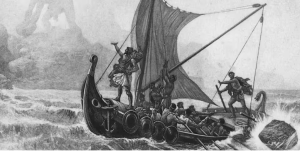
Christopher Nolan’s film adaptation of Homer’s Odyssey is visually stunning; travel agents must be booking record numbers of trips to Greece since the movie was released.
It is also very violent and very loud. The director assumes that his audience is inured to such effects. If you aren’t, you might want to skip this one.
With some trimming and re-arrangement of events, this movie is faithful to the story line of the original. But given the rapid pace of the movie’s action and the frequency with which its background music makes the dialog hard to understand, viewers who have not already read Homer’s Odyssey may find the action hard to follow. Read the Odyssey before you see the movie.
So what has Christopher Nolan made out of this masterpiece of eighth century B.C. Greek literature? He has given us a Christianized Odyssey. Which is to say, something very different in essence from Homer’s hard-edged epic.
Between the modern reader and the classic works of Greek and Roman literature, there stands an historical event that adds immensely to the difficulty, for that modern reader, of justly appraising and enjoying that literature. The historical event is the rise of Christianity.
“Do unto others as you would have them do unto you.” “Love your enemies.” “Blessed are the meek, for they shall inherit the Earth.” All such phrases from the New Testament have become part of our thinking — so much so that we can hardly be aware of them. They would have sounded bizarre to an Homeric warrior. Nolan’s Odysseus watches Troy burn and collapse into ash and sorrows at the destruction and suffering that he sees — and is appalled to see what his cleverness has brought about. This is Nolan’s half Christianized Odysseus — a figure who had more in common with Aeneas, the half Christianized hero of Vergil’s great Latin epic poem than with Homer’s Odysseus.
Viewers of Nolan-s movie who go on to read Homer’s Odyssey may be surprised and even repelled by the Odysseus they find there — a tougher character, a remorseless sacker of cities, whose main attribute is not empathy but cleverness. And reading Homer’s Odyssey, they will get something that they won’t get from Nolan’s movie: a chance to expand their sensibilities by looking at the world in a different way from our own.
The facts of life are, all in all, sufficiently bleak, but that is not a sufficent reason for anyone to go moping through life instead of enjoying it. Measures can be taken against the moping mood. Here are some measures that work for me. Feel free to suggest your own
Go to a large body of water (salt is best) , get comfortable on a blanket or in a beach chair, look at, listen to, and smell your surroundings, but do not think about them or about anything else. You will very likely fall asleep, so first ascertain whether your body of water has tides; if it does, make sure you are above the high water mark.
Put on a clean shirt. Thanks to John Keats for this tip.
Get up and walk to the other side of the room. If necessary, walk back to where you were.
Do or say something that might possibly make someone else less lonely, miserable, or hopeless.
Get the 1958 recording of Beethoven’s Ninth Symphony. by the Berlin Philharmonic Orchestra, conducted by Ferencs Fricsay. Start playing it with the volume turned up. Way up. Put an ear against one of the speakers. Sing “Ode to Joy” karaoke.
Work in your garden. Thanks to Voltaire for this tip.
Read P.G. Wodehouse. Gulp down hearty helpings.
Forgive others.
Forgive yourself.
Repeat the above measures as often as needed, as many as are needed, in any sequence.
The obituary writers are struggling to say who Wendell Berry was, and what we have lost by his death.
One wrote that he was a “voice of nostalgia for an agrarian past”. but he was not a dealer in nostalgia. The past per se did not interest him. It was the future that concerned him.
Others wrote that he was an environmentalist, an activist, a protestor, a prophet. All that is closer.
I think.of him as an artist, and his art was a celebration of creation — which God, having called into being, found to be good. His essentially gentle soul was angered by the exploitation and abuse of that goodness that he saw going on all around him. He spoke out with a passion that some mistook for hatred, but it was only outraged love, rising to the defense of creation. He asked for stability not conquest.
We will honor him best by leading simpler, more respectful lives, in constant awareness and gratitude..
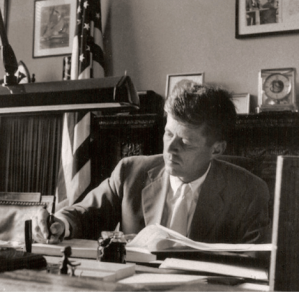
John F. Kennedy’s book “Profiles in Courage” tells the stories of eight United States Senators who risked their political careers for the good of the nation. The book begins and ends with general reflections on the meaning and importance of courage for our democracy.
I first read the book when I was in junior high school. I liked it very much, but I never reread it, fearing that it might not live up to my first enchanted impressions.
And since I first read the book, I have probably read as many words about the book as the book contains. How much of the book did Kennedy himself write? How much was written by his able word-smith Ted Sorensen? These questions have their importance, but they are not the questions I am interested in now. I am taking the book as a given and now ask only whether it is, in fact, a good book.
And my growing awareness of the silent celerity of time, to borrow a phrase from Dr. Johnson, tells me not to postpone things. So I reread it, and I found it to be well worth reading, and unlike any other book — unless you harken back to Plutarch, who wrote the lives of ancient heroes with the explicit purpose of edifying modern readers.
The writing, first of all, is distinguished — as good at least as the writing in other books that won the Pulitzer Prize in history — as good, for example, as the writing in Carl Van Doren’s classic biography of Benjamin Franklin, which won the Pulitzer Prize for history in 1938.
But the book’s main value lies in its being an antidote to the facile cynicism that condemns all political life in this country as hopelessly corrupt, and all politicians as self-serving liars. Of course, there are plenty of reasons to be disillusioned with the current state of democracy in America. For example, a series of Supreme Court decisions has held that bribing members of Congress is a Constitutionally protected form of free speech. The situation is so depressing that many people refuse to vote for candidates of either party, and are waiting for a demagogue to arrive on the scene and begin tearing down the whole rotten structure of government, replacing it with something superior to what was there before–namely himself. This may, indeed, have happened already.
But is it really the case that there are no men — or women — of courage in public life today? In the introduction to his book, Kennedy wrote:
“1 am convinced that the complication of public business and the competition for the public’s attention have obscured innumerable acts of political courage—large and small—performed almost daily in the Senate Chamber. I am convinced that the decline—if there has been a decline—has been less in the Senate than in the public’s appreciation of the art of politics, of the nature and necessity for compromise and balance, and of the nature of the Senate as a legislative chamber.”
Kennedy’s purpose in writing the book, then, was to demonstrate that our country, even during its most difficult and demoralized periods, has managed to produce leaders with courage and integrity — leaders whose example we can follow out of our ethical morass.
**********
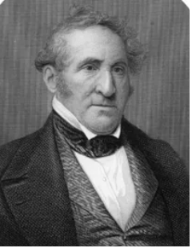
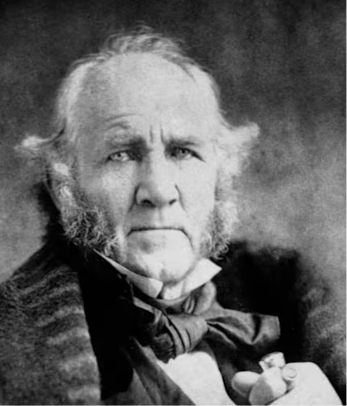
The first four of Kennedy’s heroes — John Quincy Adams, Daniel Webster, Thomas Hart Benton, and Sam Houston were born in the eighteenth century and grew up in the afterglow of the revolution. Like so many other men and women of their generation, they were fiercely nationalistic and unshakeably devoted the union.
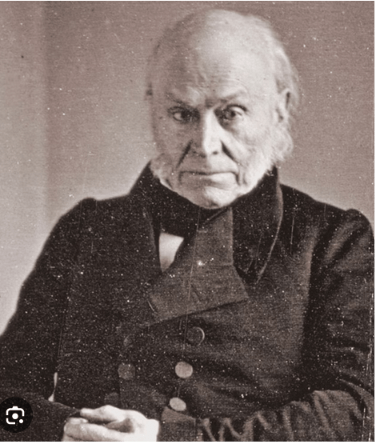
Massachusetts Senator John Quincy Adams (1767 — 1848) broke with the Federalist Party to support President Jefferson’s Embargo Act of 1807. Jefferson had imposed the embargo in retaliation against British and French interference with American shipping. It was immediately a disaster for the New England economy. Adams bore the almost universal condemnation of his constituents with serenity; and unlike most of the other subjects of this book, he managed to recover politically, eventually serving as the sixth president of the United States, and as a vociferous opponent of slavery in the House of Representatives for seven terms.
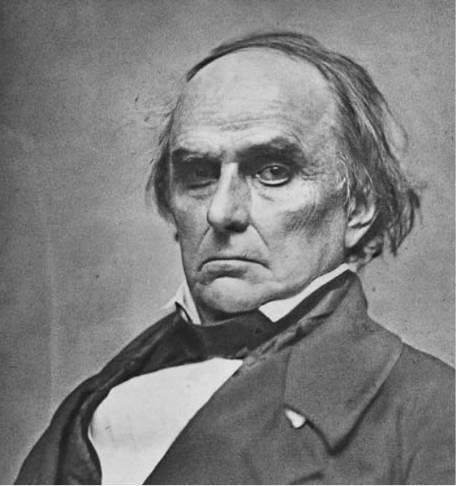
Massachusetts Senator Daniel Webster (1782 1852) was at the height of his reputation as a statesman and orator when he cast his vote in support of Henry Clay’s “Compromise of 1850”, a collection of bills that included the “Fugitive Slave Act”. This latter act made it a criminal offense to help a runaway slave gain his freedom. Many of Webster’s constituents were proudly doing just that. He was vilified by as brilliant a group of constituents as could be found anywhere on the face of the earth. He resigned his senate seat and died two years later.
Thomas Hart Benton (1782 — 1858) had served in the United States Senate for 30 years when Henry Clay introduced the Compromise of 1850. Benton, a slave owner himself, had become opposed to the extension of slavery and voted against the compromise. Missouri was a slave state, however, and the compromise was popular. Benton lost his senate seat. He was subsequently elected to the House of Representatives for one term, but lost that seat because of his opposition to Kansas-Nebraska Act. His political career was now over. Historians believe that Benton’s opposition to the extension of slavery and his devotion to the Union brought it about that Missouri did not join the confederacy.
Texas senator Sam Houston (1793 — 1863) was probably the most ambitious of Kennedy’s eight heroes. A former president of one republic (Texas), he now hoped to become president of a much greater one (the United States of America). But he lost his Senate seat owing to his opposition to the Kansas-Nebraska bill, which he opposed because it provided a way for slavery to expand. Elected Governor of Texas in 1859, he was forced to resign when the Texas legislature voted to secede from the union. He death in 1863 occurred when the union he had fought so hard to preserve seemed least likely to survive.
**********
Two of Kennedy’s heroes took their stands on principle in the bitter aftermath of the Civil War:
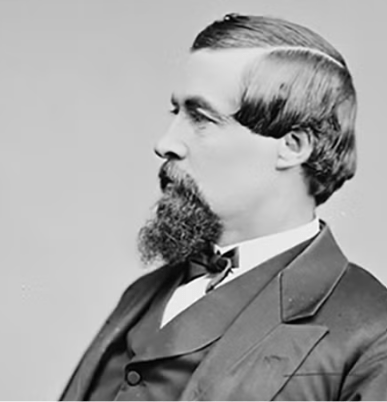
In 1867, Kansas Senator Edmund G. Ross cast the deciding vote to acquit President Andrew Johnson of all charges of impeachment, allowing him to remain in office. Ross did not like or respect Johnson, or endorse his lenient plans for reconstruction, but he did not believe that a president’s removal from office should turn on questions of policy. Ross’s vote may have prevented the presidency from being degraded into an agency of congress rather than remaining what the constitution intended it to be, one of the three equal branches of government.
Nebraska Senator George W. Norris (1861 — 1944) was a pacifist and a political independent at heart. He filibustered against President Wilson’s “Armed Ships” bill, hoping to keep the United States out of the “Great War” (World War 1); he led the successful revolt against the autocratic House speaker Joe Cannon’s control of the House Rules Committee; and he broke with his party (Republican) to support the Tennessee Valley Authority.
**********
Kennedy included two Senators, both men of demonstrated courage, whom I might have excluded from the book, for they were lacking in other qualities that might have kept their courage all right.
Mississippi Senator Lucius Quintus Cincinnatus Lamar (1825 — 1893) was a virulent white supremacist and an an enthusiastic supporter of the Ku Klux Klan. Kennedy included Lamar in his book because of the gracious eulogy of Senator Charles Sumner that Lamar delivered before an astounded Congress. Before the war, Lamar had been what was known as a “fire eater” — a rabid proponent of secession. That he should speak kind words of Sumner, who had been in effect a northern fire-eater, was a sign from the heart of the south that it was ready for reconciliation. He promoted reconciliation, but on terms that left blacks hardly better off than they had been as slaves.
Nor would I have included Senator Robert A. Taft (1889 — 1953), a leading candidate for the Republican nomination for president. Taft ruined his chances for the nomination — which truth be told were probably never great — by criticizing the Nuremberg Trials for charging leading Nazis with crimes ex post facto — something that American citizens are protected from by the United States Constitution. The Nazi defendants were, it is true, being prosecuted for having done things that were not forbidden by law at the time, but this was only because their crimes were nearly unimaginable. Taft robbed the Nuremberg Trials of some of their aura of legitimacy, something they needed if the Nazi movement were finally to be laid to rest.
.
**********
Who would be an ideal reader of Profiles in Courage? Anyone who is interested in American history and who relishes good prose will certainly enjoy the book. But its ideal reader, I think, must be a young person, still in high school, who picks the book up out of boredom or curiosity and finds himself or herself enthralled by these stories out of our country’s past — a young person now destined someday to be a courageous senator, or maybe an historian, or maybe just a lifelong dedicated reader of our country’s history.
Director Christopher Nolan has managed to make a real living movie out of the protean, magical, subtle, complex thing known as Homer’s Odyssey. That’s what everyone is saying. I haven’t seen it, but I hope to soon.
In the meanwhile, I have some advice to offer to people who have seen it or intend to. I am offering advice, not only because I am an old man and offering advice is what old me do. I am also sort of qualified to be offering advice about this matter. In college, I majored in classics in order to learn to read Homer in the original Greek. I did not become a classical scholar — far from it — but I gained some familiarity with Homer’s great poems as they were first written.
Here’s my advice:
If you plan to see the movie but haven’t read the Odyssey, read the Odyssey first.
If you have seen the movie but haven’t read the Odyssey, read the Odyssey.
A good translation reads easily and smoothly. The syntax is simple and uninvolved.
Good prose translations: George Herbert Palmer’s (Robert Frost’s favorite translation); Samuel Butler’s. Both of these are available in inexpensive paperback editions. Walter Schwering’s prose translation is both accurate and readable, and it is printed with his interesting essay on the problems of translating the Odyssey and of translation in general.
Good verse translations: William Cullen Bryant’s, Alexander Pope’s, Robert Fagles’
Translations to avoid:
Chapman’s. A vigorous Elizabethan version whose eccentricities seem tiresome after a while.
Richmond Lattimore’s. He is as faithful to the original as it is possible to be, given the immense difference between English and Homeric Greek in almost any respect. That makes his translation useful to the student who is parsing his way through the original Greek. It also conveys the impression that Homer’s language is awkward, even tortured — which is as far from being the case as it could be.
Emily Wilson”s. I’ve read only excepts from her translation, but she seems to be trying too hard to shield her readers from anything that is unfamiliar, exotic, taxing. In so doing, leaves the Odyssey rather flavorless and bland.
Note: It has been said, and I think truly, that every human being is a philosopher. That is, we all fashion explanations and reasons to smooth our ways through life. Most of these explanations and reasons are pretty shoddy patched up jobs — but people know what they need to believe to get from sunrise to sunrise. Here is my philosophy, which I don’t offer as being better than anyone else’s.
” Le silence éternel de ces espaces infinis m’effraie”, wrote Blaise Pascal, thereby qualifying as a modern. “The eternal silence of these infinite spaces terrifies me.”
And our world, with its Beethoven and Shakespeare and Buddy Holly and the Keystone Cops and all its incredible outpouring of the incidental — is all staggeringly improbable. The difference between this degree of improbability and impossibility is small enough to be regarded as non-existent.
We and our world are impossible. And yet we exist — and we exist alone because the almost infinite improbability of our existing effectly rules out other such beings as us.
Immensely powerful telescopes sweep the skies listening for patterns in the buzz of electromagnetic radiation that would appear to have been imposed on the radiation by intelligent beings in order to carry messages from one place to another. The telescopes have detected nothing of the sort — only random noise.
This does not mean that there is no intelligent life out there — only that there is no sign of intelligent life having imposed patterns on electromagnetic radiation for some purpose or other.
We ask ourselves, if intelligent life happened here, why couldn’t it have happened elsewhere? The answer must be that the chances pf a world coming into being in which one intelligent being composes The Marriage of Figaro to create something called pleasure in other intelligent beings, is so crushingly freakishly small that we are justified in saying that there is no chance at all.
We are alone. We must accordlingly regard ourselves with awe — if indeed our freakish being can ever know what “must” means. Whatever it means, we are the ones who created the meaning.
Le silemce eternel de ces espaces infinie . . .
So what do we make of our aloneness? I’s better not to think about it. Another Frenchman said “Il faut cultiver son jardin.” One must tend to one’s garden. Those two saying are the bookends that embrace all our wisdom.
Note: This post is intentionally left in a jumbled first draft state because it is best to acknowledge one’s disarray when confronting these questions.
Baby boomers are starting to die. They are dying because they are reaching the natural limits in time set for their species by biology. But as they draw near the terminus toward which all their lines of endeavor lead, a terminus, moreover, which was always in plain view, they panic. Why hasn’t someone done something about this before now? How could this have been allowed to happen?
Of course, they know all about death. They know all about everthing. They read “The Death of Ivan Ilch” by Tolstoy and “A Dreary Story” by Checkhov.
“Yes, death was a bitter pill to swallow before we, well, fixed things. But it’s ridiculous that we should have to die like the ignorant masses.
There are several good reasons to read old books. But “books get better with age” is not one of them. They don’t. Books are not wine. A couple of decades in the coolness and darkness of a wine cellar can transform a good vintage into something extraordinary. A crappy best seller is going to be crappy twenty years from now — except that it will no longer sell.
Old books — the best of them, at any rate — can be worth reading because of the truth of something that Bertrand Ruseell once said. He said that modern man is parochial in time.
Russell meant, I think, that the present moment is always a hick town with one traffic light, where the same gossip goes around and around and a certain way of looking at life was long ago agreed upon and that is that.
Now I would extend what Russell said to say that every moment in history is a hick town. Periclean Athens was one. So was Elizabethan England. So was the Russia of Dostoyevski. But they were different from the hick town that we live in.
Their being different means, at the very least, that different gossip is circulating among the resident of those towns.
But at certain moments in the past, the gossip that was circulating was of a very superior kind; this was certainly the case in the historic moments of Pericles, Shakespeare, and Dostoyevski.
What does it do for a person to hear gossip that is different from or superior to the gossip that he has been hearing in his native moment? I’m talking about gossip such as Pericles’ Funeral Oration, or “Hamlet” or “The Brothers Karamazov”.
I would like to be able to write that hearing different and superior gossip will make you a better or happier person. I can’t say that reading “Hamlet” has made me happier or better. But it has given me many hours of absorbing pleasure — unlike any other that I have known.
And it just might be that the gossip circulating in a hick town other than your own embodies wisdom that you never would have heard had you stayed home, waiting fot the traffic light to turn from red to green.