Long books are more satisfying to read than short ones, in my experience, but they present challenges. Chiefly, how to deal with a wandering eye, an eye that has been happy with the first 800 pages of, say, Proust but suddenly draws me into bookstores where I know I will find shorter, less demanding, faster paced books. I buy a couple and then confront my guilt: I have betrayed my first love.
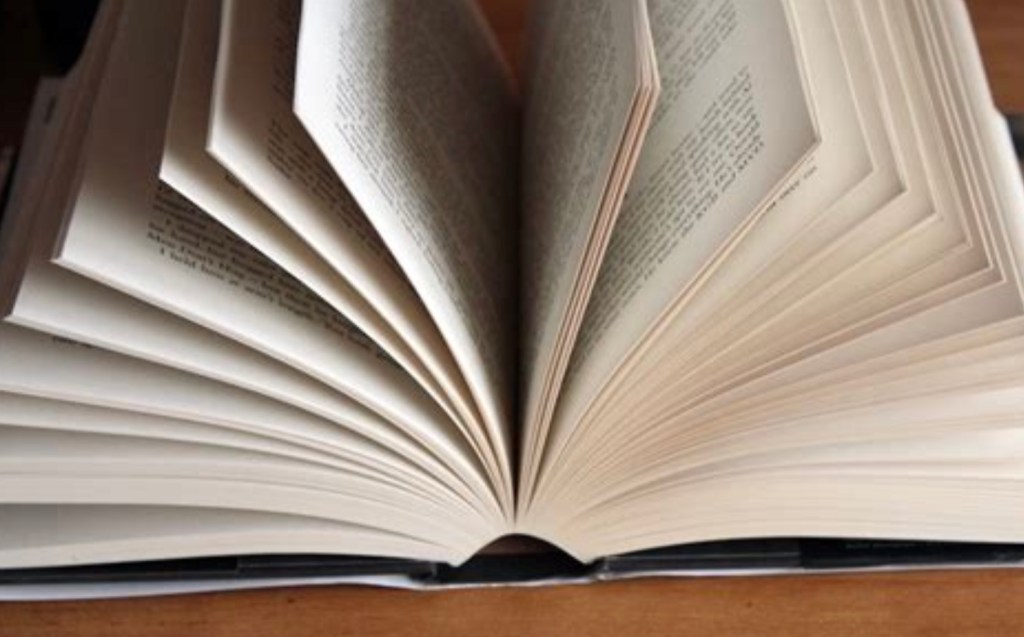
Upon reflection, though, I think this kind of infidelity is excusable — even necessary in some cases. Brief and casual adultery can “spice up a marriage” some say; I don’t know, never having tried it. But I do know that brief and casual book adultery can help me get through long and demanding books.
I take a break from Proust to read a mystery by Rex Stout. I love these mysteries; they demand little, which is what I need now. And after I’ve been on one or two adventures with Nero Wolfe and Archie Goodwin, I glance at my copy of Proust and I’m eager to take up with Baron Charlus and Vinteuil and Madame Verdurin.
The Decline and Fall of the Roman Empire is a different matter. My copy is three separate Modern Library Giants. The first is worn to pieces; I’ve read as much of Gibbon’s mighty history as this volume contains three times. With equal enjoyment each time, but each time failing to pick up volume two.
Plutarch’s Lives, Montaigne’s Essays? I pick them up and put them down. But I don’t suppose I would have gotten to the bottom of these books if I had managed to read them straight through. They are bottomless reservoirs of humanity.
Don Quixote? I set it aside when I was half way through — not out of boredom, but out of a need to see what other circuses were in town. I’ve now seen these other circuses. I can’t wait to get back to the greatest circus of them all, the one staged by Don Quixote and Sancho.
And then there is the sui generis page-turning gargantua, The Count of Monte Christo. This book is a masterpiece of plotting; in fact, it author, Dumas paid a plot writer to create the outline of the book; Dumas provided color and unforgettable characters. You will be sorry when you come to the end of this continuously exciting (spoiler: and melancholy) book.
Happy reading!


Funny you mention The Count of Monte Cristo. I couldn’t find my edition and bought a Penguin edition with a cool cover. Long books require my undivided attention. I can’t be reading anything else at the same time. My greatest long book achievements: Ulysses (twice); Don Quixote (stick with it, you’ll be glad you did); and Anatoli Rybakov’s Arbat trilogy that gives describes the terror of Stalin’s madness better than any other book on the subject (unfortunately, Rybakov is not well known and deserves more attention). When I need a break, I read Georges Simenon’s mysteries, mostly set in Paris. Simenon has no equal in the genre.
My two cent’s worth.
LikeLike
Thanks for the informative comment. I’d never heard of the Arbat Trilogy. I’ll check out Simenon, too. You must be a reader.
LikeLike
Have you read the massive novels of Samuel Richardson? Pamela is one. I haven’t read it but I have been reading his letters which are amazing. Pamela is on my list.
LikeLike
My particular requirement for reading long books is lousy weather; fortunately, I live in an area of the country that provides a valuable assist in this regard.
LikeLike
Marcel Proust’s frere Robert said, “Mon dieu, Marc
, ce livre est longue as enfer. Il faut avoir la jambe casse pour avoir le loisir pour le lire tout entier.”
A qui Marc a repondu, “Alors, Bob, casse la jambe!”
LikeLike