“What is truth?” jested Pilate. We might ask, “Where do we have any chance at all of finding truth?”
This second question is prompted by the news that pro-Ukrainian forces recently hacked major Russian news programs making them broadcast a speech by Putin proclaiming martial law and all but conceding defeat in the war with Ukraine. The speech was a highly realistic “deep fake”, created through artificial intelligence.
It is natural to take pleasure in developments that cause trouble for Putin. But these rapid advances in deep fake technology are at the same time bad news for anyone who believes in the importance of truth, justice, and ordinary decency.
Democracy, which relies on the existence of a certifiable recognizable thing called truth, stands to suffer grievously from this development.
But so does the man or woman of integrity, who believes in the existence and importance of the thing called truth, and who wants their beliefs and actions to conform with truth. What is to protect such people from being violated in their hearts and minds by deep fakes?
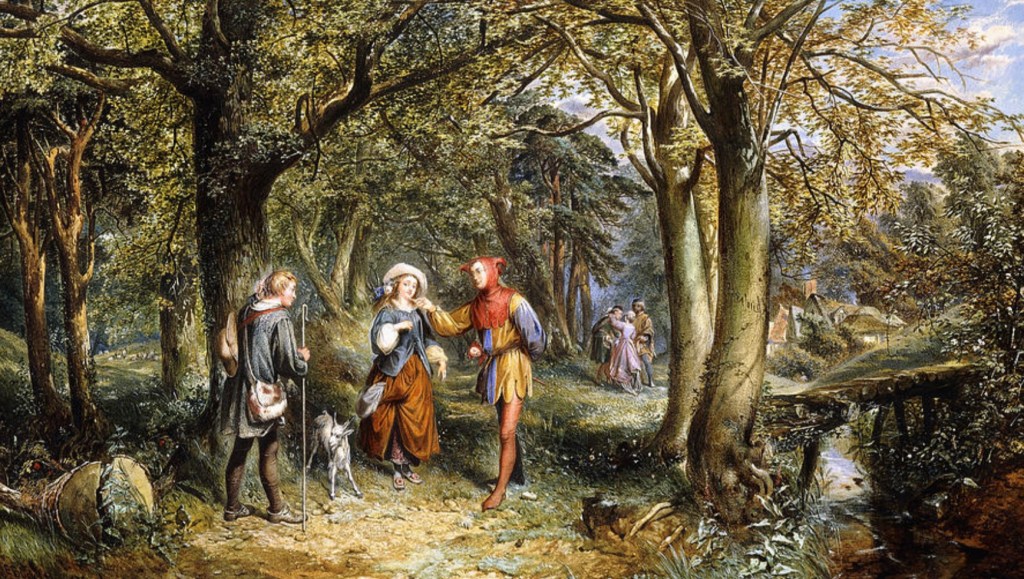
It may be that someday, truth will have to retreat to its own Forest of Arden, there to live lawlessly like Robin Hood — lawlessly, that is, except for its observance of its own laws.
This Forest of Arden will be books, especially older books, whose share in truth has been approved by generations of readers. We will cleanse our defiled minds by reading Tolstoy and Balzac and Goethe and Shakespeare. We will judge the events of our day according to the truths we have found in old books, which are filled with truths have have not stopped being true.
We will still be deceived and defiled — the children of darkness are wiser in their day than the children of light — but as long as we have our old books and read them, we will not have lost our hold on truth altogether.

 Books Matter
Well, this is prescient; the Atlantic magazine just published Adrienne Lafrance’s excellent essay on AI, “A Defense of Humanity”, in which she uses Ralph Waldo Emerson’s naturalistic insight in his age of technological upheaval as a point of perspective on our own. And, to your point, I agree that the contents of existing great books can provide a bulwark against machine mimicry, but what I worry about in this case is human-produced great literature eventually becoming <> because, well, why wouldn’t the profit motive, for example, figure into an attempted elimination of any competition to AI-generated “great literature”? To say nothing of what the autocrat would do with this power.
In the past few years, my attention to the arc of intellectual affairs has been focused largely on the attempts worldwide by humans to censor the words, images, and thought of other humans. Now, it seems, I was distracted; the great challenge of our age has come to be the current rise and impending hegemony of machine-generated words, images, and thought.
Are we going to display the will to keep the human mimic as a closely-controlled helper while we retain agency over the best of what we are and what we produce, or are we not? Given the evidence of mere algorithmic manipulation of our lives over the past couple of decades, it’s difficult to be optimistic about this.
LikeLike
Sorry, the special characters were meant to signify italics for the word “samizdat”. There’s currently no way that I can see to edit comment text after it’s been posted, so here’s my attempt to clarify.
LikeLike
That’s OK. You’ve made yourself clear.
LikeLike