The other day I came across a large-print copy of Kenneth Grahame’s ‘’The Wind in the Willows’’ in our garage, while looking for something else. This discovery is a blessing to me, for now I have something that I can read while waiting to have cataract surgery next week. (I can read it online, thanks to the larger point sizes, but I don’t like to read long stuff online.)
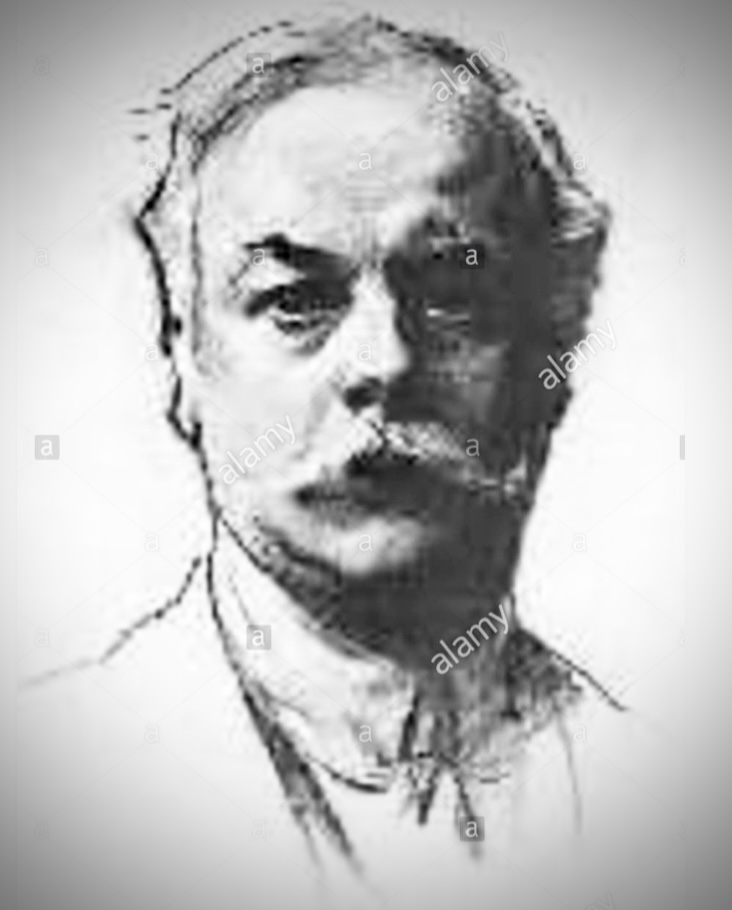
Kenneth Grahame (1859 — 1932). Official of the Bank of England; author of Pagan Papers (1894), The Golden Age (1895), Dream Days (1895), The Headswoman (1898), The Wind in the Willows (1908), and Bertie’s Escapade (1949).
I had read The Wind in the Willows before, but long enough ago that it is new to me now. As I started to read it, I thought about what Robert Frost said was his aim in creating a reading list for his English students at Pinkerton Academy in Derry New Hampshire: to teach them ‘’the satisfaction of superior speech.’’ ‘’Superior’’ is a word that today’s ‘’educators’’ avoid if they can, but there’s no getting around it — some writing is better than other writing. The Wind in the Willows is better than almost anything that is being written for young people today, I would guess.
Here is a paragraph from the beginning of the story; the innocent and sheltered Mole, taking a break from spring cleaning in his underground home, runs across a field and happens upon something he has never seen before — a river:
‘’All was a-shake and a-shiver- glints and gleams and sparkles, rustle and swirl, chatter and bubble. The Mole was bewitched, entranced, fascinated. By the side of the river he trotted as one trots, when very small, by the side of a man who holds one spell-bound by exciting stories; and when tired at last, he sat on the bank, while the river still chattered on to him, a babbling procession of the best stories in the world, sent from the heart of the earth to be told at last to the insatiable sea.’’
It is not long before the mole meets the benevolent poetry-loving Water Rat. They become friends. The Water Rat invites Mole join him for lunch and brings out his picnic basket:
‘’What’s inside it?’ asked the Mole, wriggling with curiosity.
‘There’s cold chicken inside it,’ replied the Rat briefly; ‘coldtonguecoldhamcoldbeefpickledgherkinssaladfrenchrolls resssandwichespottedmeatgingerbeerlemonadesodawater-
‘‘O stop, stop,’ cried the Mole in ecstacies: ‘This is too much!’’
I quote these two passages to show that the language of The Wind in the Willows is something more than the plain speech used by two neighbors who fall into conversation in the aisle of a supermarket, which is assumed by many writers and their readers today to be a style adequate for all purposes. This language adds wit and imagination and playfulness. It is language for the pleasure that can be taken in language.
Finding this copy of the Wind in the Willows made me rummage around — in the house this time — for the other books by Grahame that I have: The Pagan Papers, Dream Days, The Golden Age, The Headswoman, and Bertie’s Escapade. I won’t get around to reading these again until I can take the eye patches off.
Note: ‘’The Collected Works of Kenneth Grahame’’ has been published in the Scholars Select series of reprints, for a reasonable price. This includes all the titles I mentioned.
I also found my copy of the biography of Grahame by the British classical scholar Peter Green. Before I ran across this book, I disliked the idea of biographies of Grahame and analyses of his writings. Can’t you just leave our day dreams alone? But Peter Green is a graceful writer and a sensitive reader of Grahame. He has much of real interest to say to any lover of Grahame’s works.
Green writes that Grahame was divided between his desire to be ‘’the fellow that goes it alone’’ — to spend his days on the river bank, listening to the current and the wind in the willows — and to submit to the discipline of being a responsible member of society. Grahame was, in fact, for many years an important official of the Bank of England, and Green suggests that his work at the bank was something that he needed. It’s possible that Mr. Toad — wildly irresponsible, well heeled, and free to do anything he wants — was an expression of Grahame’s fear of unlimited freedom.
Mr Breithaupt
Thank you for your interest in visiting the Bank of England next year.
I am afraid that it is not possible to view the office where Kenneth Grahame worked during his time in the Bank as this was demolished when the Bank was rebuilt in between the two world wars by Herbert Baker.
You would, however, be very welcome to visit the Bank of England museum which has two small showcases dedicated to Kenneth Grahame. I have attached a link to our website which has more details. http://www.bankofengland.co.uk/education/Pages/museum/visiting/default.aspx
Kind regards
Shona
Education and Museum Group
Bank of England | Threadneedle Street | London
The Wind in the Willows contains a curious chapter titled ‘’The Piper at the Gates of Dawn’’, that seems like a digression — if so, it is a very beautiful one. Mr. Otter’s son Portly has gone missing. Portly has done this before — he likes to explore the river on his own — but he has never been gone this long, and Mr. Otter has not slept all the while. Mole and Water-Rat set off down the river to find him, paddling through the night, until just before dawn they come to and island in the river and are drawn to it by the sound of piping, of the good god Pan:
Perhaps he [the Mole] would never have dared to raise his eyes, but that, though the piping was now hushed, the call and the summons seemed still dominant and imperious. He might not refuse, were Death himself waiting to strike him instantly, once he had looked with mortal eye on things rightly kept hidden. Trembling he obeyed, and raised his humble head; and then, in that utter clearness of the imminent dawn, while Nature, flushed with fulness of incredible colour, seemed to hold her breath for the event, he looked in the very eyes of the Friend and Helper; saw the backward sweep of the curved horns, gleaming in the growing daylight; saw the stern, hooked nose between the kindly eyes that were looking down on them humourously, while the bearded mouth broke into a half-smile at the corners; saw the rippling muscles on the arm that lay across the broad chest, the long supple hand still holding the pan-pipes only just fallen away from the parted lips; saw the splendid curves of the shaggy limbs disposed in majestic ease on the sward; saw, last of all, nestling between his very hooves, sleeping soundly in entire peace and contentment, the little, round, podgy, childish form of the baby otter. All this he saw, for one moment breathless and intense, vivid on the morning sky; and still, as he looked, he lived; and still, as he lived, he wondered.
‘Rat!’ he found breath to whisper, shaking. ‘Are you afraid?’ ‘Afraid?’ murmured the Rat, his eyes shining with unutterable love. ‘Afraid! Of Him? O, never, never! And yet- and yet- O, Mole, I am afraid!’ Then the two animals, crouching to the earth, bowed their heads and did worship.’’
This is an extraordinary description of intense religious experience. The description is all the more extraordinary in coming from a writer who was an offshoot of a Scottish family and still very much a Scot. Calvinism was productive of dread, but far less of ecstatic outbursts of fear and love.
The description that Grahame gives here of the ‘’numinous’’ — of the overwhelming impression that the objective reality of the Holy makes on a mere mortal — is very much that which was given by the German scholar Rudolph Otto in his classic study The Idea of the Holy (Das Heilige. Über das Irrationale in der Idee des Göttlichen und sein Verhältnis zum Rationalen), published in 1917, nine years after The Wind in the Willows.
Professor Otto was a very great scholar and thinker; but poets and dreamers get there first.


Really enjoyed this post.
Good luck with your surgery.
LikeLike
Haven’t read The Wind in the Willows since our now-49-year-old son was in 5th grade. He was struggling a bit with it, so one of us would read the first part of a chapter to him and let him finish on his own. Also, if your experience is like ours, you will enjoy the results of cataract surgery. My vision was restored to 20/25 and Judy got rid of her contact lenses after 50 years wearing them.
LikeLike
Yep, I see much better now.
LikeLike