I have never in my life wanted to be an actor. For once, my ambition has assessed my gifts accurately. I don’t have an actor’s looks or presence. My voice is weak, and I have a hard time keeping it from trailing off in mid-sentence. I never dreamed about being part of Hollywood, and I’ve seldom given a thought to Broadway, except to relish someone’s wisecrack about it, that Broadway at night would be the most beautiful sight in the world, if only one couldn’t read.
And I can’t remember what made me decide to read Moss Hart’s memoir about Broadway, Act One, or understand why it is one of my favorite books, except perhaps for the witness that it gives to the truth of one of my favorite sentences in Thoreau’s great book Walden:
“If one advances confidently in the direction of his dreams, and endeavors to live the life which he has imagined, he will meet with a success unexpected in common hours.”
Moss Hart himself, reflecting on the ease with which one can lose one’s way and one’s self in the world of theatre, arrives at an Emersonian conclusion:
Every time I have departed from my own values and substituted those of others, I have suffered the consequences.
Moss Hart (1904 – 1961) was an American playwright, librettist, and stage director. Act One is his story of how he achieved his dream of being part of Broadway, in spite of discouragements and failures that would have made most of us settle for selling encyclopedias door-to-door. It is a story about heroic perseverance.
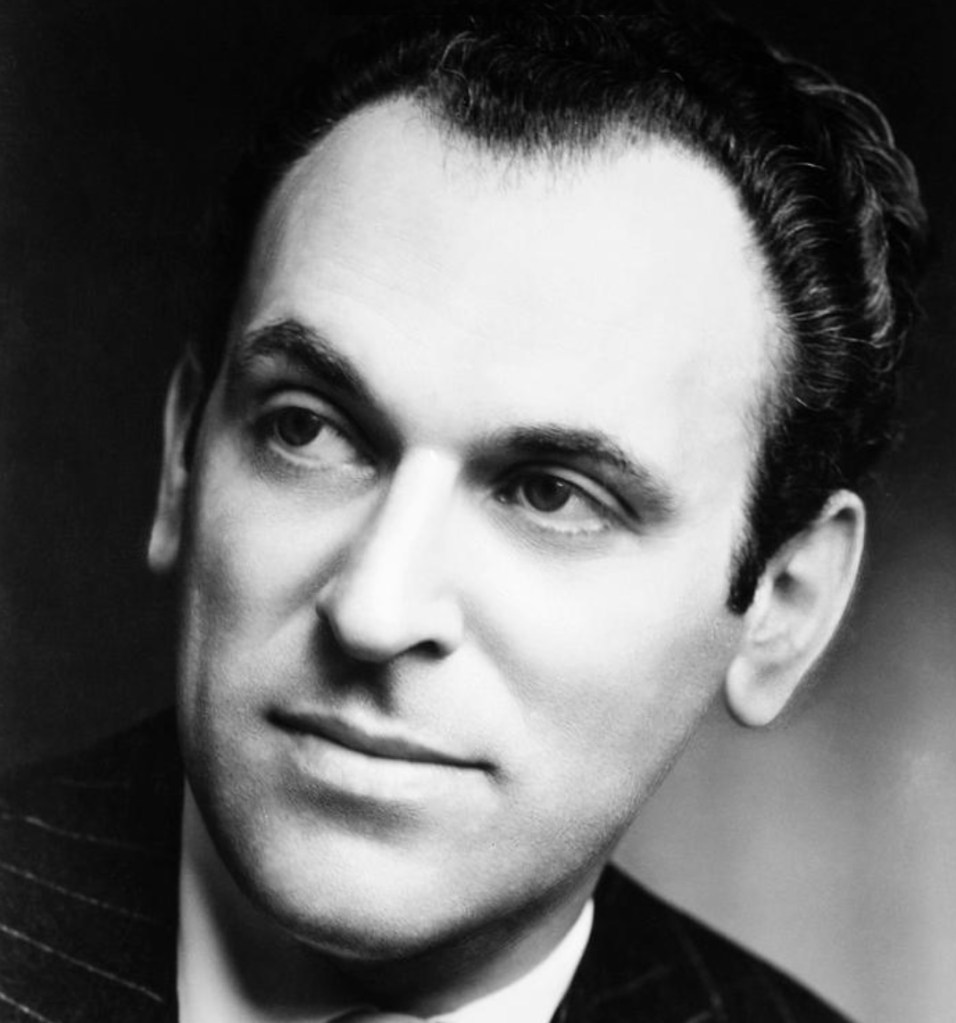
It was his dream of being part of Broadway that sustained him through the long years of an unhappy childhood and adolescence, as a member of a troubled and cash-strapped family. He was sustained, too, by his mother’s sister, Aunt Kate, who spent what little money she had on theatre tickets. Aunt Kate was eccentric — she dressed with a strange flamboyance that caused her to be ridiculed wherever she went — but her comments on plays, production, and acting were always penetrating and just.
His dream, of course, added to his misery while sustaining him. As he wrote:
“The non-athletic boy, the young.ster who liked to read or listen to music, who could not fight or was afraid to, or the boy who had some special interest that was strange or alien to the rest, like the theatre in my case, was banished from the companionship of the others by rules of the ‘tough’ world that was already beginning to prevail.”
He gained acceptance from the boys of his tough world — a neighborhood of mostly poor Jewish families in the Bronx — only by retelling for a group of them the story in Theodore Dreiser’s Sister Carrie, which he happened to be reading. They were spell bound by Hart’s retelling, and demanded that he keep reading the book and telling them what happened in the book as he read it. In this way Hart became aware that he had a gift for entertaining people.
But it was a long time before he was able to find a way to make his gift useful to Broadway. In the meanwhile, he knew only the monotony of poverty and the unhappiness of life in a family with a violent, mercurial father. His grandfather and father had been cigar makers; but they were put out of work by someone’s invention of a cigar-making machine, and Moss had to drop out of school to work to help support his family. He never completed high school.
His first job was unloading and storing shipments of furs for a furrier. The work left him exhausted by the end of the day. He also picked up an offensive odor from the furs; on the subway home, no one would sit near him. But worst of all, time was passing and he was doing nothing to realize his dream of being part of Broadway.
His description of working for a furrier is certainly vivid enough to impress any reader, but it will have special meaning for anyone who has ever worked at a job of soul crushing monotony for low pay.
But Broadway, when he finally got a foothold in it, introduced him to miseries greater in scale and intensity than anything he could ever have imagined before. He wrote a play titled The Beloved Bandit. How he came to write this play and how it came to be produced off-broadway is too involved a story to tell here. It is enough for the purpose of this article for me to say that the author makes his readers feel the humiliation of seeing one’s audience stand up and walk out of the theatre at the end of the first act, without deigning to voice their contempt for the wretched thing that they had paid good money to see.

from Frank Capra’s 1938 movie version of “You Can’t Take It With You”
But he remained determined to be a part of Broadway. He began by writing play after play — tragedies modeled on Eugene O’Neil, and explorations of social questions modeled on George Bernard Shaw. He began to develop aesthetic distance — the ability to stand back from one’s own work and judge it as if it were someone else’s. He saw that his plays were slowly becoming better crafted but were still lifeless. Something about his approach was wrong.
Then a friend who had read one of his plays told him, “The comedy in it is what works best.” He had been unaware that he had written any comedy at all. He reread his play and found that his friend was right and found himself as a playwright.
Although I always knew that Moss Hart would become one of the great names in the history of Broadway theatre, that he would collaborate with George S. Kaufman on the writing of classic comedies such as “Merrily We Roll Along” (1934), You Can’t Take It With You” (1936), and “I’d Rather Be Right” (1937) — even so, his story of ordeals including homelessness and hunger, of success achieved through heroic doggedness in the looming shadow of final humiliating failure, keeps me turning the pages of this almost fairy tale, set in a time when New York City was still a place where a young person talented and plucky and lucky enough could meet with a success unexpected in common hours.
Kaufman and Hart won over the critics as well as the audiences. “You Can’t Take It With You” is a very funny show”, wrote Robert Benchley in the New Yorker, December 26, 1936. “It is so funny that even when you are not laughing, you get a blow, for it is not only funny, but nice.” Maybe the reason I like Act One is that it conjures up a New York City at a time when plays could be reviewed by Robert Benchley and praised for being “nice” — still the city of dreams and not yet the city of nightmares.
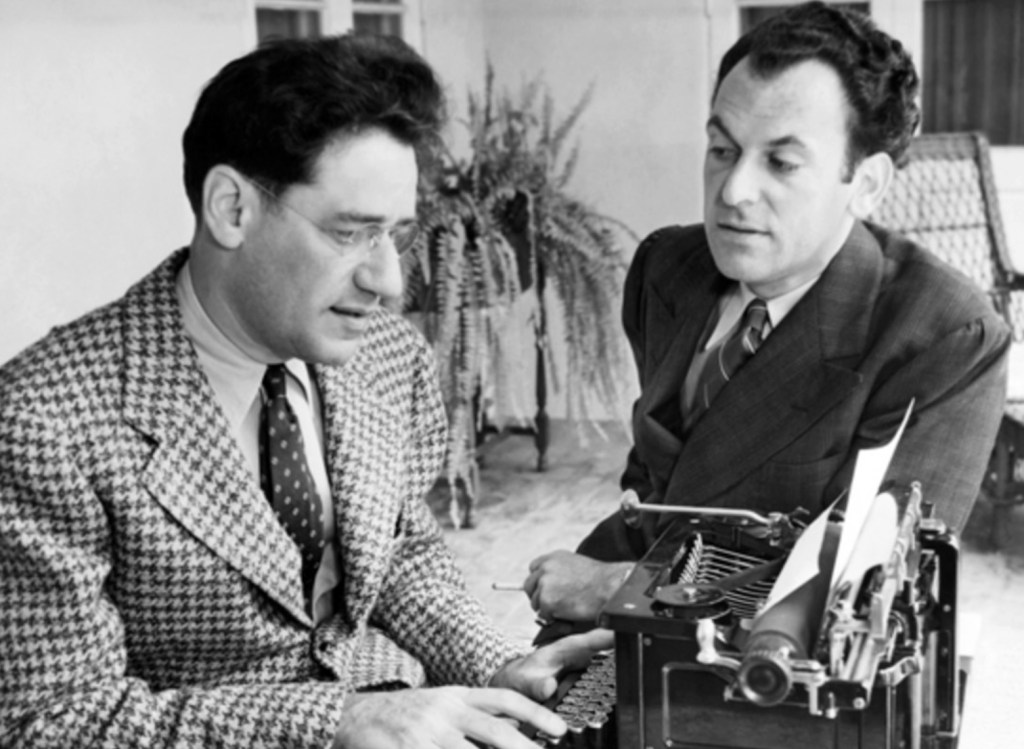
George S. Kaufman (left) and Moss Hart, 1937

 Books Matter
Very good, but I was waiting for more.
LikeLike
I’ll expand it a little.
LikeLike
Hello! I will find out more about him …Thanks for the info.
LikeLike
Great! The movie that Frank Capra made of “You Can’t Take It With You” is really good. It’s got Lionel Barrymore, Jimmy Stewart, Spring Byington, and lots of other good actors in it. Happy New Year. PS: I’m taking our stairs like a trouper.
LikeLike
My personal Moss Hart history is that I once performed in The Man Who Came to Dinner and once directed You Can’t take It With You, both fun plays.
LikeLike
That is cool! What role did you play in The Man Who Came to Dinner?
LikeLike
I haven’t read “Act One” but I seem to recall that George S. Kaufman at first was dead set against collaborating with Moss Hart. If that story is true, I’m certainly glad that Kaufman changed his mind because their plays were some of the best you’ll ever read or see.
LikeLike
Kaufman had the bigger reputation when their collaboration began.
LikeLike