John Crowe Ransom published his first book of poetry, Poems About God, in 1919, and almost immediately regretted having done so. The poems in this book, he said, were marred by “blatant and inconsistent theologizing” and a low level of craftsmanship. Robert Frost and Robert Graves both praised Ransom’s poems, but his mind was unchanged. He never permitted any of the contents of Poems About God to be reprinted.
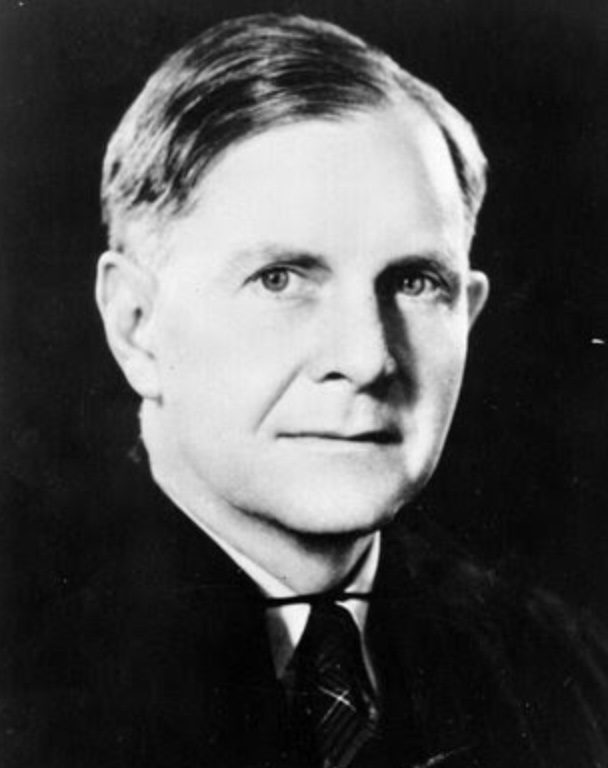
“It is a paradox that poetry has to be a technical act, of extreme difficulty, when it wants only to know the untechnical homely fullness of the world,” he wrote years later, and it is hard not to see, in this statement, a personal reference to his own pained discovery of the arduous demands of the art. His friend Robert Frost put it less elegantly: “Stay out of the poetry game if you don’t have a snout for punishment.”
Frost was referring to his own experience of the severity of reviewers; Ransom, still little known, had enough to face in the severity of his own judgement.
But he persisted in his efforts to learn to write poetry. He was helped by the advice and encouragement of a group of poetry-loving friends at Vanderbilt University, where he was now a professor of English. Several of the members of this group, including Ransom’s student Robert Penn Warren, would become honored poets, but none achieved maturity as a poet more quickly than Ransom. (And none, in my opinion, would become as good a poet as Ransom.)
In 1924, now a century ago, Ransom published his second book of poetry, Chills and Fever. His progress in the art over the preceedng five years was astonishing. He had found his way to “know the untechnical homely fulness of the world” in poetry that was as distinguished as his earlier poetry had been stumbling and unsure.
In Ransom’s poems, an observer, both tender hearted and tough minded, confronts the ineluctible finalities: the end of innocence, of love, of illusion, of life itself. Robert Penn Warren, Delmore Schwartz, and Randall Jarrell have written brilliant essays about the style that Ransom created for himself in order to become this observer. The title poem of his second book is characteristic:
Here lies a lady of beauty and high degree.
Of chills and fever she died, of fever and chills,
The delight of her husband, her aunts, an infant of three,
And of medicos marvelling sweetly on her ills.For either she burned and her confident eyes would blaze,
And her fingers fly in a manner to puzzle their heads—
What was she making? Why, nothing; she sat in a maze
Of old scraps of laces, snipped into curious shreds—Or this would pass, and the light of her fire decline
Till she lay discouraged and cold as a thin stalk white and blown,
And would not open her eyes, to kisses, to wine;
The sixth of these states was her last; the cold settled down.Sweet ladies, long may ye bloom, and toughly I hope ye may thole,
But was she not lucky? In flowers and lace and mourning,
In love and great honour we bade God rest her soul
After six little spaces of chill, and six of burning.
Delmore Schwartz wrote that Ransom’s work is especially treasured by people who want to learn to write poetry. For these people, and for anyone else who finds in poetry one of ordinary pleasures of life, I recommend The Complete Poems of John Crowe Ransom, edited by Ashby Bland Crowder. This edition contains every poem, published and unpublished, that Ransom is known to have written. The forward by Ransom’s granddaughter, Robb Forman Dew, is worth the price of admission.


I have to say that I’m not familiar with Ransom’s work but I’m more interested now as a result of this piece. Also, the first paragraph about Ransom’s attitude about his own work illustrates the difference between calling yourself a poet and making the attempt of extreme technical and artistic difficulty to write poetry. I wish that may more modern poets would adopt this attitude.
LikeLike
In his old age he came to regard all of his poems as slipshod and illogical, and rewrote them. Fortunately, we still have the uncorrected versions.
His poems are online. I particularly like “Bells for John Whiteside’s Daughter”, “Blue Girls”, “Vision by Sweetwater”, “Captain Carpenter”, and “Prelude to an Evening”.
LikeLike
Never read him. I’ll have to look into him . Thanks
LikeLike
Great!
LikeLike