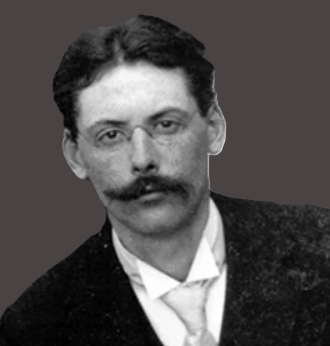
The American poet Edwin Arlington Robinson was born in Head Tide, Maine in 1869 and died in New York City in 1935. He is known today mostly for having written a poem, “Richard Cory”, that provided the title and lyrics for a song by Simon and Garfunkel, and for three or four other poems that have been, in his words, “pickled in anthological brine”. In his lifetime he was best known for several long poems on Arthurian themes that are far from being his best work.
He discovered that he was a poet while still in high school and never tried to be anything else. Like Keats and so many other English language poets (of earlier generations), he began by translating passages of the Latin poet Vergil; the surviving examples of these translations show him already to have been a careful craftsman in verse. By his mid-twenties he had begun to write better poetry than anyone else in America at the time.
His family was gifted and troubled; you can find the details in Scott Donaldson’s meticulously researched Edwin Arlington Robinson: A Poet’s Life. What matters, if you are a lover of poetry, is not that he found life hard, but that he succeeded in doing what he set out to do.
From time to time, a poet or critic writes an essay deploring the reading public’s neglect of this distinguished artist, for acquaintance with his work can lead to no other estimation. The poets Robert Mezey, Donald Hall, and several other poets and critics have published good selections of his works. The Library of America, however, has denied him entrance into the American canon, instead conferring the honor of a dedicated volume on Gary Snyder and other, in my opinion, lesser lights.
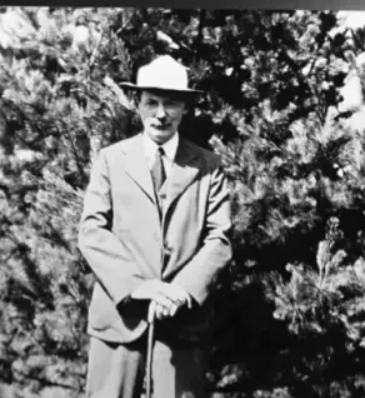
So what is going on with Edwin Arlington Robinson?
Readers of his book The Children of the Night (1897) would have found in it poems such as “The Mill”:
The miller’s wife had waited long,
The tea was cold, the fire was dead;
And there might yet be nothing wrong
In how he went and what he said:
“There are no millers any more,”
Was all that she had heard him say;
And he had lingered at the door
So long that it seemed yesterday.
Sick with a fear that had no form
She knew that she was there at last;
And in the mill there was a warm
And mealy fragrance of the past.
What else there was would only seem
To say again what he had meant;
And what was hanging from a beam
Would not have heeded where she went.
And if she thought it followed her,
She may have reasoned in the dark
That one way of the few there were
Would hide her and would leave no mark:
Black water, smooth above the weir
Like starry velvet in the night,
Though ruffled once, would soon appear
The same as ever to the sight.
Charitable readers would have allowed Robinson his right to think an occasional bleak thought, and turned to other poems, such as “The Clerks”:
I did not think that I should find them there
When I came back again; but there they stood,
As in the days they dreamed of when young blood
Was in their cheeks and women called them fair.
Be sure, they met me with an ancient air,—
And yes, there was a shop-worn brotherhood
About them; but the men were just as good,
And just as human as they ever were.
And you that ache so much to be sublime,
And you that feed yourselves with your descent,
What comes of all your visions and your fears?
Poets and kings are but the clerks of Time,
Tiering the same dull webs of discontent,
Clipping the same sad alnage of the years.
Other poems in the book would reveal the nature and subject matter of Robinson’s work as a whole. His subject matter is ordinary people and their trials and misfortunes; the treatment of this subject matter is detailed, restrained, and classical; for example, the poem “Reuben Bright”:
Because he was a butcher and thereby
Did earn an honest living (and did right),
I would not have you think that Reuben Bright
Was any more a brute than you or I;
For when they told him that his wife must die,
He stared at them, and shook with grief and fright,
And cried like a great baby half that night,
And made the women cry to see him cry.
The singers and the sexton and the rest,
He packed a lot of things that she had made
Most mournfully away in an old chest
Of hers, and put some chopped-up cedar boughs
In with them, and tore down the slaughter-house.
Robinson would have known Wordsworth’s poem “Michael”, about a shepherd whose son leaves home to make his fortune in some far away place, and disgraces himself there in such a way that it is impossible that he should ever return home. Upon learning of his son’s disgrace, Michael went to a stone enclosure for his sheep that he had been building with his son, and sat down in it, “and never lifted up a single stone.” Reuben Bright’s grief is similarly objectified in a single act, that of tearing down his slaughter house, but how different in effect the two poems are. Robinson’s poem has the brutal reality of a headline, which distances it from the moving pathos of Wordsworth’s idyll. Mankind cannot stand very much reality, wrote T. S. Eliot, and Robinson’s poems are full of reality unpalliated.
No poem has more of it than “Eros Tyrannos” (Love the Tyrant), which elevates into tragedy the familiar story of a woman who married in haste, or for wrong reasons, with all the rest of her life for regrets. Aristotle said that every tragedy is centered on a “reversal of fortune”, in which not only the protagonist but all his household (family, slaves, dependents) are brought to ruin. In “Eros Tyrannos”, the reversal of fortune has already occurred. A young woman, fearing never to find a man, has married a scoundrel, and her life, and the honor of her family and perhaps even of her town, have been brought to ruin:
She fears him, and will always ask
What fated her to choose him;
She meets in his engaging mask
All reasons to refuse him;
But what she meets and what she fears
Are less than are the downward years,
Drawn slowly to the foamless weirs
Of age, were she to lose him.
Between a blurred sagacity
That once had power to sound him,
And Love, that will not let him be
The Judas that she found him,
Her pride assuages her almost,
As if it were alone the cost.—
He sees that he will not be lost,
And waits and looks around him.
A sense of ocean and old trees
Envelops and allures him;
Tradition, touching all he sees
Beguiles and reassures him;
And all her doubts of what he says
Are dimmed with what she knows of days —
Till even prejudice delays
And fades, and she secures him.
The falling leaf inaugurates
The reign of her confusion;
The pounding wave reverberates
The dirge of her illusion;
And home, where passion lived and died,
Becomes a place where she can hide,
While all the town and harbor side
Vibrate with her seclusion.
We tell you, tapping on our brows,
The story as it should be,—
As if the story of a house
Were told, or ever could be;
We’ll have no kindly veil between
Her visions and those we have seen,—
As if we guessed what hers have been,
Or what they are or would be.
Meanwhile we do no harm; for they
That with a god have striven,
Not hearing much of what we say,
Take what the god has given;
Though like waves breaking it may be,
Or like a changed familiar tree,
Or like a stairway to the sea
Where down the blind are driven.
Robert Frost said that Robinson was the “prince of heartachers”, that he gave us the poetry of griefs, and left the grievances for others. This may account for his non-acceptance by the academies, who require of all artists that they shoulder arms against the world’s injustices. Robinson instead asserted the immemorial privilege of poets to do nothing but sing their dolefullest.
As Edwin Arlington Robinson lay dying of cancer in a New York Hospital at the age of 65, he said that he had no regrets, that he had had a good life. He had been a success, on his own terms, having written a few poems that will be remembered anywhere and everywhere there are people for whom poetry is one of the ordinary and indispensible pleasures of life.
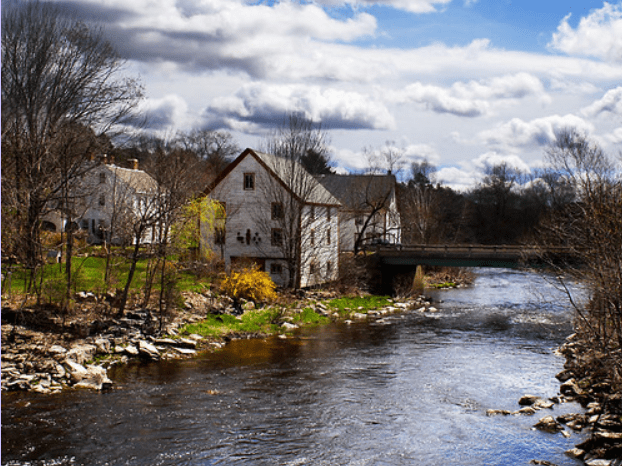

 Books Matter
Thanks for the monograph on a terrific poet not only in technical terms but in the subjects he chose to fix his gaze upon, and in his refusal to be a poet in the Church of Solipsism, as so many poets are today. EAR is still underappreciated, by my view.
LikeLike
He had no grievances and so did not enlist in the war against structures of racist phallocratic colonialism. So what good was he.
LikeLike
“Poets and kings are but the clerks of Time”. Geez, wish I’d had the talent to write this poem.
LikeLike
Remember that Robinson gave up everything in order to be a poet.
LikeLike