I started rereading Don Quixote around two years ago, and had just finished the account of the Don’s second of three sallies out into the unregenerate world when I became sick and had to set the book aside. After a long sojourn in hospitals and rehabilitation centers, I got to go home, and my copy of Don Quixote was waiting for me. I hesitated to pick it up, though. I was afraid that my hospital stay might have impaired my ability to enjoy it. It’s a high spirited (although melancholy) book, and my recent experience of illness had left me anything but high spirited. It’s a playful book, and my recent experiences had been deadly serious.
But I couldn’t decide what else to read, so I picked it and found the page where I had stopped reading.
The months between when I set the book aside and now when I picked it up again were abolished. The conversation between Don Quixote and Sancho Panza continued — it wasn’t resumed, because there has been no interruption. I had re-entered the onward flow of life that is Cervantes’ great creation.
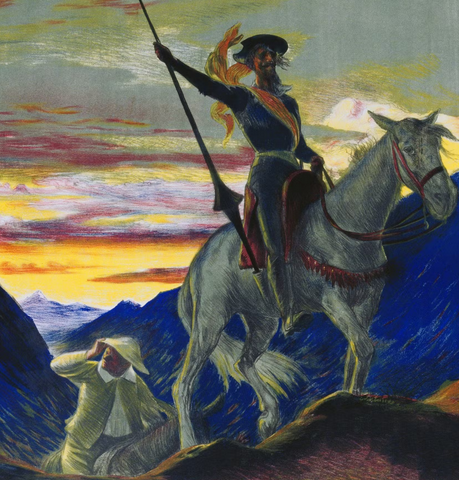
This onward uninterruptible flow of life in Don Quixote is the first of several things about the book that now struck me. I didn’t need to flip back and forward a few pages to situate myself in the book. I was there, in the middle of things, with the doleful knight and his squire, who were living their lives in the present moment. Start reading the book anywhere, and you will experience the same thing. You are always caught up, wherever you start.
This leads me to the second of my impressions, that the experience of reading the book does not feel literary. When you read the book, you find yourself in an accidental world, where everything is contingent, not written.
At the start of Book Two, where I started reading again, they talk about the mistakes in Book One, the story of Don Quixote’s first two sallies. Such a book had in fact been printed, before Part Two appeared, and Don Quixote and Sancho discuss the mistakes it like any other members of the reading public. The mistakes were of course Cervantes’ own mistakes: Sancho’s donkey was stolen and a few pages later he is riding on his donkey as if it had never been stolen.
A third impression is of the number of questions that are raised without being answered — without needing to be answered. The principal .question is whether Don Quixote is mad, or simply goads himself into counterfeit madness to serve some emotional or spiritual need. How conscious is Don Quixote of his mental states? We can’t be sure. The story works very well if such questions are held in suspense. This is another aspect of the book’s non-literary quality. In real life we have to live with such questions about other people — about ourselves, even. We live among riddles that we know we will never solve.
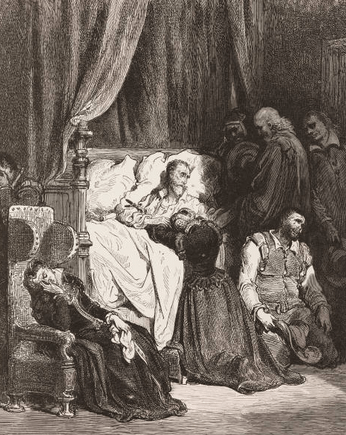
The strongest impression that my rereading of the book made on me is how much the relationship of Don Quixote with Sancho Panza resembles a marriage — and in the end, a good one. There is no suggestion in the book that their relationship is sexual, although I am certain that that possibility has been the grist for someone’s grievance mill — Sancho being the oppressed wife, and Dox Quixote the male predator. But it’s nevertheless a marriage in that the two of them learn to abide each other’s quirks, and come, even to appreciate them. They acquire a history.; it binds them together, and provides them with many points of reference, making the basis of a private language that only the two of them can fully understand. And when Dox Quixote dies, Sancho grieves for more than his loss of a chance to become the governor of an island; that is not on his mind at all. He has become a keening widow.
And I can feel free writing these impressions knowing that the critical opinion about this great and vast book is wildly varied, and that some critics would consider my opinions superficial or irrelevant or incompetent; and that other critics would back me up. This book approximates to life in scope, variety, and complexity. You can think about it whatever you want.

 Books Matter
Thanks for this — I started reading the book some years ago but had to return it to my sister-in-law for a class that she was to teach. Too slow, I guess. But it reminds me that this is one of the great books that I mean to read nor that y I have more time to do so.
LikeLike