It is said of the music of Beethoven and Mozart that it is greater than can be performed. After listening to recitations of Lincoln’s Gettysburg Address by several famous actors, I was starting to think that Lincoln’s famous 272 words might be better than can be recited. In these recitations, something adventitious always seems to obscure the sense of the words and their matchless construction — something corny sired by Disney on Sandburg. What is lost is the nature of the address — its severe verbal economy, its passionate reasoning, making it an example of what the poet Marianne Moore said was Lincoln’s essential style, a “Euclid of the heart.”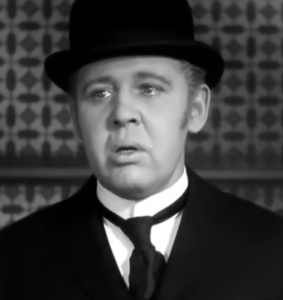
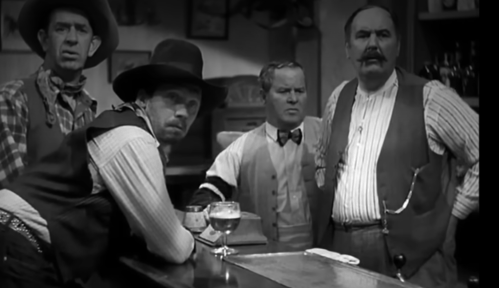
But the other day — yesterday, to be precise — I came across, in the infinite flea market of the Internet, a short video clip titled “Charles Laughton Recites the Gettysburg Address.” The clip is from a 1935 movie titled “Ruggles of Red Cap”, a comedy in which an English butler named Ruggles (played by Laughton) is lost in a poker game to an Americn and accompanies his new employer to the American west. There in the west where everyone is free to fashion for himself the life that he desires to live, he experiences “a new birth of freedom”. In the clip, the patrons of a bar try to remember what it was that Lincoln said at Gettysburg, and then they notice that Ruggles, who has suddenly understood the application of the words to his life, is reciting the address to himself in a sort of trance. At the request of the patrons, he recites it for them, as the living words that they must have been on Novermber 19, 1863.

 Yes Books Matter
”It is said of the music of Beethoven and Mozart that it is greater than can be performed.” I think I understand the thought behind the statement but I’d need some convincing. After all, the composer has in his or her head the sound of the instruments that will produce the music, and thus the music’s ideation is grounded in the reality of a lifetime of sounds, instruments, rehearsals, concert halls. If nothing else, the composer could have in life produced the music to his or her satisfaction.
At any rate, are you saying that Laughton’s recitation of Lincoln’s address is the best you’ve ever heard? I watched the clip, and the rendition certainly was devoid of the usual flourishes one usually hears. It was spare, as I recall, with hardly any modulation — unselfconscious. “In a trance”, as you put it. I thought afterward that I would have loved to have heard Lincoln himself declaim it.
LikeLike