by John Breithaupt
John F. Kennedy’s book “Profiles in Courage” tells the stories of eight United States Senators who risked their political careers for the good of the nation. The book begins and ends with general reflections on the meaning and importance of courage for our democracy.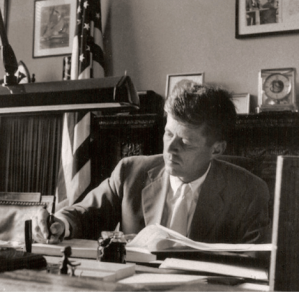
I first read the book when I was in junior high school. I liked it very much, but I never reread it, fearing that it might not live up to my first enchanted impressions.
And since I first read the book, I have probably read as many words about the book as the book contains. How much of the book did Kennedy himself write? How much was written by his able word-smith Ted Sorensen? These questions have their importance, but they are not the questions I am interested in now. I am taking the book as a given and now ask only whether it is, in fact, a good book.
And my growing awareness of the silent celerity of time, to borrow a phrase from Dr. Johnson, tells me not to postpone things. So I reread it, and I found it to be well worth reading, and unlike any other book — unless you harken back to Plutarch, who wrote the lives of ancient heroes with the explicit purpose of edifying modern readers.
The writing, first of all, is distinguished — as good at least as the writing in other books that won the Pulitzer Prize in history — as good, for example, as the writing in Carl Van Doren’s classic biography of Benjamin Franklin, which won the Pulitzer Prize for history in 1938.
But the book’s main value lies in its being an antidote to the facile cynicism that condemns all political life in this country as hopelessly corrupt, and all politicians as self-serving liars. Of course, there are plenty of reasons to be disillusioned with the current state of democracy in America. For example, a series of Supreme Court decisions has held that bribing members of Congress is a Constitutionally protected form of free speech. The situation is so depressing that many people refuse to vote for candidates of either party, and are waiting for a demagogue to arrive on the scene and begin tearing down the whole rotten structure of government, replacing it with something superior to what was there before–namely himself. This may, indeed, have happened already.
But is it really the case that there are no men — or women — of courage in public life today? In the introduction to his book, Kennedy wrote:
“1 am convinced that the complication of public business and the competition for the public’s attention have obscured innumerable acts of political courage—large and small—performed almost daily in the Senate Chamber. I am convinced that the decline—if there has been a decline—has been less in the Senate than in the public’s appreciation of the art of politics, of the nature and necessity for compromise and balance, and of the nature of the Senate as a legislative chamber.”
Kennedy’s purpose in writing the book, then, was to demonstrate that our country, even during its most difficult and demoralized periods, has managed to produce leaders with courage and integrity — leaders whose example we can follow out of our ethical morass.
**********
The first four of Kennedy’s heroes — John Quincy Adams, Daniel Webster, Thomas Hart Benton, and Sam Houston were born in the eighteenth century and grew up in the afterglow of the revolution. Like so many other men and women of their generation, they were fiercely nationalistic and unshakeably devoted the union.
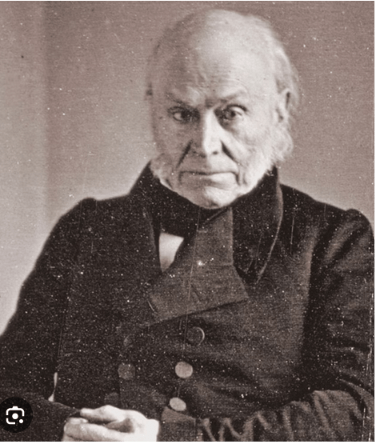
Massachusetts Senator John Quincy Adams (1767 — 1848) broke with the Federalist Party to support President Jefferson’s Embargo Act of 1807. Jefferson had imposed the embargo in retaliation against British and French interference with American shipping. It was immediately a disaster for the New England economy. Adams bore the almost universal condemnation of his constituents with serenity; and unlike most of the other subjects of this book, he managed to recover politically, eventually serving as the sixth president of the United States, and as a vociferous opponent of slavery in the House of Representatives for seven terms.
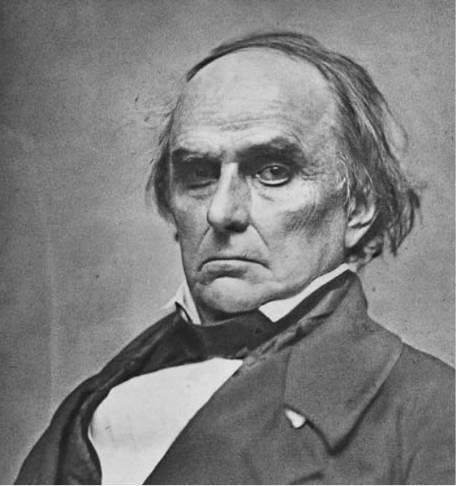
Massachusetts Senator Daniel Webster (1782 1852) was at the height of his reputation as a statesman and orator when he cast his vote in support of Henry Clay’s “Compromise of 1850”, a collection of bills that included the “Fugitive Slave Act”. This latter act made it a criminal offense to help a runaway slave gain his freedom. Many of Webster’s constituents were proudly doing just that. He was vilified by as brilliant a group of constituents as could be found anywhere on the face of the earth. He resigned his senate seat and died two years later.
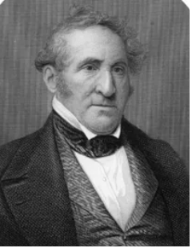
Thomas Hart Benton (1782 — 1858) had served in the United States Senate for 30 years when Henry Clay introduced the Compromise of 1850. Benton, a slave owner himself, had become opposed to the extension of slavery and voted against the compromise. Missouri was a slave state, however, and the compromise was popular. Benton lost his senate seat. He was subsequently elected to the House of Representatives for one term, but lost that seat because of his opposition to Kansas-Nebraska Act. His political career was now over. Historians believe that Benton’s opposition to the extension of slavery and his devotion to the Union brought it about that Missouri did not join the confederacy.
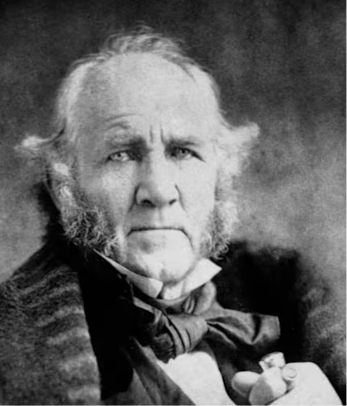
Texas senator Sam Houston (1793 — 1863) was probably the most ambitious of Kennedy’s eight heroes. A former president of one republic (Texas), he now hoped to become president of a much greater one (the United States of America). But he lost his Senate seat owing to his opposition to the Kansas-Nebraska bill, which he opposed because it provided a way for slavery to expand. Elected Governor of Texas in 1859, he was forced to resign when the Texas legislature voted to secede from the union. He death in 1863 occurred when the union he had fought so hard to preserve seemed least likely to survive.
**********
Two of Kennedy’s heroes took their stands on principle in the bitter aftermath of the Civil War:
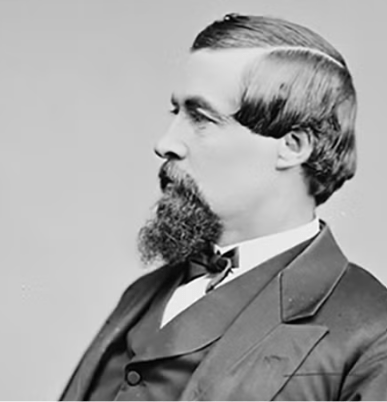
In 1867, Kansas Senator Edmund G. Ross cast the deciding vote to acquit President Andrew Johnson of all charges of impeachment, allowing him to remain in office. Ross did not like or respect Johnson, or endorse his lenient plans for reconstruction, but he did not believe that a president’s removal from office should turn on questions of policy. Ross’s vote may have prevented the presidency from being degraded into an agency of congress rather than remaining what the constitution intended it to be, one of the three equal branches of government.
Nebraska Senator George W. Norris (1861 — 1944) was a pacifist and a political independent at heart. He filibustered against President Wilson’s “Armed Ships” bill, hoping to keep the United States out of the “Great War” (World War 1); he led the successful revolt against the autocratic House speaker Joe Cannon’s control of the House Rules Committee; and he broke with his party (Republican) to support the Tennessee Valley Authority.
**********
Kennedy included two Senators, both men of demonstrated courage, whom I might have excluded from the book, for they were lacking in other qualities that might have kept their courage all right.
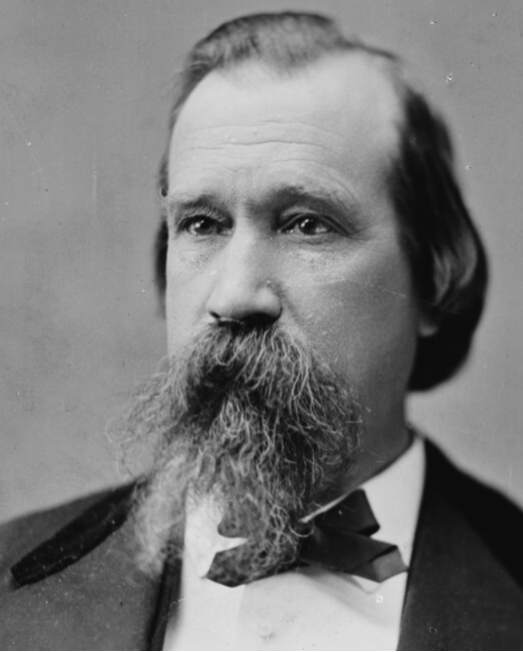
Mississippi Senator Lucius Quintus Cincinnatus Lamar (1825 — 1893) was a virulent white supremacist and an an enthusiastic supporter of the Ku Klux Klan. Kennedy included Lamar in his book because of the gracious eulogy of Senator Charles Sumner that Lamar delivered before an astounded Congress. Before the war, Lamar had been what was known as a “fire eater” — a rabid proponent of secession. That he should speak kind words of Sumner, who had been in effect a northern fire-eater, was a sign from the heart of the south that it was ready for reconciliation. He promoted reconciliation, but on terms that left blacks hardly better off than they had been as slaves.
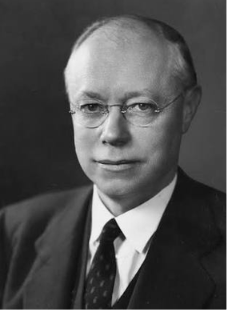
Nor would I have included Senator Robert A. Taft (1889 — 1953), a leading candidate for the Republican nomination for president. Taft ruined his chances for the nomination — which truth be told were probably never great — by criticizing the Nuremberg Trials for charging leading Nazis with crimes ex post facto — something that American citizens are protected from by the United States Constitution. The Nazi defendants were, it is true, being prosecuted for having done things that were not forbidden by law at the time, but this was only because their crimes were nearly unimaginable. Taft robbed the Nuremberg Trials of some of their aura of legitimacy, something they needed if the Nazi movement were finally to be laid to rest.
.
**********
Who would be an ideal reader of Profiles in Courage? Anyone who is interested in American history and who relishes good prose will certainly enjoy the book. But its ideal reader, I think, must be a young person, still in high school, who picks the book up out of boredom or curiosity and finds himself or herself enthralled by these stories out of our country’s past — a young person now destined someday to be a courageous senator, or maybe an historian, or maybe just a lifelong dedicated reader of our country’s history.


 Yes Books Matter