by John Breithaupt
For many years, my wife and I spent part of every August in Columbus, Ohio, visiting my family and several old friends who still lived in the area. We always stayed in the same motel in Worthington, the part of Columbus that lies directly north of the immense jungle that serves as the campus of the Ohio State University. Our list of visits to be made was invariable.
One year (1999?), however, I shook things up a bit. As soon as my wife and I had settled into our motel room, I said, “OK. I’m going to call Lonnie Thompson. I have some questions that I want to ask him.”
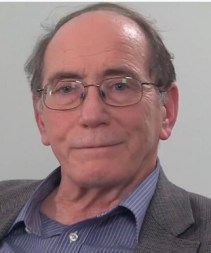
Lonnie Thompson was the Distinguished University Professor in the School of Earth Sciences and a Senior Research Scientist in the Byrd Polar Research Center at The Ohio State University. He was also a particular hero of mine — a climate scientist who went where the data was — in his case, to the world’s largest, deepest, and most remote glaciers.
Assisted by his wife Ellen Moseley, a physicist and trained geologist, he mounted over 60 expeditions to extract ice cores from the glaciers, which he shipped back to Columbus for analysis. He was the first climate scientist to regard glaciers as a significant source of information about the composition of the Earth’s atmosphere in the past.
The ice cores typically extended hundreds feet into the glacier. Each section of the ice core contained information about the composition of the earth’s atmosphere at a given moment in the past. The hundreds of cores that the Thompsons extracted from scores of glaciers around the world all indicated that the amount of carbon dioxide in the atmosphere had remained nearly constant for centuries, until the beginning of the Industrial Revolution, when the amount of carbon dioxide began to rise dramatically. It has continued to rise dramatically since then.
The Thompsons also climbed Mount Kilimanjaro in Africa to investigate the disappearance of that mountain’s famous snows. Climate change deniers argued that the snows had disappeared through sublimation — the evaporation of ice without melting, a process that occurs at every temperature. The Thompsons found pools of meltwater everywhere on the mountain’s top, showing that the snows of Kilimanjaro disappeared because of global warming.
On his many expeditions, the Thompsons encountered hostile local populations, armed bandits, corrupt officials, and severe weather. Once a strong wind began to slide the Thompsons in their tent toward the edge of a precipice. Thompson stopped the slide just in time by driving his pick ax into the ground. Quite understandably,Thompson was nicknamed Indiana Jones by his colleagues.
I found a number for Thompson in the ponderous Columbus phonebook and began to dial it. My wife said, “You’ll get his secretary — or his secretary’s secretary.”
The phone rang twice and then a soft friendly voice said “Lonnie Thompson.”
I was flustered by my success in reaching my hero. Even so, I managed to explain that I was a member of an environmental group in Massachusetts whose aim was to disseminate accurate information about global warming and climate change. I asked him if he would have time to answer some questions that I had about global warming and climate change.
He said yes could I stop by his office at 2:00 p.m.? I said yes, and thank you so much.
The Byrd Polar Research Center is at the western extremity of the OSU campus, among the open fields of the agricultural college that lie beyond Woody Hayes Drive. At the Research Center, the woman at the front desk seemed delighted to have visitors, and pointed the way to Thompson’s office — down a long hallway filled with crates, suitcases, and scientific instruments. We asked a graduate student if we were going in the right direction to find Professor Thompson, and he said yes. I then asked him why there was so much stuff in the hallway. He said that Thompson was packing things to take on his next expedition to Peru — he will be leaving tomorrow, as a matter of fact.
The door to Thompson’s office was open and we found him sitting at a table, waiting for us. I introduced myself and my wife and he invited us to sit down.
I said, “Professor Thompson, I have ten questions that people frequently ask the members of our group and it will help us if you could answer them for me.”
He smiled and said, “I’ll try.” It was then that I noticed how much he looked the part of an explorer among glaciers — he was lean and muscular and his skin was weathered and tanned.
I said, “OK, would you agree that the mechanism by which carbon dioxide raises the earth’s average temperature is well understood, and that the uncertainties still facing climate science mostly concern how a given increase in the earth’s temperature will play out as climate change?”
He thought for a moment and then said, “Yes, I would agree with that.”
I said, “It seems that it’s easier to anticipate what will happen than when it it will happen.”
Again, he thought a moment and said “Yes, we have always expected the polar ice cap to melt, but no one thought it would begin melting so soon.”
I asked, “Are there any changes in the climate that could be caused only by our adding so much carbon dioxode to the atmosphere?”
He thought about this for a minute or so and said “Yes, there are two changes that could be brought about only youby increasing the amount of carbon dioxide in the atmosphere. One is the warming of the stratosphere. The other is the fact that the nights are staying warmer than ever before. There are no cycles of nature that could account for these changes, no natural variability could make any sense as a cause.”
I asked other questions, which he answered in a slow measured voice. At no time during our talk did he look at his watch or indicate any desire to break off and do other things — such as finishing packing for his trip to Peru. But I was conscious of the passage of time, so I asked him my final question: “Is there anything you would like to say to my environmental group?”
He straightened himself up and said, “Yes. I can’t emphasize enough that man made climate change is a moral issue. It is a question of justice and humanity. Take for example the indigenous people who live at the highest altitudes in the Andes. They rely on alpacas for food and clothing. The alpacas in turn live on certain mosses that grow only in the cold damp mountaintops. Because of global warming, those mosses are dying off, and this is forcing the indigenous people and their alpacas off the mountains. What happens to them when they come down off the mountains is not good.
“And then there are the communities that rely on hydroelectric power, driven by the runoff from glaciers. When the glaciers are gone, these communities will be without power. Many of them are too poor to buy electricity or invest in other means of generating it, such as nuclear power. For such communities, the loss of glaciers is a simple disaster. “
I had kept Professor Thompson for nearly an hour now, and I was feeling that I ought to release him. We rose to go. He said, “Would you like me to show you my store of ice cores? They are in the refrigerated quonset hut that you may have seen.”
I thanked him for the kind offer but didn’t feel that I had a right to any more of his time. (I intensely regret not having taken the opportunity to tour the ice cores with the man who could best appreciate them. Dolt!)
Then I asked him why he was saving so many cores. He said he was saving them for the next generation of climate scientists who will not have any glaciers to study. He said that he believed that the next generation will be better educated than the current one and very likely — he said this with a smile — smarter.
We thanked Lonnie Thompson for his time and said goodbye. We threaded our way back through the cluttered hallway, back to the receptionist, who said she hoped that we would visit the Byrd Polar Research Center again sometime soon.
Lonnie Thompson died on November 2, 2026. He was 78 years old.


Could we have more of these people, please? I promise I’ll be nice, not naughty, and I’ll ask Santa to bring a dozen for Christmas. They’re just too rare these days.
LikeLike