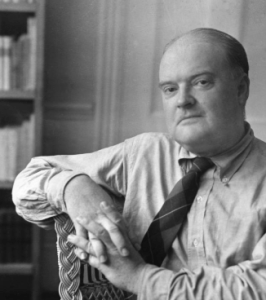
The Library of America is a non-profit foundation that prints well-edited uniformly bound editions of major American writers. The first volumes in the series (works by Melville, Hawthorn, and Whitman) went on sale in 1982, ten years after the death of the critic Edmund Wilson, who had long been agitating for the creation of a foundation such as this — one that would do for American literature what the Bibliothèque de la Pléiade had long since done for French literature: make the works of the country’s best writers available in not-too-expensive editions that are sturdy and legibly printed, and can easily fit in a suitcase or handbag.
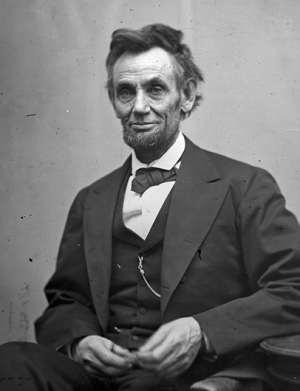
Most of titles printed by the Library of America are reprints, but a number of original titles have been brought out recently. One of the most valuable of these titles is, in my opinion, The Lincoln Anthology: Great Writers on His Life and Legacy from 1860 to Now, edited by Harold Holzer, and published in 1989.
The Lincoln Anthology contains 129 entries, none longer than seven or eight pages. Some entries are by forgotten writers such as James Sloan Gibbons (1810 -1892), author of the patriotic poem “We Are Coming, Father Abraham, 300,000 Strong” and Honoré Willsie Morrow (1880 – 1940), author of a trilogy of historical novels about Lincoln’s life.
Other entries are by some of the great ones of the Earth: Karl Marx, Henrik Ibsen, Victor Hugo, and Leo Tolstoy (who thought Lincoln the greatest leader in human history.)
One entry is itself a masterpiece: Walt Whitman’s superb “When Lilacs Last in the Dooryard Bloomed.” In general though, poets do not make a good showing here; for example, Edwin Arlington Robinson’s “The Master” is far from the level of this wonderful poet’s best.
Ralph Waldo Emerson’s remarks at a memorial gathering in Concord several days after Lincoln’s assassination, and Nathanial Hawthorne’s account of his meeting with Lincoln in the White House, are magnanimous and just. Here are two princes of Yankeedom acknowledging that the finest fruits of the nation’s character may bloom not in New England, but out in the uncouth hinterland. Their remarks do them credit.
Governor Adlai E. Stevenson of Illinois, speaking at Gettysburg on the the eighty-eighth anniversary of Lincoln’s address, said that “it is for us, the living, to rekindle the hot, indignanr fires of faith in the free man, free in body, free in mind, free in spirit, free to hold any opinion, free to search and find the truth for himself; the old faith that is ever new — that burned so brightly here at Gettysburg long ago.”
I’m far from having read all the entries in “The Lincoln Anthology.” But among those that I have read, three stand out for their penetration and their ability to bring Lincoln into focus. These essays are Jacques Barzun’s “Lincoln the Writer” (1959), Reinhold Niebuhr’s “The Religion of Abraham Lincoln” (1965), and Marianne Moore’s “Abraham Lincoln and the Art of the Word.” (1961)
Reinhold Niebuhr (1982 – 1971) was a reformed Lutheran pastor and theologian whose writings on public affairs have had a profound influence on historians, political scientists, reformers (including Martin Luther King) and politicians (including Barack Obama). By temperament a crusader for social justice, he criticized modern liberal movements for their utopianism, arguing that “original sin is one Christian dogma that is empirically verifiable.” His aphorisms (“Man’s capacity for justice makes democracy possible; his inclination to injustice makes it necessary.”) are legendary, and he is thought to be the author of an early form of the “Serenity Prayer”.
Niebuhr admired Lincoln for his grasp of what modern theologians (Karl Barth?) have called the “otherness” of God. In the view of these theologians, men may be instruments of God’s will, but not necessarily in ways they would have guessed or found flattering. In his Second Inaugural Address, delivered at the moment of victory in a terrible war that even friendly observers gave Lincoln’s side little chance of winning, he refused to take victory lap or claim that the North won because it was doing God’s will. Instead, Lincoln said the war may have been a punishment meted out to both sides for their joint complicity in the crime of slavery. That the leader of a great nation should renounce the mantle of righteousness when all the world would have forgiven him for assuming it, Niebhuhr found to be astounding; his call for charity for all, Niebuhr thought, showed that Lincoln’s religion, unorthodox as it may have been, was grounded in profound religious insight.
Jacques Barzun (1907 – 2012), a native of France, was for many years a professor of cultural history at Columbia University. In “Lincoln the Writer”, Barzun said that Lincoln was for him first of all artist, “the maker of a style that is unique in English prose and doubly astonishing in the history of American literature, for nothing led up to it.” I don’t entirely agree that “nothing led up to it”; Daniel Webster, when he was not upholstering his speeches with verbal velvet, at times achieved something like the sinewy argumentative strength that is so characteristic of Lincoln’s best prose. And Lincoln borrowed phrases from the Boston abolitionist, preacher, and scholar, Theodore Parker (1810 — 1860), whose writings he admired. Even so, Barzun is certainly right that there is something unique about Lincoln’s prose — a cadence, an impetuosity of thought, a striving for clarity that make almost every sentence he wrote proclaim its author.
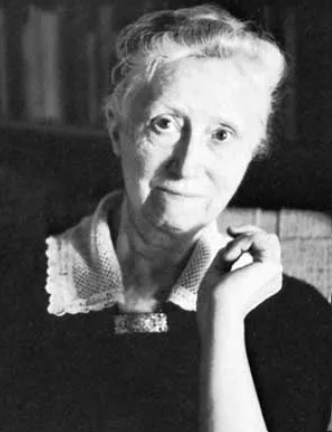
“Abraham Lincoln and the Art of the Word” by the poet Marianne Moore, seems to me the best account of Lincoln’s style ever written. “The largeness of the life,” she wrote, “entered into the writing, as with a passion he strove to persuade his hearers of what he believed, his adroit ingenious mentality framing an art which, if it is not to be designated poetry, we may call a grasp of eternal grace — in both senses, figurative and literal.”
I’ve often wondered why the knickname “Honest Abe” was affixed to Lincoln so early, and stayed with him to the end. Salmon P. Chase was an honest man; never a breath of scandal about him. But it was Lincoln who was “honest” Abe, and Marianne Moore helps us understand why this was so. Lincoln’s intellectual honesty was evident in everything he wrote. He tried to make what he thought, as well as why he thought it, as clear as possible, in the hope that his hearers would thereby be persuaded. The American people understood that Lincoln was treating them with respect and to their credit repaid him with a fierce devotion.
Reviewing the list of books that Lincoln read, and made part of himself, she found Euclid’s “Elements of Geometry” to be crucial.
In a Euclidean mood, he wrote to James Conkling, “You desire peace, and you blame me that we do not have it. But how can we attain it? There are but three conceivable ways. First, force of arms. . . . Are you for it? A second way is to give up the Union. Are you for it? If you are, you should say so plainly. If not for force, not yet for dissolution of the Union, Compromise. I am against that. I do not believe any compromise is now possible.”
“An architect of justice,” she wrote, “determined and destined to win his ‘case’, he did not cease until he had demonstrated the mightiness of his ‘proposition’. It is a Euclid of the heart.”
This anthology would have done well to include two more items that I can think of:
- The discussion of Jefferson’s language in Carl Becker’s beautifully written book, “The Declaration of Independence” (1922). Jefferson’s language, wrote Becker, is felicitous, and his gifts as a phrase maker are obvious. But it all lacks warmth; it is too entirely of the head. Lincoln’s language, in contrast, appeals to the heart as well as the mind, very much as Marianne Moore would point out.
- Walter Bagehot’s editorial “The Assassination of Mr. Lincoln”, in the April 29, 1865 issue of the Economist is the most profound estimate of Lincoln’s historical achievement that I have ever read. “We do not know in history such an example of the growth of a ruler in wisdom as was exhibited by Mr. Lincoln,” wrote Bagehot. The editorial is particularly gratifying to Yankee sensibilities when read in the light of Bagehot’s previous editorials on American affairs, in which he deplored the “smallness and meanness” of the leadership of the North. I will discuss the evolution of Bagehot’s views on Lincoln and the Civil War in a soon to be published post, titled “Walter Bagehot’s Palinode.”
……..
Will this country ever again see such a leader as Lincoln? We cannot know. But by studying the qualities of heart and mind that made Lincoln so extraordinary a leader, we can become better able to recognize such qualities in the people who emerge from the American political machine to solicit our favor. It’s a forlorn hope, that there will ever be much to recognize or reward, but then democracy was never anything more than an experiment.

 Yes Books Matter