palinode, n: 1. An ode or poem that recants or retracts something said in an earlier poem, 2. a recantation
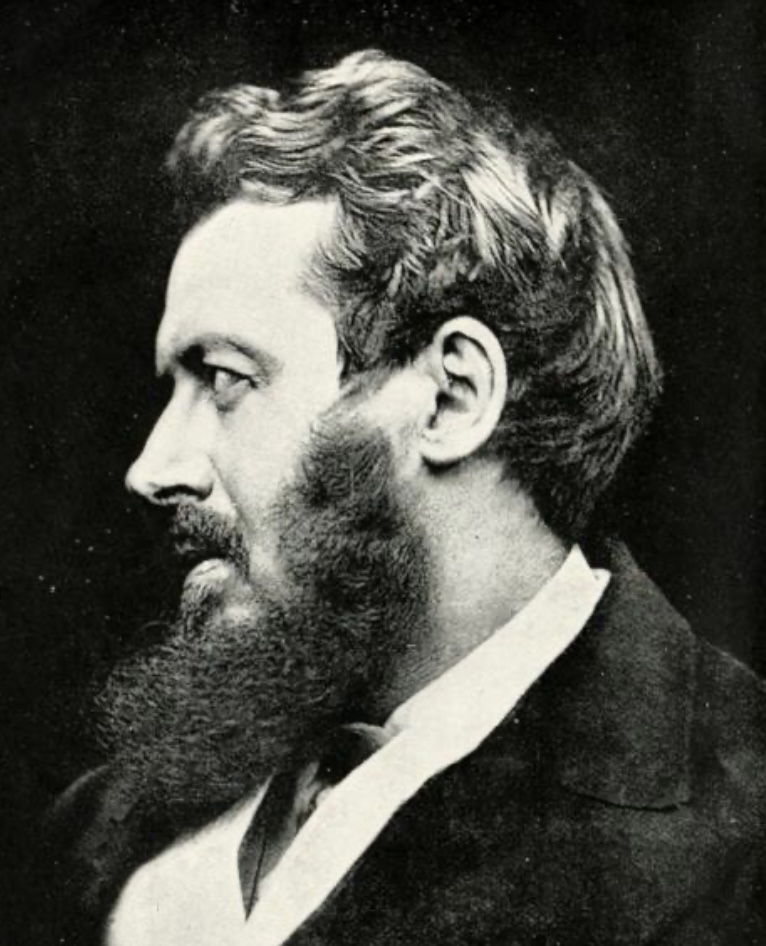
By a stroke of good luck for students of the Civil War, Walter Bagehot, one of Victorian England’s most brilliant economists, essayists, and political thinkers, became editor of the London business journal The Economist in the autumn of 1860, not long before Abraham Lincoln became President of the United States. As editor of the Economist, Bagehot would freqently need to comment on American affairs; even then the English and Americans were deeply involved with each other both politically and economically. The twenty commentaries on American affairs that Bagehot eventually wrote provide a valuable historical record of the evolution of the views of a first rate mind on the momentous events in America and on the statesmanship of the chief actor in those events, Abraham Lincoln.
Walter Bagehot was born in 1826, into a wealthy family of merchants and bankers. After completing his education at University College, London, with first class honors in economics and moral philosophy, he studied law and worked as manager of the Bristol branch of Stuckey’s bank. At the same time he began publishing articles on history and economics in England’s leading academic and literary journals. The original content and elegant style of these articles were admired by James Wilson, a member of the Palmerston government, who had founded The Economist is 1843. Wilson died in 1860, and Bagehot by pre-arangement became editor of the Economist. Several years after becoming editor, Bagehot married Wilson’s daughter Eliza; the marriage was by all accounts exceptionally happy.Walter Bagehot died in 1873, of complications from pneumonia.
Bagehot also found time to write books — remember, he was a Victorian — two of which were of enduring importance. One is “The English Constitution” a brief overview of the subject that is said to be required reading for the Princes of Wales. The other is “Lombard Street”, about the Bank of England and central banking generally; in this book, he expounds the rule, known as “Bagehot’s dictum”, that in times of financial crisis following the collapse of speculative investments, the central banks should provide unlimited amounts of credit to solvent institutions in order to quell panic and prevent a disastrous contraction of the economy. During the financial crisis of 2008, officials at the United State Federal Reserve Bank frequently referred to Bagehot’s dictum and claimed to be following it in practice.
In his articles about American affairs, Bagehot often wrote about the difficulty of learning what was happening in America and of understanding why. But however baffling and obscure American affairs may have been to Bagehot and his readers, they were of too much consequence to England to be ignored.
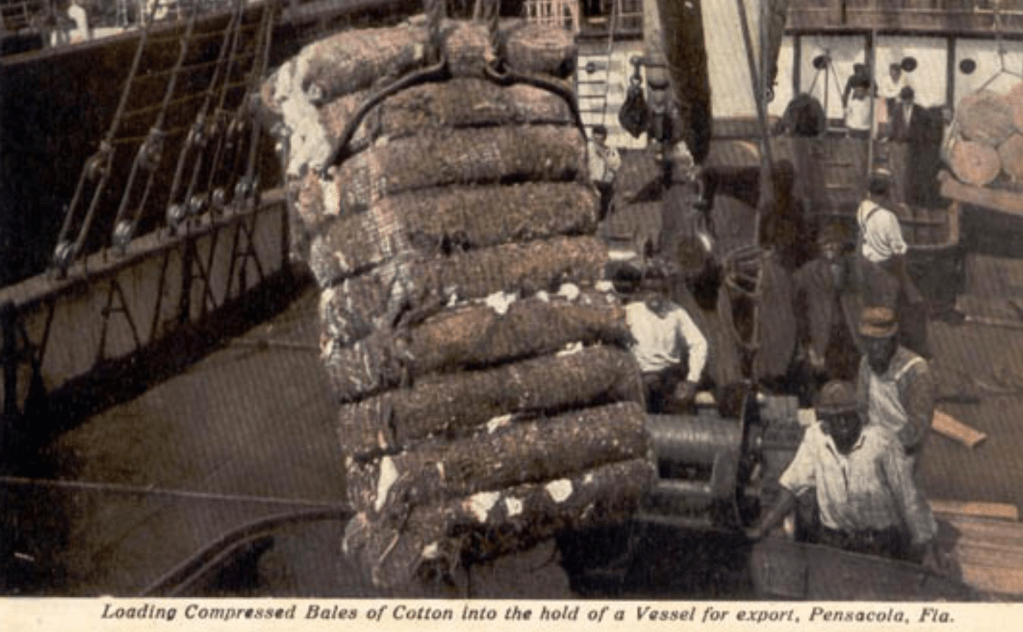
For example, Lancashire depended for its prosperity on American cotton, and the north’s embargo on the export of cotton was causing great hardship there.
And for Bagehot in particular — a keen student of forms of government, the functioning of the United States Constitution in this moment of crisis provided almost endless matter for reflection.
Thus, Bagehot’s thoughts were drawn to America willy-nilly, and he formed strong convictions on several fundamental matters:
Adding to the difficulties of the north, Bagehot believed, was its lack of capable leadership. Here the south had the advantage of being led by so capable and experienced men as Jefferson Davis and Robert E. Lee. On the other hand, the government of the federal states, Bagehot wrote, “has fallen into the hands of the smallest weakest and meanest set of men who ever presided over the policy of a great nation at the critical epic of its affairs. The president means well, but he does nothing else well. The inexplicable caprice of a forgotten caucus selected Mr. Lincoln as a candidate because no one knew much about him, and therefore scarce anyone could object to him.”
Bagehot further deplored the “ungrammatical prolixity” of Lincoln’s writing style, saying “There is no greater misfortune than for a great nation to be exclusively represented at a crisis far beyond previous example by a person whose words are mean even as his actions are important.”
The blame for the rise of such a person as Lincoln belongs to the constitution’s “gift of unchecked influence to obscure political caucuses and the uninstructed outdoor multitudes”. Bagehot wrote:
“The constitution of the United States was framed upon a vicious principle . . . under the growing influence of democracy, the electoral college had lost its power of independent choice, and now simply ratified the choice of the people,” and this was frequently a “bombastic vulgarian”.
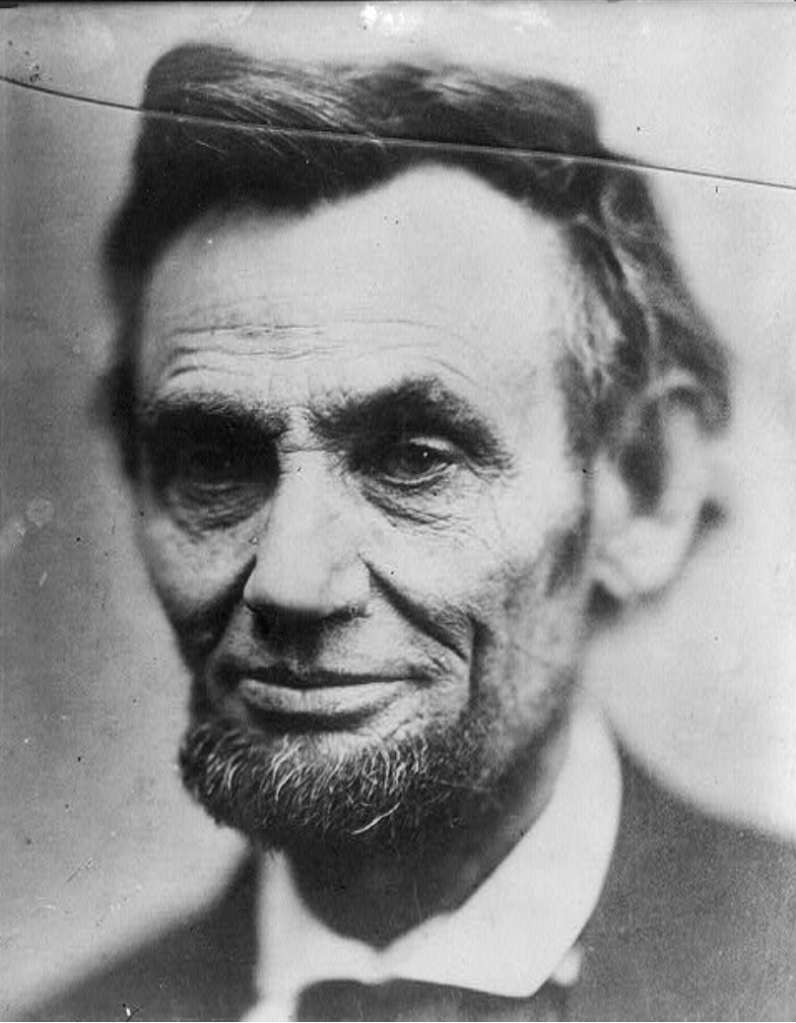
But Bagehot was a student of the actual who never tried to explain away what he saw happening, however unexpected and inexplicable that might be. In the third year of America’s terrible war, the North looked more and more like it might win; the American people unexpectedly showed powers of endurance and a gift for mastering difficulties; and Lincoln appeared more and more to be the leader that the crisis demanded. Bagehot changed his views accordingly. His exceptionally eloquent editorial of April 29, 1865, “The Assassination of Mr. Lincoln”, was his palinode from everything he had written on Lincoln. Bagehot wrote that under the American system of government,
“the head of the Executive may, by an infinitesimal chance, be a man so exactly representative of the people, that his acts always represent their thoughts, so shrewd that he can steer his way amidst the legal difficulties piled deliberately in his path, and so good that he desires power only for the national ends. The chance of obtaining such a man was, as we say, infinitesimal; but the United States, by a good fortune, of which they will one day be cruelly sensible, had obtained him. Mr. Lincoln, by a rare combination of qualities—patience, sagacity, and honesty—by a still more rare sympathy, not with the best of his nation but the best average of his nation, and by a moderation rarest of all, had attained such vast moral authority that he could make all the hundred wheels of the Constitution move in one direction without exerting any physical force. . . .
“. . . The President had, in fact, attained to the very position — the dictatorship — required by revolutionary times. At the same time, this vast authority, not having been seized illegally, and being wielded by a man radically good—who for example really reverenced civil liberty and could tolerate venomous opposition—could never bedirected to ends wholly disapproved by the ways of those who conferred it.”
“. . . We do not know in history such an example of the growth of a ruler in wisdom as was exhibited by Mr. Lincoln. Power and responsibility visibly widened his mind and elevated his character. Difficulties, instead of irritating him as they do most men, only increased his reliance on patience; opposition, instead of ulcerating, only made him more tolerant and determined. The very style of his public papers altered, till the very man who had written in an official despatch about “Uncle Sam’s web feet,” drew up his final inaugural in a style which extorted from critics so hostile as the Saturday Reviewers, a burst of involuntary admiration. A good but benevolent temporary despotism, wielded by a wise man, was the very instrument the wisest would have desired for the United States; and in losing Mr. Lincoln, the Union has lost it. The great authority attached by law to the President’s office reverts to Mr. Johnson, but the far greater moral authority belonging to Mr. Lincoln disappears.”
Bagehot was wrong in supposing that Lincoln’s eloquence was drawn out of him by the pressures he felt as President — the Presidency does not turn inarticulate men into literary artists, as the long dismal turgid flow of presidential speech in our time so clearly demonstrates! But Bagehot’s palinode says more about Lincoln’s greatness than many whole books on the subject have managed to say, and it remains a classic of political commentary.At the end of the war, the nation was in fact exhausted — physically, emotionally, morally. It did not want to hear about the rights of man, or justice, or freedom. For another 80 years, black Americans would be oppressed and abused in ways barely preferable to what they had experienced as slaves. But Lincoln’s words and his example of faithfulness to the principles of the Declaration of Independence, if they did not make us just, lingered in our minds, keeping us from being even more unjust than we were.

 Yes Books Matter
Bagehot was amazing in the way that Matthew Arnold or T. H. Huxley or many other Victorians were amazing; their incisive thinking was amplified tremendously by their extraordinary skill with the English language. At any rate, I think that Bagehot dismissed too soon Lincoln’s remarkable qualities, perhaps because he was an ocean away. He had the character and awareness to eventually understand Lincoln’s greatness and to admit that he’d come around to that understanding, but I never did see — and I could well be wrong in this — an actual ‘I was hasty’ from Bagehot. It seemed more rather, ‘Well, Lincoln grew in ways that most men could not have under the circumstances.’ A true observation in itself, and well noted, at least.
LikeLike